Beautiful Gardens, landscaping, art, printing For Your Home And Garden!
Beautiful Gardens, landscaping, art, printing For Your Home And Garden!
Learn how to style garden planters with layered planting, resilient species, and artful placement for a welcoming outdoor room that thrives year-round.
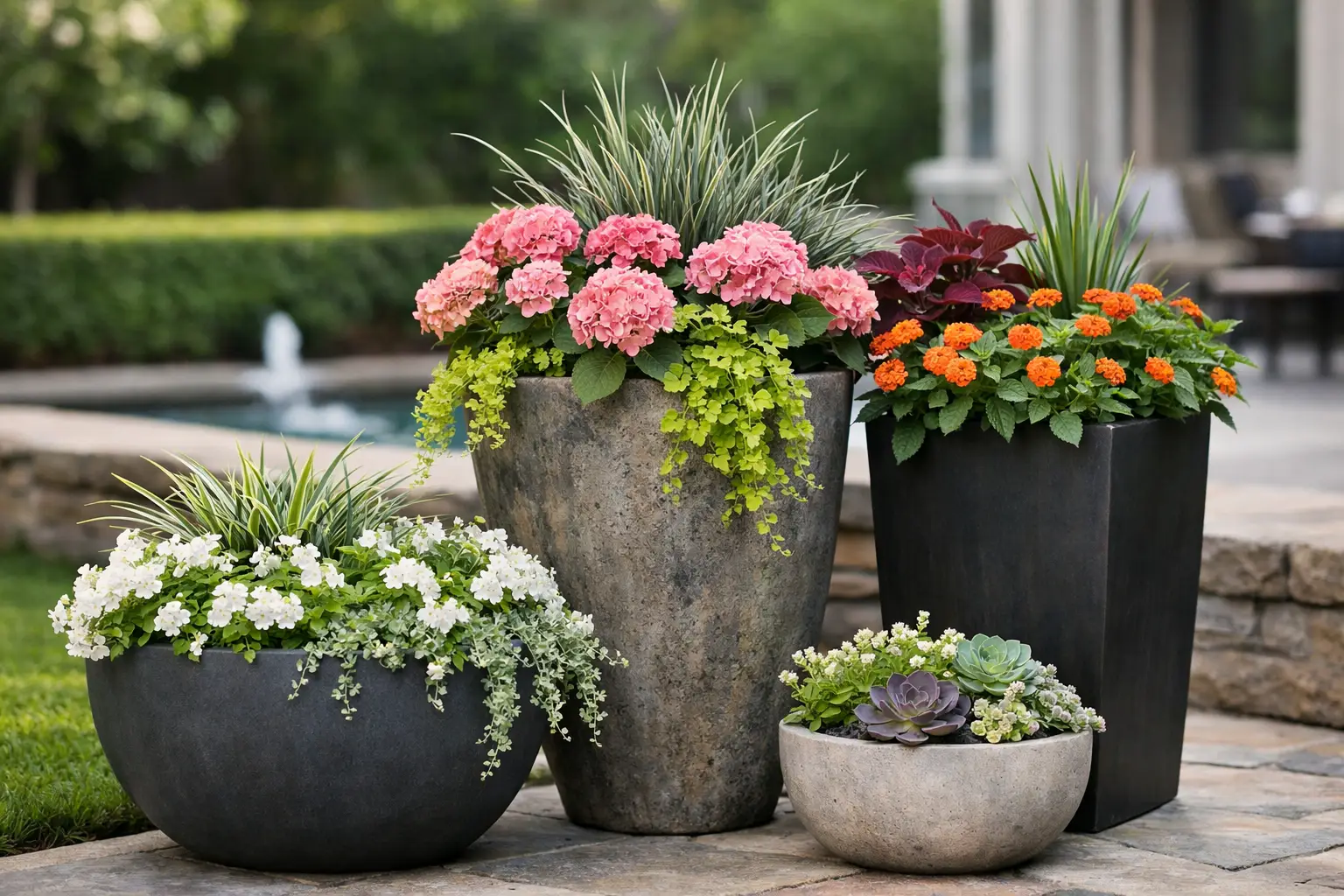
A planter beside the front door can do more than hold a single seasonal flower. It can soften hard architecture, frame a view toward the garden, offer herbs within reach of the kitchen, and give bees a place to pause. Learning how to style garden planters begins with seeing each vessel as a small, living landscape – one that changes with light, weather, and the rhythms of your home.
For a garden that feels designed rather than decorated, start with the relationship between planter, plant, and place. The most beautiful arrangements do not rely on constant replacement. They build atmosphere through proportion, foliage, texture, and resilient planting that grows richer over time.
Before choosing a pot or a plant, stand where people naturally enter, sit, and look outward. A pair of planters may define an entryway; a generous low bowl can anchor a dining table; a tall vessel can create privacy beside a lounge chair. In a compact patio, planters can become the walls, thresholds, and focal points that a larger garden achieves with hedges and planting beds.
Think in scenes rather than isolated containers. A quiet reading corner may call for soft grasses and aromatic herbs. A sunny terrace used for long lunches may need sculptural foliage that holds its shape through heat. Near a door, the arrangement should be legible from indoors as well as close up.
This is where restraint matters. If the furniture, rug, or umbrella carries a strong pattern, choose planters with calm forms and let the plants supply movement. If the surrounding architecture is minimal, a handmade-looking vessel with a mineral finish can introduce warmth. At Fensgarden, this balance between expressive detail and quiet structure is central to bringing an outdoor space into harmony with the home.
A collection of matching pots can look formal and polished, but it is not the only route to cohesion. A more natural composition often uses two or three related materials or colors: warm stone, weathered terracotta, matte charcoal, soft sand, or a deep ink-like blue-black. The connection can be subtle. What matters is that the planters belong to the same visual family.
Vary the scale before varying everything else. One large planter carries more presence than several small ones, and it also gives roots better protection from heat and drought. Pair a substantial anchor pot with one or two smaller companions, leaving enough negative space for the grouping to breathe. Crowding every corner with containers can make even a generous patio feel busy.
Shape changes the mood. Cylindrical planters feel architectural and composed. Wide bowls create a grounded, landscape-like effect and suit low, spreading plants. Tall, narrow forms add vertical punctuation, especially against fences or walls. For homes inspired by Eastern garden art, an asymmetrical grouping can be especially compelling: one upright vessel, one lower rounded form, and a small planting that seems to have arrived naturally rather than been arranged too perfectly.
Drainage is not a detail to overlook for the sake of appearance. Outdoor planters need drainage holes, and large vessels should be positioned before filling them. In regions with freezing winters, choose frost-resistant materials or be prepared to protect more delicate containers. A beautiful planter that cracks after one season is not a lasting design choice.
The familiar formula of thriller, filler, and spiller can be useful, but it can also produce containers that look identical from one porch to the next. A more enduring approach is to layer plants as they grow in nature: a structural element, a middle layer with texture or flowers, and an edge that softens the rim.
Start with one plant that gives the arrangement a clear silhouette. This may be a compact evergreen, upright grass, dwarf conifer, cordyline in a mild climate, or a clump of architectural alliums. Then add plants with contrasting leaf shapes. Fine grass beside broad rounded leaves, or silvery foliage beside deep green, creates interest even when few plants are flowering.
The final layer should not always trail dramatically. A low thyme, strawberry plant, hardy geranium, or softly mounding sedum can gently blur the container edge while remaining useful to pollinators or your kitchen. In a windswept spot, restrained forms often look better than long vines that become tangled or stressed.
Color deserves the same patience. Instead of choosing every color at once, build from a limited palette. White, blue, and pale green feel calm in shaded spaces. Apricot, burgundy, and bronze bring warmth to brick or timber. A single bright accent, repeated in just one or two blooms, has more impact than a crowded rainbow of unrelated flowers.
A stylish planter that needs daily rescue is rarely a pleasure. Match plants to the actual conditions of the site: hours of sun, reflected heat from paving, wind exposure, rainfall, and your willingness to water. Containers dry more quickly than garden beds, particularly small pots and dark materials in full sun.
For a hot, bright patio, consider drought-tolerant choices such as lavender, rosemary, salvia, yarrow, sedum, ornamental grasses, or regional native perennials suited to your area. Their needs vary by climate, so local suitability should guide the final selection. In shade, ferns, heuchera, hostas, carex, and shade-tolerant flowering plants can create an equally layered composition with less strain.
Native plants are especially valuable when appropriate for your location. They can support local pollinators, cope better with regional weather patterns, and connect a container garden to the wider landscape. A few flowers left to fade or seed can also provide texture and food for birds, rather than signaling that the display has failed.
Use a quality potting mix rather than soil dug from the yard, and refresh the top layer each spring. Group plants with similar water needs in the same container. This simple decision prevents the common problem of pairing a thirsty annual with a drought-loving herb, then satisfying neither.
A planter can be ornamental and productive at once. This is one of the most satisfying ways to make a garden feel lived in. Place basil, chives, parsley, mint in its own contained pot, or compact peppers near an outdoor dining area where they can be picked while cooking.
Edibles also bring nuance to a composition. The gray-green leaves of sage, the feathery texture of dill, and the glossy foliage of small citrus trees offer more than harvests. They introduce scent and seasonal rituals. A child snipping mint for iced tea or a guest reaching for rosemary makes the garden part of daily life rather than a backdrop viewed only from afar.
Be realistic about sunlight. Most fruiting edible plants need at least six hours of direct sun. In lower light, focus on leafy greens, parsley, cilantro, or decorative herbs that tolerate partial shade.
Good placement makes individual pots feel intentional. At an entrance, use pairs only when the architecture benefits from symmetry. A formal doorway or a balanced facade can carry matching vessels well. A more relaxed garden path may be better served by an uneven sequence of containers that draws the eye forward.
Repeat one plant or planter color at intervals to create rhythm across a larger space. This may be as simple as echoing a blue ceramic pot near the seating area and again by the gate, or repeating airy grass in several containers. Repetition gives the garden a visual thread without making it feel rigid.
Consider the view at different heights. From a kitchen window, you may see the top of a planter more than its sides, making foliage and surface texture especially important. From a lounge chair, a nearby pot should not block a sightline or dominate the conversation. At night, planters become part of the lighting composition, catching a soft glow and creating shadow around leaves.
The strongest container gardens are not remade from zero every month. Keep a framework of long-lived plants, then edit around it with seasonal additions. Spring bulbs can emerge beneath evergreen structure; summer flowers can fill gaps; seedheads and ornamental grasses can carry the scene into fall and winter.
Do not rush to remove every imperfect leaf. A garden with a little weathering, seed, and movement feels more alive than one controlled into silence. Still, regular deadheading, occasional pruning, and checking soil moisture will keep a naturalistic planting from becoming neglected.
As your garden changes, let the planters change with it. Move a sun-loving pot to a brighter edge, split an overgrown perennial, or replace one underperforming plant instead of discarding the entire arrangement. The goal is not a frozen picture. It is a small ecosystem with enough beauty, usefulness, and resilience to invite you outdoors again tomorrow.