Beautiful Gardens, landscaping, art, printing For Your Home And Garden!
Beautiful Gardens, landscaping, art, printing For Your Home And Garden!
Nature inspired patio styling turns a deck or terrace into a living outdoor room, using layered plants, natural materials, and resilient choices daily.
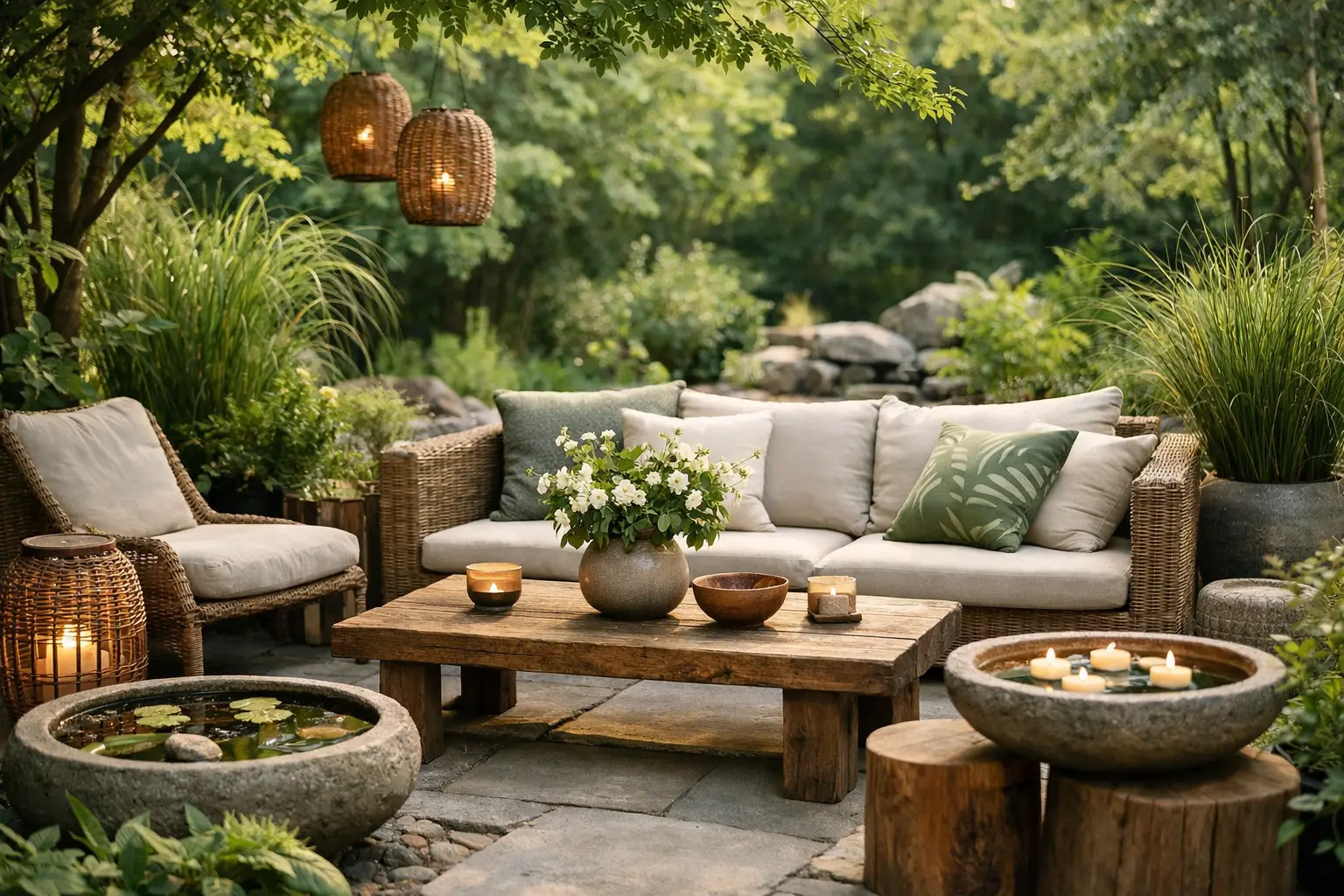
A patio feels most generous when it does more than hold a table and a few pots. The shift begins when nature inspired patio styling treats the paved surface as a clearing within a larger living landscape: a place where shade moves, herbs release fragrance, birds pause for water, and the view outward feels as considered as the seat beneath you.
For many homes, this does not require a major renovation. It requires a different design instinct. Rather than filling every edge with matching furniture or forcing plants into rigid rows, create a patio that has rhythm, seasonal change, and room for daily life. The most convincing outdoor spaces are not overly arranged. They feel rooted in their climate and personal to the people who use them.
Before choosing a color palette or planter, spend a few days noticing what already happens outside. Where does the morning sun land? Which corner stays damp after rain? Is the prevailing wind strong enough to unsettle an umbrella or dry out containers? These observations are the real beginning of a resilient patio.
A south-facing patio may need filtered shade and drought-tolerant planting. A sheltered courtyard can support ferns, hydrangeas, or shade-loving herbs. In colder regions, a patio needs room for winter storage and materials that tolerate freeze-thaw cycles. The goal is not to copy a Mediterranean terrace or an English garden border exactly. It is to borrow their atmosphere while responding honestly to your own place.
This is where a limited palette becomes useful. Choose two or three anchor materials, such as weathered wood, stone, terracotta, dark metal, or woven natural fiber. Their textures should sit quietly together, allowing foliage, flowers, and changing light to provide the movement. A pale concrete patio, for example, becomes softer beside clay planters, a timber bench, and leafy plants with deep green or silver foliage.
A garden is rarely experienced as a flat picture. It is experienced through foreground, middle distance, scent, shade, and small discoveries. Bring that same layered logic to the patio.
The boundary between hardscape and garden is often where a patio either comes alive or feels abruptly finished. Soften edges with planters, planted beds, or a narrow ribbon of ground cover. Let a few plants lean gently toward the paving rather than keeping every stem restrained.
Use different heights to create depth. Low thyme, sedum, or trailing nasturtium can spill near the ground. Mid-height grasses, salvia, or lavender create a soft screen without blocking a view. A small multi-stem tree, climbing vine, or tall planter gives the eye somewhere to travel upward. In compact yards, vertical planting is especially valuable because it adds immersion without taking away dining space.
Avoid relying on one dramatic plant in every pot. A repeated mix of foliage forms tends to look richer over time. Combine broad leaves with fine grasses, upright stems with trailing growth, and evergreen structure with seasonal flowers. The composition will feel more like a small ecosystem and less like a display assembled for one afternoon.
Every outdoor room benefits from a visual pause. It may be a low dining table, a fire bowl, a sculptural planter, or a simple water vessel that catches the sky. Keep this central element low enough that people can still see plants and one another across the patio.
Furniture should support the way your household actually gathers. A generous dining table is right for long weekend meals, while two deep chairs and a small side table may better serve a quiet morning ritual. If space is limited, choose pieces with slim frames and add comfort through outdoor cushions, throws, and textured textiles. The trade-off is that softer furnishings need storage or weather-resistant fabrics, especially in rainy climates.
Shade is not merely a practical add-on. It shapes the atmosphere of an outdoor room. A pergola can frame a long table and support climbing plants. A patio umbrella offers flexibility where permanent construction is not possible. A fabric canopy creates a lighter, more temporary expression, though it may require removal in high winds or winter weather.
Choose the shade structure based on how the sun moves, not only on its appearance. A fixed pergola is an investment, but it can organize the whole patio and become more beautiful as vines mature. An umbrella is easier to reposition, yet it needs a stable base and adequate clearance. In either case, the most natural result comes from integrating shade with planting rather than treating it as a separate object.
A nature-led patio should be beautiful for people and useful to the life around it. Pollinator-friendly flowers, seed-bearing grasses, bird water, and healthy soil can all fit into a refined design. The point is not to make the patio look wild at every moment. It is to allow it to participate in a larger local ecology.
Native plants are often a strong foundation because they are adapted to regional rainfall, temperatures, and local insects. But a fully native palette is not the only thoughtful choice. Culinary herbs, fruiting shrubs, and climate-adapted perennials can bring pleasure and function as long as they are suited to the site and do not become invasive.
Consider planting for more than one season. Spring bulbs can emerge beneath shrubs, summer flowers can feed pollinators, ornamental seedheads can hold their form in fall, and evergreen foliage can keep the patio from feeling empty in winter. A few edible plants make the space even more participatory: rosemary beside the grill, mint in a contained pot, alpine strawberries near a seating area, or a compact fig in a warm, protected corner.
Container gardens need more attention than planted beds because their soil dries quickly and roots have less insulation. Larger pots are generally easier to maintain than small ones, and grouping containers creates a cooler, more humid microclimate. Use pots with drainage, elevate them slightly where needed, and mulch the soil surface with fine bark, gravel, or leaf mold to slow evaporation.
The most restorative patios appeal to more than the eye. A small fountain can soften traffic noise. A shallow bird bath invites movement and gives pollinators a place to drink, provided the water is refreshed regularly. Even a glazed bowl placed where it catches rain can introduce reflection without turning the patio into a themed water feature.
Lighting should make the patio usable after sunset while preserving a sense of dusk. Skip the impulse to illuminate every border. Warm, low-level light near steps, a dining table, and circulation paths is usually enough. Lanterns, shaded wall lights, and subtle uplighting on one specimen tree can create depth without washing out the night sky.
Texture matters just as much. Rough stone, smooth ceramic, woven rope, brushed metal, and the delicate movement of grasses all create contrast. Fensgarden draws on the quiet spatial language of Eastern ink landscapes, where open space is not empty but intentional. Leave some visual breathing room on the patio. A few well-chosen forms will feel more composed than a crowded collection of objects.
Low maintenance does not mean no maintenance. It means arranging the patio so care is realistic and rewarding. Place thirstier containers near a hose or discreet drip irrigation line. Keep pruning tools and cushions close to where they are used. Choose washable fabrics, durable finishes, and plants that can tolerate an occasional missed watering.
A small seasonal routine is enough for most patios: refresh mulch and check irrigation in spring, deadhead or harvest through summer, clear leaves from drains in fall, and protect vulnerable pots before severe winter weather. As plants mature, edit rather than constantly add. Move what is struggling, divide what has become too dense, and let successful combinations repeat.
The patio will never be static, and that is its advantage. Let moss soften a shaded edge, let a vine take its time, and let a favorite chair fade slightly in the sun. When a space is designed to grow with weather, wildlife, and family rituals, it becomes more than a furnished exterior. It becomes a living threshold between home and garden.