Beautiful Gardens, landscaping, art, printing For Your Home And Garden!
Beautiful Gardens, landscaping, art, printing For Your Home And Garden!
Biophilic design turns a patio, balcony, or backyard into a living refuge through resilient plants, natural materials, and gentle sensory detail at home.
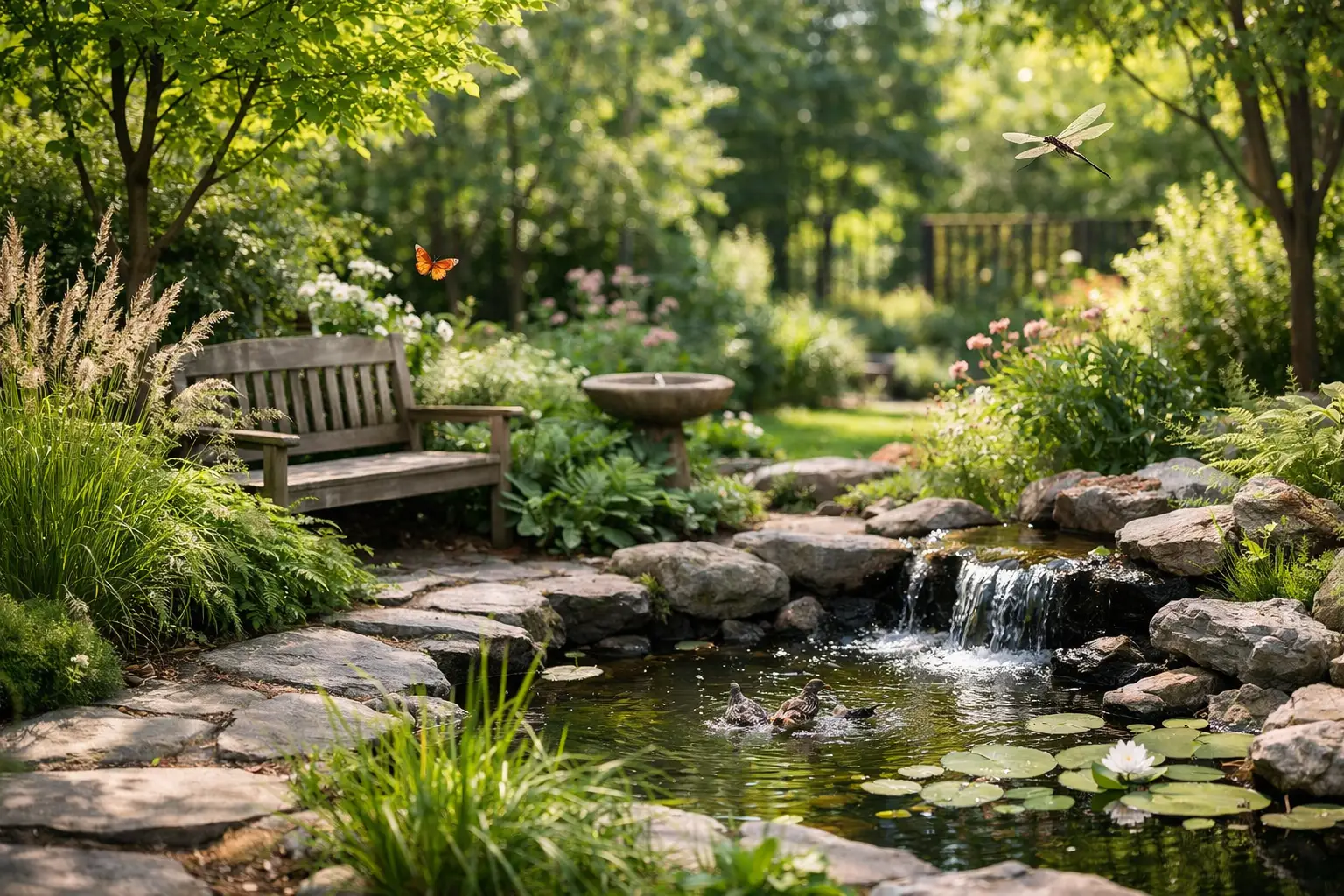
A garden can look polished and still feel strangely distant. Rows of identical pots, clipped hedges, and furniture arranged like a showroom may photograph well, yet offer little reason to linger. The difference is often biophilic design: a way of shaping home spaces around our instinctive need to see, touch, hear, and participate in nature.
For a family garden, this is not about filling every corner with greenery. It is about creating a place with atmosphere and relationship – where morning light reaches a chair, leaves move in the breeze, herbs are close enough to pick, and birds find shelter among layered planting. The garden becomes less of a backdrop and more of a living room with sky overhead.
Biophilic design begins with a simple premise: people feel better when daily life includes meaningful contact with the natural world. In architecture, that might mean daylight, natural ventilation, visible timber, or views of planting. In a backyard, patio, balcony, or courtyard, it becomes more tactile and personal.
A biophilic garden does not need to imitate wilderness. It can be carefully designed, even quite contemporary. The goal is to let natural processes remain visible rather than hiding them behind perfect surfaces. Seasonal change, rainfall, plant growth, dappled shade, and the presence of insects all become part of the experience.
This matters especially for busy households. A well-considered outdoor space offers a small reset between work, school runs, screens, and domestic routines. Five quiet minutes beside a fragrant planter can be more restorative than a decorative garden that requires constant correction.
There is also an ecological dimension. Planting with pollinators, birds, and soil life in mind makes the garden more generous. Beauty is no longer separate from function. A flowering perennial can soften a terrace edge, feed bees, and return every year with less effort than a high-maintenance seasonal display.
The strongest gardens are remembered through sensation. Before choosing a pergola, planter, or outdoor sofa, consider what you want to notice when you step outside.
Light is often the first design material. Watch where sun arrives in the morning and where late-afternoon heat settles. A breakfast chair may belong in a bright eastern pocket, while a shaded bench can turn an overlooked boundary into a retreat. Slatted pergolas, climbing plants, and lightly filtered canopies create shifting patterns that feel softer than a solid roof.
Sound deserves equal attention. Rustling grasses, water moving over a small basin, and foliage that catches the wind can calm a noisy urban setting. Water features should be chosen with restraint. A quiet bowl or narrow rill may suit a compact garden better than a loud fountain. The purpose is not spectacle but a subtle sense of life.
Scent and touch give a landscape its intimacy. Place rosemary, lavender, mint, thyme, or scented geraniums where hands naturally pass. Use materials that age with grace: weathered wood, natural stone, textured ceramic, woven outdoor textiles, and powder-coated metal in earthy tones. A smooth tabletop and a rough stone wall can make a small space feel layered without becoming crowded.
For 2026 homes, the most compelling gardens are not separate destinations at the far end of the yard. They begin at the door. This is where an indoor small forest and an outdoor oasis can read as one continuous landscape.
Repeat a few visual cues across the threshold. A large leafy houseplant near a patio door might echo the shape of ferns or ornamental grasses outside. A muted ink-wash palette of charcoal, stone, moss, and warm clay can carry from textiles to planters. Framing a garden view from indoors gives even a modest balcony a larger presence.
Movement matters, too. Avoid treating the patio as a hard stop between house and planting. Let pots, low borders, or a trellis lead the eye outward. A narrow path that curves gently toward a seating area feels more inviting than a straight corridor of paving. The path does not need to be elaborate; it simply needs to suggest that there is something worth approaching.
Fensgarden often draws from the quiet spatial logic of Eastern landscape painting: the scene is not revealed all at once. A screen of grasses, a climbing vine, or a tall planter can create a moment of partial concealment, allowing a small garden to feel more spacious and contemplative.
Biophilic design is not a demand for a high-maintenance jungle. In fact, planting that works with local conditions is usually the more sustainable and beautiful choice. Native or climate-adapted plants tend to need less intervention once established, while diverse layers support a broader range of wildlife.
Think in plant communities rather than isolated specimens. Ground covers protect the soil and reduce weeds. Perennials provide returning structure. Grasses add movement and winter texture. Shrubs offer shelter and height. Small trees cast shade, create habitat, and make a garden feel established.
The exact plant palette depends on your climate, soil, sun exposure, and local regulations. A drought-prone California yard needs a different approach from a rain-soaked Pacific Northwest garden or a windy northeastern rooftop. Rather than forcing thirsty plants into difficult conditions, let the climate guide the composition.
Edible plants belong naturally in this picture. Blueberries, strawberries, sage, basil, chives, kale, and dwarf fruit trees can sit comfortably beside ornamental planting. The point is not to turn every garden into a production plot. It is to make the landscape participatory. A child picking a strawberry, a guest adding mint to a drink, or a cook clipping herbs before dinner creates a direct bond with the space.
Leave a little room for imperfection. Seed heads, fallen leaves, and stems can provide food and cover for wildlife, particularly through colder months. A garden that is too immaculate may be visually controlled but ecologically thin. The better balance is intentional abundance: maintained enough to feel cared for, open enough to feel alive.
An outdoor room becomes biophilic when nature is not merely positioned around the furniture but woven into how the room functions. A dining table beneath a canopy of vines changes the pace of an evening meal. A lounge chair facing planting rather than a fence creates a more restorative view. A compact water bowl near a meditation corner gives the eye somewhere to settle.
Start by giving each area one clear purpose. A sunny patio might serve meals and conversation. A quieter edge may be reserved for reading or stretching. Near the kitchen, a small edible planting zone can support everyday cooking. These zones do not need walls. Changes in texture, planting height, shade, or furniture placement are enough to suggest different moods.
Scale is critical. Oversized furniture can make a compact patio feel like a storage area, while too many small accessories create visual noise. Choose fewer pieces with shape, comfort, and durability. Let plants do some of the enclosing work. Tall grasses, espaliered shrubs, and climbing structures can define a room while remaining breathable.
At night, use light to preserve atmosphere rather than erase darkness. Low, warm lighting near a path, dining surface, or doorway is usually more welcoming than bright fixtures aimed across the entire yard. Darkness also supports nighttime insects and gives the sky a chance to remain part of the garden.
Smart garden systems can support biophilic living when they reduce friction without making the garden feel engineered. Drip irrigation, soil moisture sensors, timers, and rain-aware controls can conserve water and protect plants through hot periods. The best systems are nearly invisible: they help the garden thrive while allowing the sensory experience to stay natural.
Technology cannot solve a mismatched planting plan. An automated irrigation system will not make a water-hungry plant suitable for a dry site. Use it after the fundamentals are right: healthy soil, appropriate species, mulch, drainage, and a layout that accounts for sun and wind.
This is also where patience becomes part of the design. A newly planted garden may look sparse at first. Resist the urge to overfill every gap. Perennials spread, shrubs gain presence, and climbers gradually soften structures. A growth-minded garden has a different kind of beauty because it records time.
Not every garden needs a full renovation. One planted threshold, a generous container with layered foliage, a shaded chair, or an herb-filled table garden can change how a home feels. Begin where you already pause: beside the back door, at the balcony railing, or in the view from your kitchen window.
Choose materials that invite touch, plants that belong to your climate, and small rituals that bring you outside. When the garden offers shade in summer, seeds for birds in winter, fragrance after rain, and a place to gather, it becomes more than an attractive feature. It becomes a daily practice of belonging.