Beautiful Gardens, landscaping, art, printing For Your Home And Garden!
Beautiful Gardens, landscaping, art, printing For Your Home And Garden!
Learn how to choose a pergola that fits your space, style, climate, and budget with practical design tips for a more beautiful outdoor room.
A pergola can change the feeling of a yard faster than almost anything else. Put one over a dining table, a lounge area, or a garden path, and the space suddenly has shape, rhythm, and a sense of intention. If you are wondering how to choose a pergola, the real question is not just which model looks good online. It is which one will feel right in your landscape, hold up in your climate, and still suit the way you live a year from now.
A good pergola is part architecture, part atmosphere. It frames the sky, filters light, and gives an outdoor area a quiet kind of structure without making it feel closed in. That balance is why choosing one deserves a little more thought than simply picking a size and color.
Before materials or style, start with placement. A pergola that looks generous in a product photo can feel oversized in a narrow patio, while one that seems modest on paper can disappear in a wide backyard. Measure the footprint carefully, but also measure how much breathing room you want around it. You should still be able to move chairs, open doors, walk garden paths, and see the surrounding planting.
Think about what the pergola is meant to anchor. Over an outdoor dining area, it should leave enough room for chairs to slide back comfortably. Over a sofa setting, it should feel centered rather than floating off to one side. If it is being used near a pool, outdoor kitchen, or raised bed garden, consider how it will relate to those elements from multiple angles, not just from the house.
Height matters as much as width. A lower pergola can feel intimate and calm, which suits a small courtyard or tucked-away seating area. A taller one feels airy and architectural, better for open lawns or larger patios. The right proportion often depends on the scale of your home. A pergola should feel connected to the house and landscape, not like a separate object dropped into the yard.
Many people begin shopping for a pergola when what they really want is better shade. That is fair, but pergolas vary widely in how much sun they block. Traditional open-roof designs cast shifting, striped shadows and create visual texture more than full protection. If that soft, filtered light is what you love, an open slat roof may be perfect.
If your patio gets harsh afternoon sun, you may want more coverage. In that case, look at pergolas with retractable canopies, adjustable louvers, or options for adding fabric panels and climbing plants. There is a trade-off here. More shade usually means more components, more upkeep, or a more modern visual profile. Less shade can look lighter and more timeless, but it may not solve a comfort problem in midsummer.
Climate should guide this choice. In dry, mild regions, filtered shade may be enough. In hot, bright areas, the difference between decorative cover and usable cover becomes obvious very quickly. If rain protection matters, a pergola alone may not be enough unless it is specifically designed with a louvered or covered roof system.
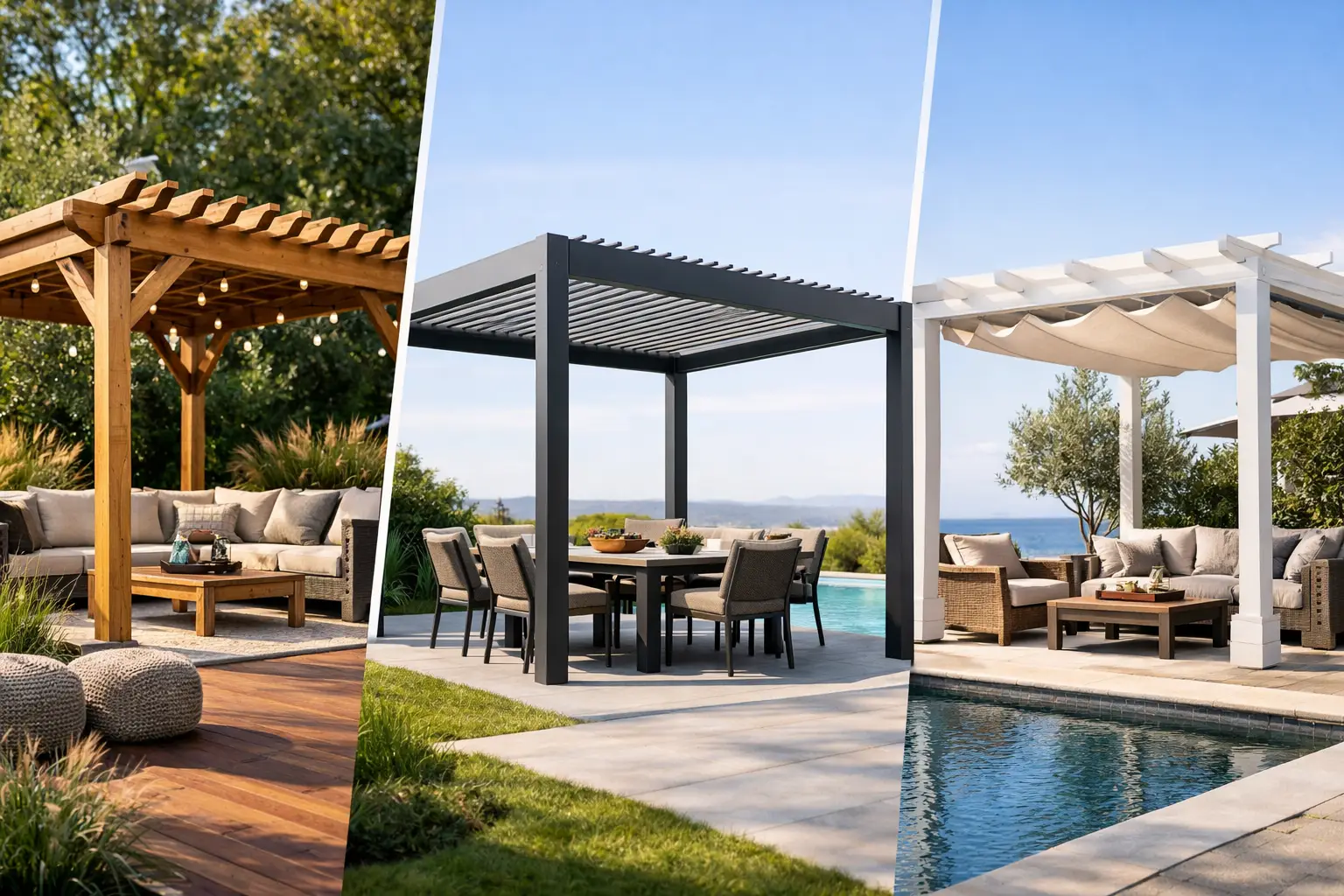
Material is where practical decisions and visual taste meet. Wood pergolas have warmth and character that many homeowners still prefer. Cedar and redwood are especially popular because they resist decay and age with grace. A wood pergola can feel organic, grounded, and at home in a planted landscape. The trade-off is maintenance. Even durable wood usually needs staining, sealing, or periodic care if you want it to keep its best appearance.
Aluminum pergolas are lighter in feel and often easier to maintain. They resist rust, do well in many climates, and usually suit a cleaner, more contemporary look. For homeowners who want structure without a long seasonal maintenance list, aluminum is often the practical answer.
Vinyl pergolas appeal to buyers who want low upkeep and a bright, neat finish. They can work well in classic suburban settings, but some have less visual depth than wood or powder-coated metal. If design is a priority, pay close attention to the profile of the posts and beams, not just the material itself.
Steel is strong and striking, though it may require more attention in humid or coastal environments depending on the finish. It often suits more architectural spaces where a slimmer, sharper profile is part of the appeal.
This is one of the moments where personal style matters. If your garden leans soft, layered, and natural, wood may feel more in tune. If your outdoor space is crisp, minimal, and modern, aluminum or steel may create a cleaner line.
A pergola should not copy your house exactly, but it should speak the same language. On a traditional home, overly industrial framing can feel abrupt. On a modern home with clean edges and large windows, a heavily ornamental pergola may feel out of step.
Look at the recurring shapes already present in your architecture. Are your lines straight and restrained, or more detailed and decorative? Is the palette warm and natural, or cool and minimal? A pergola works best when it echoes those cues without becoming too literal.
Color also changes the result more than people expect. Black or charcoal pergolas can look elegant and graphic, especially against greenery. White feels classic and bright but may read more formal. Natural wood tones tend to soften a patio and blend with planting. There is no universal best option. It depends on whether you want the pergola to stand out as a visual frame or melt gently into the landscape.
At Fensgarden, we often think of outdoor structures the same way we think about interiors: not as isolated pieces, but as part of a composed scene. The pergola, the planter, the paving, the textiles, and the light should feel like they belong to the same story.
When people ask how to choose a pergola, they often focus only on the structure itself. But the experience of a pergola depends on what happens under it and around it. Will you hang lights from the beams? Add outdoor curtains for softness? Train vines across the top? Place a dining table beneath it, or deep lounge seating with layered cushions?
These decisions affect sizing, material, and even installation. A pergola that will support lighting, fans, or climbing plants may need different specifications from one that is purely decorative. If you imagine it becoming the center of outdoor entertaining, think about electricity, nearby storage, and the path from your kitchen to the seating area.
This is also where the pergola starts to feel personal rather than generic. A bare structure can look unfinished. A thoughtfully styled pergola feels inhabited, even when no one is sitting there.
The pergola itself is only one part of the cost. Installation, site prep, anchoring, lighting, furniture, and shade accessories can shift the total significantly. A freestanding pergola on a level patio is one budget scenario. A custom-sized pergola installed over a new deck or integrated into hardscaping is another.
It is usually wiser to buy a pergola that fits your long-term use than to choose the cheapest option and then outgrow it quickly. That does not always mean spending more. It may mean buying a simpler structure with better proportions and better material, then styling it over time.
If budget is tight, prioritize the elements that are hardest to change later: structural quality, correct sizing, and material suited to your climate. Decor, lighting, and accessories can evolve gradually.
A pergola has to do more than look beautiful. It has to stay stable through wind, weather, and regular use. Check whether your site is level, what kind of surface you are anchoring into, and whether local codes or permits apply. In some areas, the size and placement of a pergola can trigger permit requirements, especially if it is attached to the home.
If you are choosing between a freestanding and attached pergola, think about both aesthetics and logistics. Attached pergolas can feel integrated and convenient, especially near the back door. Freestanding pergolas offer more flexibility and can create a destination elsewhere in the yard. One is not better than the other. It depends on how you use your outdoor space and where you want the eye to go.
Professional installation can be worth it when the pergola is large, custom, or part of a broader outdoor design plan. A well-installed pergola feels effortless because the details have already been solved.
A pergola should make outdoor life easier to enjoy, not add another decorative feature that looks lovely and sits empty. If you drink coffee outside in the morning, create a pergola for that hour of the day. If your weekends revolve around grilling and friends staying late into the evening, build around dining, shade, and lighting. If you want a quiet garden retreat, choose scale, material, and planting that support calm rather than spectacle.
Beauty matters. In a well-made outdoor space, beauty is not extra. It is part of what makes people linger. But the most satisfying pergola is one where design and daily life meet naturally.
When you choose with that in mind, the structure does more than fill a patio. It gives the landscape a center of gravity, a place where light, shelter, and living come together with intention.