
Beautiful Gardens, landscaping, art, printing For Your Home And Garden!
Beautiful Gardens, landscaping, art, printing For Your Home And Garden!
Art printed blankets bring warmth, texture, and gallery-worthy style to sofas, beds, and outdoor spaces, with room for personal meaning too.
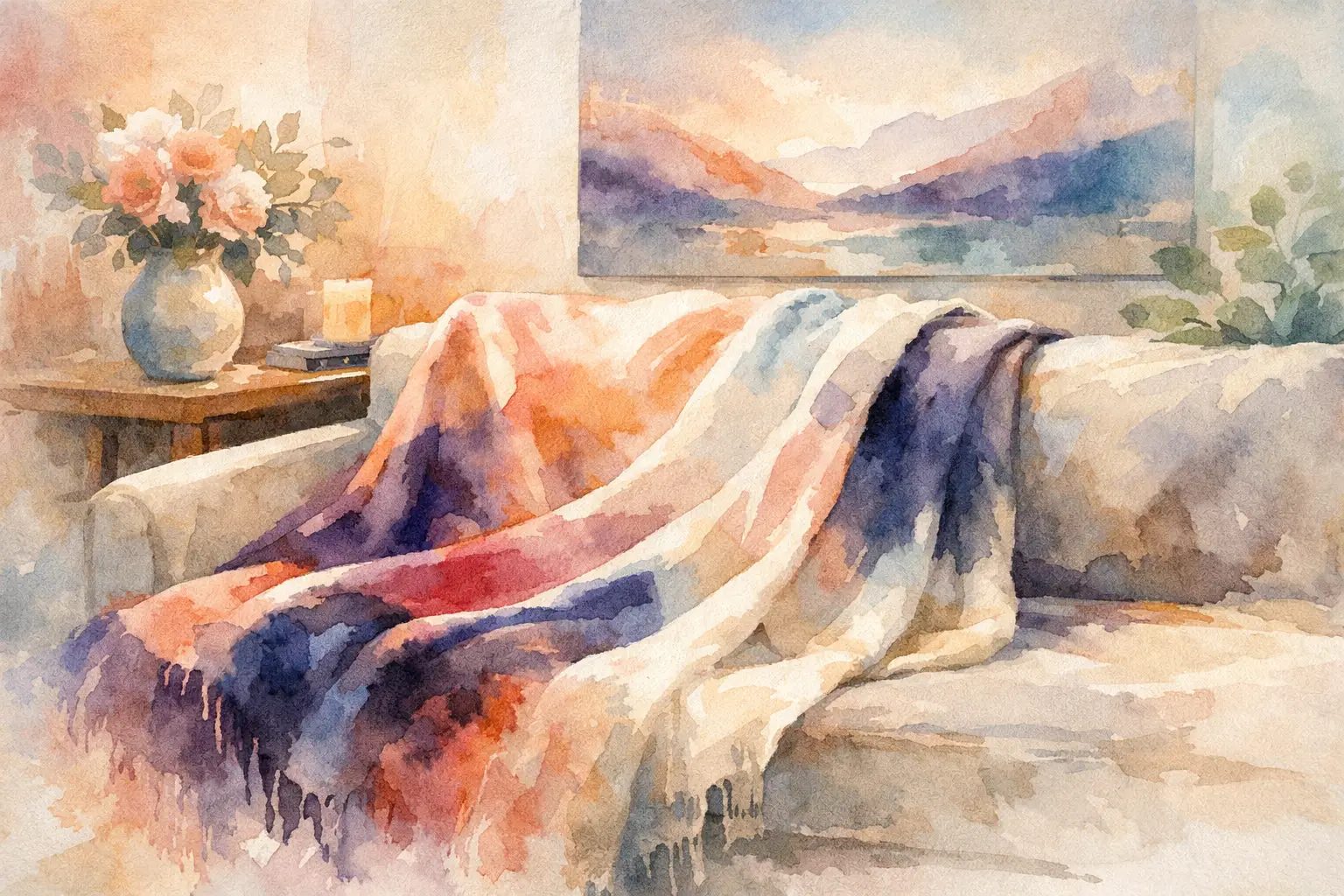
A blanket usually gets chosen for one of two reasons – softness or warmth. The piece that stays in your home for years, though, usually earns its place for a third reason: it changes the feeling of the room. That is why art printed blankets have become more than seasonal extras. They sit somewhere between textile, decor object, and personal statement.
For people who care about interiors, that difference matters. A plain throw can fill space. A thoughtfully designed blanket can give a room a point of view. It can soften a modern sofa, add rhythm to a neutral bed, or bring an outdoor lounge area into the same visual language as the garden around it. When the artwork is handled well, the blanket stops feeling like an accessory and starts reading like part of a curated home.
Not every printed blanket deserves the word art. A surface pattern repeated without intention may add color, but it rarely adds depth. The best art printed blankets begin with composition. They consider scale, negative space, movement, and how imagery will translate once it wraps, folds, and drapes.
That is especially true for nature-led designs and ink-inspired artwork. A branch, mountain line, koi shape, or wash of mist can look refined on fabric when the visual balance is right. Too dense, and the blanket becomes noisy. Too faint, and the art disappears once placed on a chair or bed. Good design lives in that middle ground where the image remains expressive but still functions as part of a room.
Material also changes the effect. On a plush surface, printed art tends to feel softer and more atmospheric. On a tighter weave, details can look more graphic and crisp. Neither is automatically better. It depends on whether you want the blanket to read like a quiet landscape or a more defined design accent.
People who are sensitive to design often resist items that feel mass-produced, even when they are practical. Blankets are a good example. Most homes need them. Few people want them to look generic. Art printed blankets solve that tension because they offer utility without giving up personality.
They also work across styles more easily than many decorative pieces. In a minimal interior, one art blanket can introduce movement without clutter. In a layered, collected room, it can bridge furniture, wall art, and ceramics. In homes that lean natural or garden-inspired, botanical and landscape imagery can echo what is happening outside the window rather than compete with it.
There is also an emotional reason they resonate. Textiles are intimate objects. You touch them, fold them, live with them. When art enters that category, it becomes part of daily ritual rather than something admired only from across the room. That shift is subtle, but powerful. Beauty becomes usable.
A blanket may look beautiful on its own and still feel wrong once it reaches your home. The better approach is to choose it in relation to the space where it will live.
Start with scale. Large, expansive artwork often works best on beds or broad sectionals, where the image has room to breathe. Smaller motifs or repeating compositions tend to suit reading chairs, bench seating, or layered throws at the foot of a bed. If the print is highly detailed, think about viewing distance. Some blankets are meant to be appreciated up close. Others should make sense from across the room.
Color deserves just as much attention. If your interior already has strong material variation – wood grain, stone, woven baskets, linen upholstery – a blanket with a restrained palette can add elegance without creating visual noise. If the room is calm to the point of feeling unfinished, a richer composition can supply contrast. Ink-wash neutrals, moss greens, clay tones, and muted blues tend to have longevity because they feel connected to landscape rather than trend cycles.
Then consider mood. A blanket with misty mountains or brush-painted florals creates a different atmosphere than one with bold abstract geometry. Neither choice is wrong. It depends on whether you want the room to feel grounded, expressive, quiet, or energetic.
There is a reason ink-inspired blankets feel fresh even in contemporary American homes. Traditional East Asian visual language relies on restraint, asymmetry, and suggestion. Instead of filling every inch, it often leaves room for air. On textiles, that can be especially effective.
A blanket is rarely seen fully flat. It folds, gathers, and overlaps. Artwork that depends on perfect symmetry can lose impact in use. Ink painting, landscape motifs, and brush-led compositions often become more beautiful with movement because they are already designed around flow and spacing.
This is where Eastern aesthetics can feel less decorative and more atmospheric. A single branch stretching across a field of color, a mountain silhouette fading into negative space, or a watery wash that looks almost accidental – these images do not shout for attention. They shape the room quietly. For many homes, that kind of presence is easier to live with long term.
At Fensgarden, this design language matters because the goal is not simply to print an image onto a blanket. It is to translate the poetry of water-ink landscapes and nature into a functional textile that still feels contemporary in everyday American interiors.
One reason art printed blankets are such strong gifts is that they can carry both beauty and story. Personalization turns them from attractive objects into keepsakes.
That does not always mean adding a large name across the front. In fact, the most elegant customization is often subtle. A date worked into the composition, a family name placed discreetly, a phrase with emotional meaning, or a custom image developed from a specific landscape reference can preserve the artistic integrity of the piece while making it personal.
For weddings, housewarmings, anniversaries, and holiday gifts, this matters. A personalized blanket still needs to belong in the recipient’s home. If customization overwhelms the art, the blanket can feel novelty-driven and temporary. If handled with restraint, it becomes something people actually display and use.
This balance matters for small businesses too. Branded textiles can easily slip into giveaway territory if the logo dominates. But when branding is integrated into a strong visual concept, the result feels more considered. Boutique hospitality, creative studios, and garden-focused businesses often do better with custom blankets that reflect atmosphere first and branding second.
The obvious places are the sofa and bed, but they are not the only ones. In a reading corner, an art blanket can make a single chair feel intentional. In a guest room, it can act as both comfort layer and decorative accent. In covered outdoor spaces, it adds softness that helps patios and garden lounges feel connected to the home.
Outdoor use does come with trade-offs. A beautiful blanket on a porch or pergola can create a welcoming mood, especially around dusk, but exposure matters. Moisture, direct sun, and frequent dirt will affect how long printed surfaces stay vivid. If the blanket is intended for outdoor living, it helps to think in terms of occasional styling and gentle use rather than constant exposure.
Seasonality also changes placement. In colder months, heavier drape and richer tones feel natural. In spring and summer, lighter palettes and botanical imagery often feel more aligned with the room and garden. Rotating blankets the way you rotate pillows or table linens can refresh a space without major redesign.
Design can catch the eye, but quality decides whether the blanket remains part of your life. This is where shoppers sometimes have to slow down. A striking print on a weak base cloth may look good on screen and disappoint in person.
Pay attention to the hand feel, edge finishing, print clarity, and how the artwork behaves when the blanket bends and folds. Does the image still feel intentional in use? Do colors hold depth, or do they flatten out? Does the material suit the style of the art? Soft, painterly visuals need a textile that complements that softness. Sharper graphic work can support a cleaner finish.
There is always a trade-off between decorative impact and everyday practicality. Some blankets are primarily for display with occasional use. Others are built to be lived with daily. The best choice depends on your habits, your household, and whether you are styling a primary living room, a guest space, or an outdoor nook.
A well-chosen art blanket does something rare. It gives warmth, yes, but it also gives shape to the way a space feels when you walk into it. That is why the right one tends to stay out year-round, folded within reach, looking less like storage and more like part of the life you want your home to hold.





[…] Ink art has fluidity, but interiors need tactility. That is why this style translates so well onto woven blankets, plush towels, textured upholstery, and matte-surface accessories. A printed motif alone can feel […]