Beautiful Gardens, landscaping, art, printing For Your Home And Garden!
Beautiful Gardens, landscaping, art, printing For Your Home And Garden!
Find the best drought tolerant container plants for sunny patios and balconies, with design-led planting ideas that save water and support pollinators.
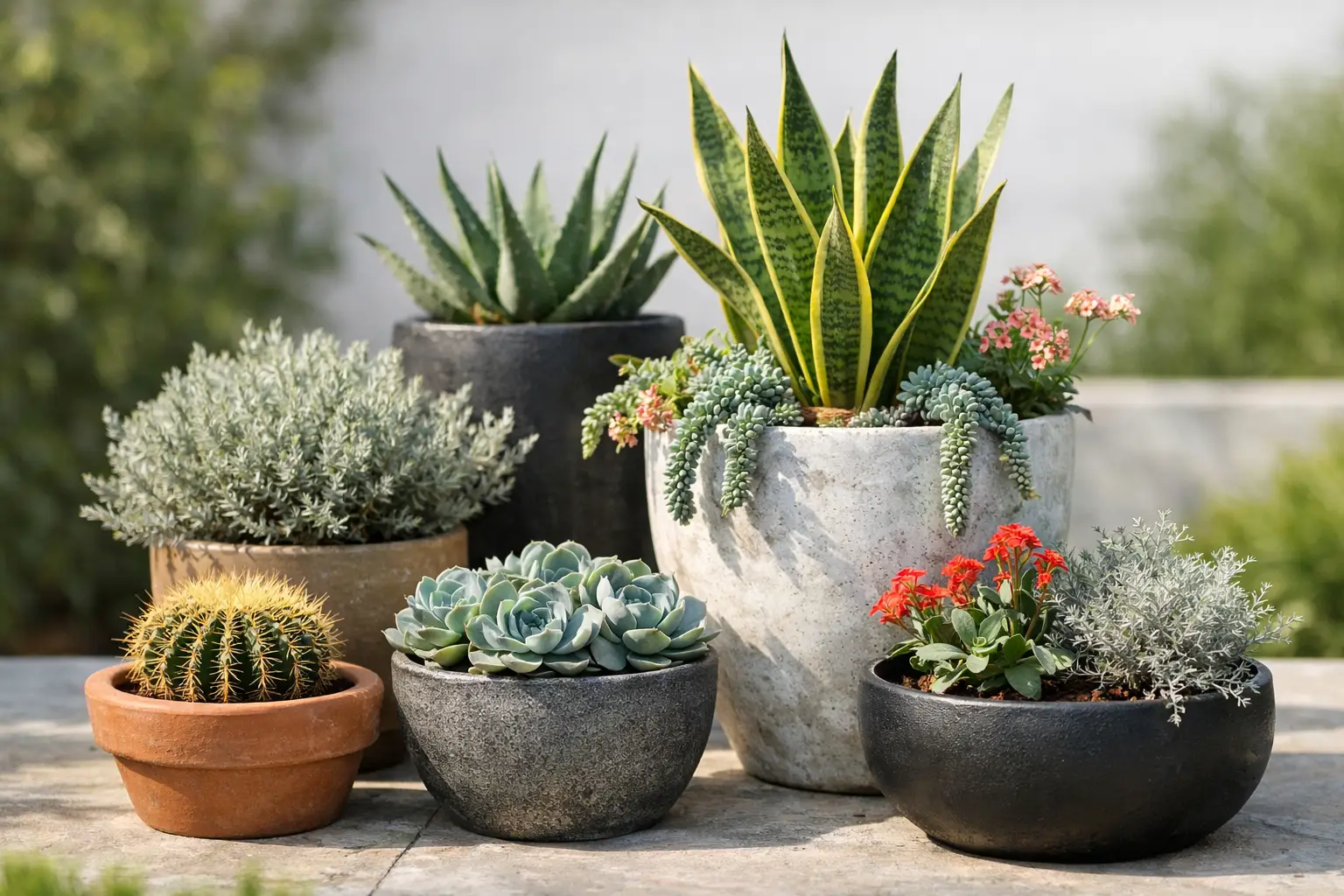
A sunlit patio can feel like the most demanding corner of a home landscape. Heat gathers on stone, wind dries leaves, and pots lose moisture far faster than garden beds. Yet the best drought tolerant container plants turn that challenge into a composed, living scene – one that asks for less water while offering form, scent, movement, and habitat.
The goal is not a collection of plants that merely survive neglect. A well-designed dry container garden should feel abundant: silvery foliage against warm clay, airy grasses moving beside a chair, flowering stems that draw bees through the season. Think of each pot as a small landscape, shaped by sun, soil, vessel, and daily life.
Drought tolerance in a container is different from drought tolerance in the ground. Even plants adapted to dry climates have limited root room in a pot, and a black planter on a south-facing terrace can become intensely hot. The strongest choices have foliage or root systems designed to manage dry spells, but they still need thoughtful planting and occasional deep watering.
Look for plants with gray, felted, waxy, narrow, or succulent leaves. These traits often reduce moisture loss. Plants from Mediterranean landscapes, prairie environments, and dry coastal regions are particularly useful, though native choices should always be considered first when they suit your local climate.
There is a trade-off. A plant that tolerates drought may dislike winter wet, especially in a container with poor drainage. Choose a vessel with drainage holes, use a free-draining potting mix, and avoid letting saucers hold water after rain. Resilience comes from the right conditions, not from withholding care.
Lavender brings fragrance, soft color, and a quiet, structural grace to sunny containers. Its silver-green foliage reads beautifully beside limestone, weathered wood, charcoal metal, or a simple white planter. English lavender is often the better choice for cooler regions, while Spanish lavender offers dramatic tufted flowers in warmer climates.
Give lavender full sun and sharply drained soil. It is not a plant for frequent light watering. Let the upper layer of soil dry, then water deeply at the base. Prune lightly after flowering rather than cutting into old wood.
Rosemary is both an architectural plant and an everyday ingredient. Upright varieties create a vertical accent among softer plantings, while trailing rosemary can spill over the edge of a raised planter or terrace pot. Brush past the foliage and the entire seating area carries its clean, resinous scent.
In cold-winter regions, rosemary may need protection or a bright indoor location during freezes. It prefers sun, excellent drainage, and restraint with water. Pair it with lavender, thyme, or compact sedums for a useful edible composition.
Sedums are among the most forgiving plants for exposed balconies, hot steps, and shallow bowls. Their fleshy leaves store water, and their flower clusters can support late-season pollinators when much of the garden begins to fade. Low-growing varieties create a textured carpet, while upright types add height and dusty pink or wine-red blooms.
They are especially effective in low, wide planters where their spreading habit can be appreciated. Do not overfeed them. Rich soil and excessive irrigation can make stems floppy and reduce the crisp character that makes sedum so appealing.
Hens-and-chicks, or Sempervivum, make small containers feel intentional rather than sparse. Their rosettes resemble miniature botanical sculptures, ranging from cool green to burgundy, copper, and near-black. They are ideal for a tabletop bowl, a stone trough, or a narrow planter where a larger plant would look out of scale.
These succulents need bright sun and fast drainage. Their main weakness is prolonged wetness, not dry weather. In humid climates, place the container where rainwater can move through freely and avoid dense, moisture-retentive mixes.
Blue fescue offers the fine, wind-responsive movement that succulents alone cannot provide. Its compact blue-gray mounds soften the geometry of contemporary planters and echo the pale, brushed marks of an ink landscape. It works particularly well at the edge of a seating area, where afternoon light can illuminate its narrow blades.
This grass likes full sun and moderate watering while it establishes. It may look tired in hot, humid summers, so it is best suited to dry, airy locations rather than humid, shaded courtyards.
For a larger container, feather reed grass creates a vertical screen without feeling heavy. Its upright stems frame a view, add privacy near a dining terrace, and catch low evening light. Unlike many drought-adapted plants, it benefits from more consistent moisture during its first growing season, but established plants handle periodic dryness well.
Choose a generous, stable planter for grasses. A pot that is too small dries rapidly and can make tall stems top-heavy in wind. Cut old foliage back in late winter before fresh growth begins.
Yarrow has the relaxed, meadow-like quality that makes a container arrangement feel alive rather than overly arranged. Its ferny foliage is drought tolerant, and its flat flower heads offer a landing place for beneficial insects. Colors range from soft cream and pale yellow to coral, rose, and deep terracotta.
Yarrow wants sun and room for its roots. Use it in a large container with ornamental grass or a compact shrub, rather than crowding it into a tiny pot. Deadheading can encourage a longer display, although leaving some seedheads into fall adds texture and bird value.
Coneflower brings the expressive, seasonal character of a prairie planting to a patio. Its central cones attract pollinators, and the seedheads can be left standing for birds and winter interest. Compact cultivars are generally the most practical for containers, since tall types may need staking.
Coneflowers are drought tolerant once established, but they need more regular watering during their first season in a pot. In very hot climates, a little afternoon shade can keep flowering stronger. This is a good example of why drought tolerant does not mean water-free.
Blanket flower is made for bright, exposed places. Its red, gold, and orange blooms bring warmth to a dry planting palette, and its long flowering season makes it useful for containers near an outdoor dining area. The daisy-like flowers are also welcoming to pollinators.
Keep the soil lean and well drained. Too much fertilizer encourages leaves over flowers. Where summers are humid and rainy, blanket flower can be short-lived, so treat it as a seasonal accent rather than the permanent backbone of the planting.
In warm regions, lantana delivers nearly nonstop color through heat and dry spells. Its clustered flowers shift between yellow, orange, pink, red, and purple, creating a vivid counterpoint to restrained foliage plants. It is a strong choice for a sunny poolside container or a patio that needs color from early summer into fall.
Lantana is frost tender and can be invasive in some warm areas. Choose sterile cultivars where available and check local recommendations before planting. In cooler climates, it is usually grown as an annual.
Agave gives a container garden a decisive focal point. Its sculptural rosette, often edged with cream, blue, or fine teeth, introduces a sense of permanence even in a small space. One agave in a generous planter can anchor a whole terrace composition, especially when balanced by softer grasses or trailing sedums.
Choose smaller species or compact cultivars for containers. Many agaves have sharp spines, so place them away from paths, children’s play areas, and the edge of outdoor lounge furniture. In climates with freezing winters, move tender varieties to shelter before cold weather arrives.
Thyme is a small but valuable finishing plant. It softens container edges, releases fragrance under a hand or passing footstep, and offers edible leaves for summer cooking. Creeping thyme suits wide, shallow pots, while upright varieties create a neater mound among lavender and rosemary.
It thrives in sun and dry, lean soil. Like lavender, it suffers more from wet roots than from a missed watering. Its modest scale makes it especially useful for tying a collection of larger planters together.
The most successful drought-tolerant containers combine plants with similar needs, not simply similar colors. Put Mediterranean herbs together. Group succulents with sedums and hens-and-chicks. Pair prairie flowers with grasses in a deeper container that can hold more root volume and a little more moisture.
Start with one structural plant, such as rosemary, agave, or feather reed grass. Add a middle layer of flowering yarrow, coneflower, or lavender, then soften the rim with thyme, trailing rosemary, or low sedum. This layered approach feels natural from every angle and avoids the flat, one-note look of a single-species pot.
Container material matters, too. Unglazed terracotta is beautiful and breathable, but it dries quickly in hot, windy weather. Glazed ceramic and powder-coated metal hold moisture longer, while lightweight composite planters are practical for rooftops and balconies. For a quiet, landscape-inspired palette, let foliage do most of the work: blue fescue, silver lavender, deep green rosemary, and the changing tones of sedum can be more lasting than a pot crowded with bright flowers.
Newly planted containers need regular attention while roots settle in. Check moisture a few inches below the surface rather than watering by calendar. When the mix is dry, water slowly and thoroughly until it drains from the bottom, then allow the soil to dry to the level each plant prefers.
A simple drip line on a timer can make low-water gardening far more reliable, particularly for households that travel or manage several outdoor rooms. Keep the system discreet, mulch the soil surface with fine gravel where appropriate, and let the planting remain the visual focus. Fensgarden approaches this balance as a form of lived landscape design: practical systems can sit quietly beneath an artful garden.
Choose a few plants that belong to your climate, give them a vessel generous enough to grow into, and leave room for light, air, and change. Over time, the pot will become more than décor. It will hold scent after rain, visiting wings, and the small daily ritual of stepping outside.