Beautiful Gardens, landscaping, art, printing For Your Home And Garden!
Beautiful Gardens, landscaping, art, printing For Your Home And Garden!
Compare pergola vs gazebo for shade, style, cost, and garden use. Find the outdoor structure that fits your climate, routines, and planting plans well.
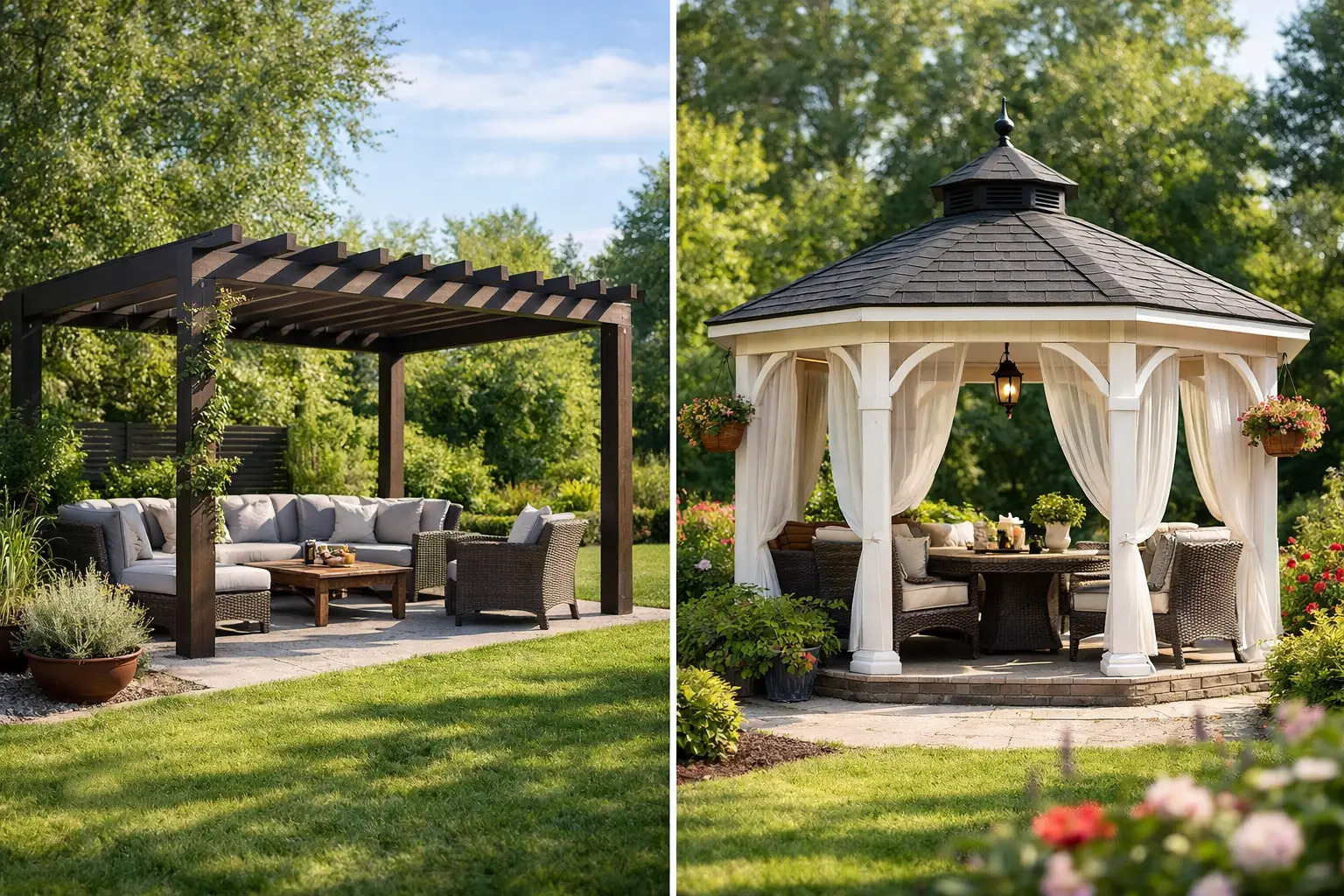
A garden structure changes more than the amount of shade in your yard. It decides where breakfast lingers, where children make rainy-day forts, and where vines find their way upward. In the pergola vs gazebo decision, the best choice is rarely the one that simply looks best in a catalog. It is the one that gives your outdoor space a useful center while respecting its light, plants, weather, and daily rhythm.
For many American homes, the garden is becoming a true outdoor room: part dining area, part retreat, part habitat. A pergola and a gazebo can both create that feeling, but they do it in fundamentally different ways. One frames the sky. The other shelters you from it.
A pergola is an open-sided structure built with vertical posts and an overhead grid of beams or slats. It provides architectural definition and filtered shade rather than full protection. Its beauty lies in the changing pattern of sun, leaves, and shadow across a table, deck, or path.
A gazebo is typically a freestanding, roofed structure with a solid canopy. It may be open on the sides, screened, or partially enclosed. Because its roof is continuous, it offers more dependable shelter from sun and rain and often feels like a small pavilion placed within the landscape.
Think of a pergola as a threshold between house and garden. It is ideal for making a patio feel intentional without closing it off. A gazebo is more like a destination – a defined place to sit, dine, read, or gather even when the weather is less cooperative.
Neither is automatically more luxurious. Scale, material, siting, and the life around the structure matter more than size alone. A modest cedar pergola wrapped in native honeysuckle can feel deeply considered; a well-positioned gazebo beside a rain garden can become the most used room on the property.
A pergola suits homeowners who want a sense of enclosure while keeping the garden visually open. It is especially effective over a patio directly outside the kitchen, beside a pool, or at the edge of a deck where the landscape begins. The open roof preserves long views and allows morning light to reach the space.
This is often the better choice for a planting-led garden. Climbing plants can soften the beams, attract pollinators, and create seasonal character without turning the structure into a sealed container. Consider native clematis, coral honeysuckle, climbing roses, or grapes if you want edible abundance. The right plant should match your climate and your willingness to prune – a fast-growing vine can be romantic in June and demanding by August.
Pergolas also work beautifully with layered shade. A retractable canopy, outdoor curtains, or a well-placed patio umbrella can add comfort when the sun is strongest. This flexibility matters in regions with bright, dry summers, where you may welcome winter sunshine but want relief at midday in July.
There is a trade-off. A standard slatted pergola does not keep rain off the dining table. It can reduce direct sun, but it cannot replace a roof. If your family expects to use the space through frequent showers, a louvered roof or weather-rated canopy may be necessary. Those additions can raise the price and add moving parts that need care.
A pergola is particularly suited to an outdoor dining room, a transition from indoor living to a planted terrace, or a quiet seating area that benefits from gentle shade. It also makes a strong visual frame for a water bowl, sculptural planter collection, or a long table set beneath lantern-like lighting.
Its design language is linear and airy. For a garden inspired by Eastern ink landscapes, choose a dark, restrained frame and allow foliage, stone, and shifting light to supply the softness. The structure should feel like a few deliberate brushstrokes, not a heavy object competing with the planting.
A gazebo earns its place when reliable cover matters more than openness. If you live in a rainy climate, entertain often, or want a protected space away from the house, its solid roof offers a real advantage. You can keep cushions outdoors more confidently, host dinner during a passing shower, or create a shaded retreat for older family members and young children.
Because a gazebo is often freestanding, it can draw people deeper into the garden. This makes it valuable on larger lots, where a patio near the home may not fully use the landscape. Set at the end of a curving path, beside a meadow-style border, or near a small pond, it creates a reason to walk through the garden rather than merely look at it from the back door.
A gazebo can also support more specialized uses. Screens help reduce mosquitoes in humid regions. A hard roof makes it easier to add a ceiling fan, pendant lighting, or a discreet sound system. With thoughtful furnishings, it can become a reading room, an afternoon tea spot, or a place for slow family meals.
The trade-off is visual weight. A gazebo has a stronger footprint and can block views, shade nearby beds, and overwhelm a small yard if it is too tall or ornate. Before choosing one, stand where it would go and mark its dimensions with stakes and string. Look at the view from inside the house as well as from the property line. Good garden design considers what the structure reveals, not only what it covers.
Choose a gazebo for dependable alfresco dining, a sheltered lounge, a poolside refuge, or a garden focal point at some distance from the house. It is often the wiser investment when weather protection is nonnegotiable and your yard has enough room for the structure to breathe.
For a calmer, more contemporary look, avoid overdecorating it. Natural wood, matte metal, warm neutral textiles, and a few generous planters can feel more enduring than elaborate trim. Add a planted edge around the base, but leave access for cleaning, repairs, and airflow.
The practical choice in a pergola vs gazebo comparison often comes down to local climate. In hot, low-rain regions, a pergola can be ideal because it tempers intense light without trapping heat. Add drought-tolerant planting nearby – grasses, salvia, yarrow, lavender, or regionally native perennials – and the area can remain beautiful with less water and maintenance.
In humid or rainy areas, a gazebo’s roof can make outdoor life more predictable. Still, pay close attention to drainage. Water should run away from the structure and the home’s foundation. A roof also creates a dry zone beneath its edges, so nearby plants may need supplemental water even during wet weeks.
Material changes the maintenance equation. Wood has warmth and a natural relationship to garden planting, but it may require sealing or staining depending on the species and exposure. Powder-coated aluminum and steel can offer a cleaner, lower-maintenance profile, though metal may heat up in direct sun. Vinyl is easy to care for but can feel less integrated with a naturalistic landscape unless balanced by abundant planting and textured materials.
Whatever you choose, leave room for growth. Trees mature, borders fill in, and family rituals change. Avoid placing a structure so close to a young tree that future branches will press against the roof, or so tightly against a fence that repairs become frustrating.
A pergola or gazebo should not sit on a bare pad like an afterthought. Let paths, planters, lighting, and planting connect it to the rest of the yard. A gravel path can make a gazebo feel discovered; large containers filled with herbs can make a pergola beside the kitchen immediately useful.
Use lighting with restraint. Low, warm illumination along a path is more inviting than a bright overhead glare. Solar or low-voltage fixtures can make the route safe while protecting the night atmosphere that birds, insects, and people all need. If you add smart irrigation, keep it nearly invisible – it should support healthy planting without making the garden feel engineered.
Furnish for the way you actually live. A pergola used for weekday dinners may need a durable table and stackable chairs. A gazebo intended for restoration may call for two deep seats, a small surface for tea, and textiles that bring softness without demanding constant fuss. Fensgarden approaches outdoor living as a meeting of architecture, planting, and atmosphere: the most memorable spaces are composed, yet never overly controlled.
Before you decide, imagine a normal Tuesday rather than a perfect party. Where will you sit with coffee? Where will wet shoes go after a summer storm? Will the structure support your favorite plants, your local wildlife, and the kind of time you want more of? The answer will lead you to a garden shelter that grows more personal with every season.