Beautiful Gardens, landscaping, art, printing For Your Home And Garden!
Beautiful Gardens, landscaping, art, printing For Your Home And Garden!
This balcony garden layout guide helps you shape a layered, low-maintenance outdoor room with plants, seating, and habitat for daily living each season.
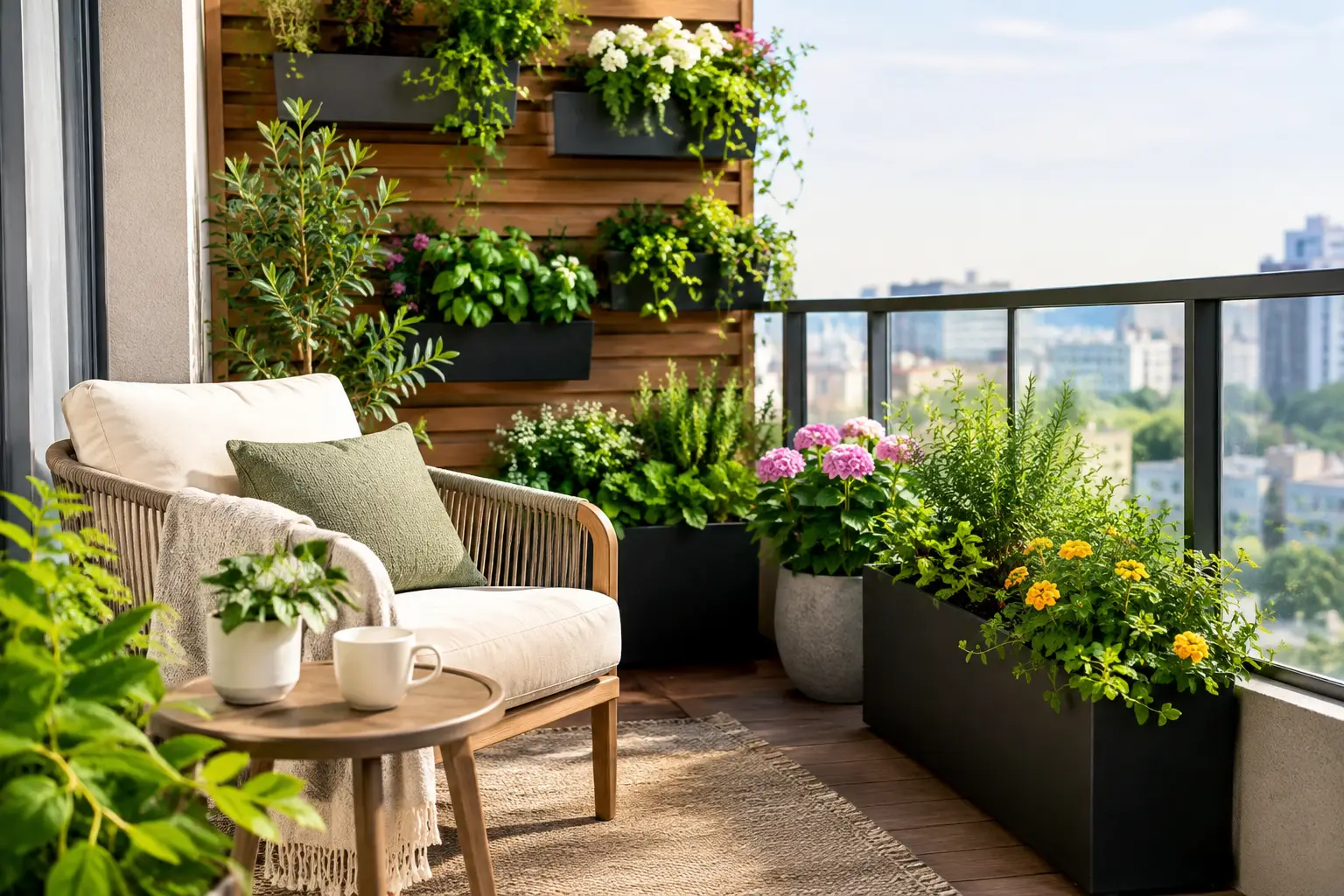
A balcony can hold more life than its square footage suggests. The difference is rarely a matter of buying more pots. It comes from arranging light, movement, planting, and pause with intention. This balcony garden layout guide is for creating a small outdoor room that feels generous: a place for morning coffee, fragrant herbs, visiting pollinators, and the quiet pleasure of watching leaves move in the wind.
For Fensgarden, a well-composed balcony is not a miniature backyard. It is its own landscape, shaped by the architecture around it and the changing conditions of sun, rain, temperature, and city air. Start with the life you want to bring outdoors, then let the layout serve it.
Before choosing a single planter, observe the balcony for several days. Notice where the sun lands in the morning and afternoon, where rain reaches, and which corners stay exposed to wind. A south- or west-facing balcony can support sun-loving edibles and flowering perennials, but pots may dry quickly in summer. A north-facing space may be better suited to ferns, heuchera, hellebores, and shade-tolerant foliage.
Also look down as well as out. Confirm the balcony’s weight limits, drainage points, railing rules, and access routes. Large ceramic planters filled with wet soil are much heavier than they appear. If structural guidance is unclear, choose lighter planters and distribute weight close to a supporting wall rather than concentrating it at the railing.
A successful layout works with constraints instead of trying to decorate over them. Windy upper-floor balconies benefit from sturdy, low-growing plants and substantial containers. Sheltered balconies can hold softer foliage and trailing forms. The goal is not a perfect catalog image. It is a planting that stays beautiful when the weather behaves like itself.
Small spaces become crowded when every wish is given equal importance. Choose one primary use for your balcony: lingering over dinner, growing ingredients, reading after work, or building a green view from the living room. That decision gives the layout a clear center.
If the balcony is mainly for sitting, reserve the best view and the easiest door clearance for a compact chair or bench. Place planting around that moment rather than directly in front of it. If you want to grow food, give the brightest edge to herbs, strawberries, peppers, or compact tomatoes, while keeping a narrow route for watering and harvesting.
Think in three bands: a living edge at the railing, a flexible middle, and a quieter threshold near the door. The railing zone is where plants can soften hard lines and frame the view. The middle should remain open enough to move through, with a small table, folding chair, or an occasional planter that can shift as your needs change. Near the door, keep the transition calm and uncluttered. This makes the interior and exterior feel like one continuous green landscape rather than two separate rooms.
Even the most planted balcony needs breathing room. Aim for a clear path wide enough to carry a watering can and step around a chair without brushing every leaf. On a narrow balcony, use vertical height rather than pushing containers into the walkway. A trellis, wall-mounted support, or tall but narrow planter can create enclosure without sacrificing movement.
This is also where restraint becomes a design tool. One beautifully proportioned planter with layered planting often has more presence than six mismatched small pots. Repetition in material or color brings calm, while variations in leaf shape keep the scene alive.
The most inviting balcony gardens have a sense of foreground, middle ground, and distance. Use plant height to create that effect, but avoid turning the space into a green wall that blocks every view and breeze.
Place taller plants at the back or corners, particularly where you need privacy or want to hide a neighboring wall. Evergreen shrubs, clumping grasses, upright herbs, and compact small trees can provide structure. In the middle layer, use plants with generous texture: salvia, lavender, sedges, dwarf hydrangeas, coleus, or leafy edible greens, depending on your climate and sun. Let a few plants spill over the front of containers, such as creeping thyme, nasturtiums, sweet alyssum, trailing rosemary, or calibrachoa.
Choose plants for more than flowers. Foliage carries the garden through long stretches of the year and makes a small space feel composed even between blooms. Pair broad leaves with fine grasses, silver foliage with deep green, and soft mounds with a few vertical accents. This layered rhythm echoes the depth of an ink landscape: quiet fields, rising lines, and space left deliberately open.
On a balcony, multifunctional planting is practical and generous. Fragrant herbs can season dinner and feed pollinators when allowed to flower. Native flowering plants may support local bees and butterflies while creating a changing palette. Evergreen plants can provide winter form, privacy, and a backdrop for seasonal color.
The best choices depend on your region. Native plants are usually adapted to local rainfall and temperature shifts, but they still need enough root room and reliable establishment watering in containers. For a low-maintenance mix, combine a few climate-adapted anchor plants with seasonal additions rather than replanting every container each month.
Planters define the rooms within a balcony garden. A long trough can create a planted boundary along a railing. Two matching containers can frame a seating area. A single sculptural pot can serve as a visual anchor near the door.
Scale matters. Larger containers hold moisture more steadily and give roots space to develop, making them easier to maintain than tiny pots in hot weather. They also allow a more natural-looking mix of plants. The trade-off is weight, so lightweight composite, fiberglass, or responsibly designed resin planters may be a better choice for elevated balconies.
Keep drainage holes open, raise containers slightly so water can escape, and use saucers only when they will not leave roots sitting in water. Grouping pots by watering needs saves time and reduces loss. Mediterranean herbs, for example, prefer a different rhythm than moisture-loving ferns.
For visual continuity, limit the planter palette to two or three finishes. Earthy mineral tones, charcoal, warm sand, or soft off-white make foliage the focal point. A single artful pattern can add character, especially when balanced by simpler surrounding forms.
A balcony becomes an outdoor room when it offers a reason to stay. This does not require a full furniture set. A weather-resistant chair, a slim bench with hidden storage, or a small café table may be enough. Choose pieces with open legs or lighter visual weight so the floor remains visible and the space feels less compressed.
Lighting should be low and warm. A small lantern, rechargeable table lamp, or discreet outdoor-rated wall light can make plants and faces look inviting after sunset. Avoid harsh overhead brightness. The most restful balcony lighting resembles a late, gentle glow rather than a patio floodlight.
Textiles can extend the season, but select pieces that can be brought inside easily after rain. An artful throw or patterned cushion can introduce the warmth of home while letting the plants remain central. Natural materials, wood tones, woven textures, and water-inspired patterns work especially well beside leafy planting.
A balcony garden should not depend on daily rescue. Use moisture-retentive potting mix, mulch exposed soil with fine bark or gravel where appropriate, and place thirstier plants together. A discreet drip system can be worthwhile for a large collection of containers, especially during travel or heat waves. It is less about gadgetry than preserving a healthy rhythm with minimal effort.
Expect some change. A plant may outgrow its spot, a shade pattern may shift, or a summer storm may damage tender stems. Leave room to edit. Seasonal adjustment is part of the pleasure, not evidence that the original design failed.
Let the first season teach you where the balcony wants to be lush, where it needs shade, and where an empty patch of floor feels most valuable. A garden that grows with your habits will always feel more personal than one finished all at once.