Beautiful Gardens, landscaping, art, printing For Your Home And Garden!
Beautiful Gardens, landscaping, art, printing For Your Home And Garden!
Learn how waterproof outdoor rugs handle rain, sun, and patio life, with material, care, and design choices that keep an outdoor room looking beautiful.
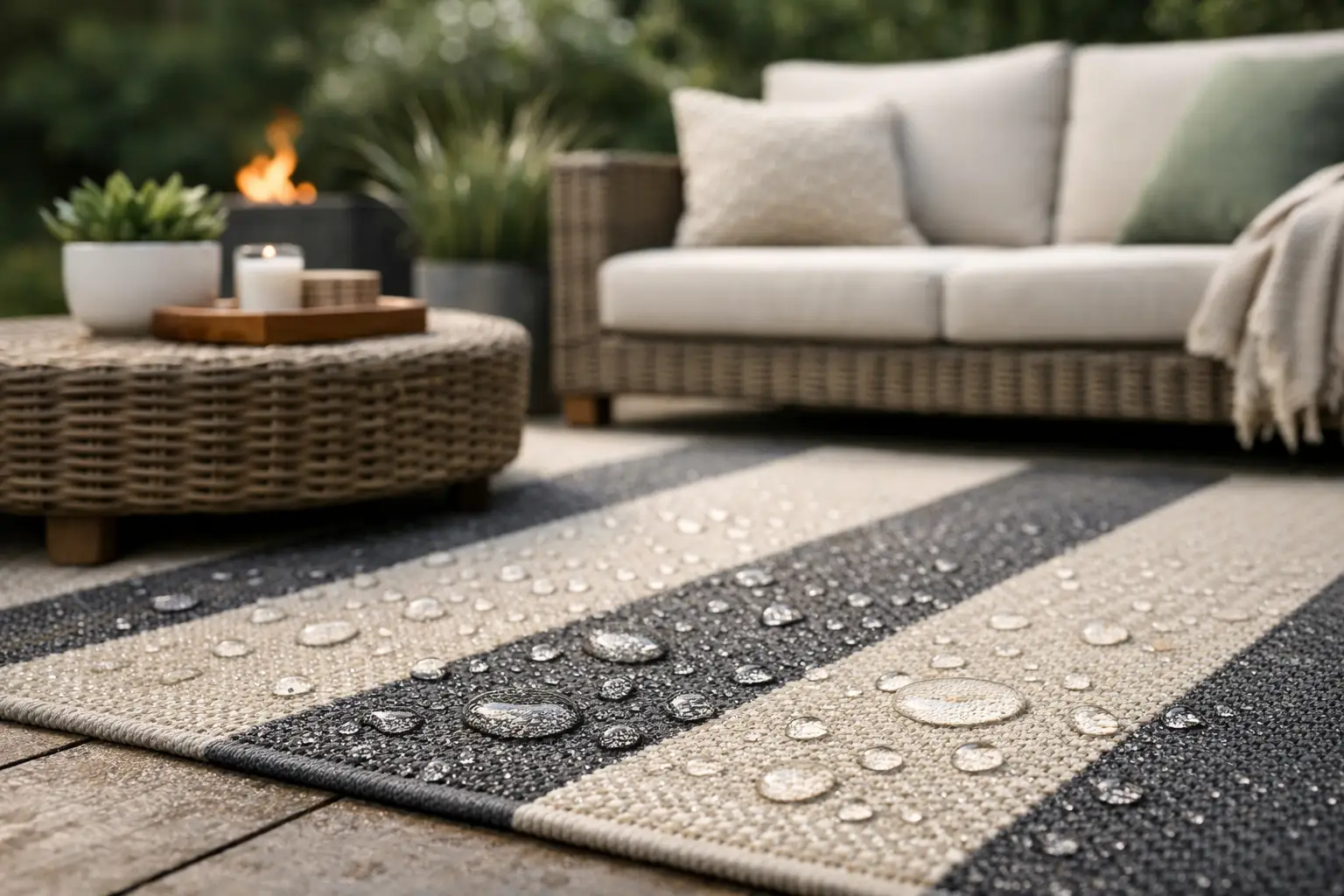
A rug can make a patio feel less like a paved leftover and more like a true outdoor room. It gathers a dining table, softens the edge of a lounge chair, and gives bare feet a more welcoming place to land. But the phrase outdoor rugs waterproof can be misleading. A rug that survives a summer shower is not necessarily one that should sit through weeks of standing water, snowmelt, or a damp winter under a tightly fitted cover.
The best choice is not simply the most weatherproof-looking option. It is the rug whose material, construction, placement, and pattern suit the way your garden actually lives. For a sunlit deck with afternoon rain, that may mean a quick-drying woven polypropylene rug. For a covered porch, you can prioritize a richer texture. For a small balcony where every piece must earn its place, a reversible flatweave can offer flexibility without adding visual weight.
Most outdoor rugs sold as waterproof are better understood as water-resistant and quick-drying. Their synthetic fibers do not absorb much water, so rain tends to pass through the weave or sit briefly on the surface rather than soaking deep into the yarn. This helps prevent the musty odor, sagging, and prolonged dampness associated with natural-fiber rugs.
A truly impermeable rug would need a sealed backing or a nonporous surface. That may sound ideal, but it creates a trade-off: water can become trapped beneath it. On a wood deck, stone terrace, or composite surface, trapped moisture can encourage staining, slippery residue, or mildew around the rug’s edges. Breathability is often more useful than total water blockage.
Think of a good outdoor rug as a rain-ready layer, not a permanent waterproof roof for your patio floor. It should shed water, dry quickly in moving air, resist mold, and be easy to lift when the weather turns persistently wet.
Polypropylene is the material most people need for uncovered patios, poolside seating, and active family gardens. It is solution-dyed, meaning color is built into the fiber rather than printed only on its surface. That gives it strong resistance to fading, moisture, mildew, and many common food spills.
It is also pleasantly low-maintenance. A rinse with a garden hose and a little mild soap is usually enough to refresh it after pollen season or a busy dinner outdoors. The trade-off is feel: even well-made polypropylene does not have the softness or depth of indoor wool. A finer weave and a thoughtful pattern can make it feel more elevated, especially when layered with timber, stone, planting, and warm outdoor lighting.
Many premium outdoor rugs now use yarns made from recycled plastic bottles. These can have a softer, more textile-like hand than traditional polypropylene while retaining strong weather resistance. They are a good fit for a covered veranda or a low-traffic seating area where you want the rug to feel closer to an indoor textile.
Quality varies. Look for a tightly finished weave and clear care guidance, since some softer recycled yarns take longer to dry than a classic flatwoven polypropylene design. If your climate is humid, fast drainage should matter more than plushness.
Polyester can offer vivid printed color and a smooth surface, although it may not resist long-term sun exposure as well as solution-dyed polypropylene. Nylon is durable under foot traffic but is less common for large outdoor rugs and can retain moisture depending on its construction.
Natural materials such as jute, sisal, seagrass, and cotton belong in protected outdoor rooms only. They bring beautiful tactile variation, but they are not candidates for an exposed deck or rain-prone patio. Once repeatedly wet, they can stain, weaken, and harbor mildew. Their beauty is real, but so is their limit.
A rug is part of the landscape, not a product floating outside it. Before choosing color or pattern, notice how your space receives water, sun, leaves, and foot traffic.
On an open patio, select a low-pile or flatwoven rug with no dense backing. Rain can drain through it, and sunlight can reach the surface more evenly as it dries. If the patio is shaded by trees, choose a lighter visual pattern that disguises fallen petals and pollen without making the space feel busy.
For a covered porch, moisture is less intense, but wind-driven rain and morning humidity still matter. A softer recycled-fiber rug can work well here, particularly beneath a seating group. Leave a little visible floor around all sides. This border makes the area feel composed while helping air circulate beneath and around the rug.
At a pool, prioritize traction, drainage, and bleach resistance over elaborate texture. A rug with a small-scale pattern will hide splash marks and bare-foot traffic better than a pale solid. On a balcony, avoid oversized rugs that press against railings, walls, or planters. A narrower border allows rainwater to find the drain and prevents the space from feeling crowded.
The most common outdoor-rug mistake is buying too small. A rug should define a zone rather than sit like a postage stamp under a coffee table. In a lounge arrangement, the front legs of sofas and chairs should rest on it. For a dining area, extend the rug at least 24 inches beyond the table on every side so chairs remain on the rug when pulled back.
This is especially helpful in gardens that mix uses: a table for weekend lunches, a quiet chair for morning coffee, and a planting edge alive with herbs and pollinator-friendly flowers. The rug gives the human gathering space a clear center without competing with the living abundance around it.
Outdoor textiles do not need to imitate indoor decor. They can answer the garden itself. A charcoal or deep indigo rug can ground silvery grasses, pale gravel, and white flowering plants. Sand, clay, and muted olive tones sit naturally beside wood, terracotta planters, and drought-tolerant planting. Soft blue-gray can echo water, sky, and weathered stone.
For Fensgarden, an outdoor rug is most compelling when it carries the quiet movement of a landscape painting rather than a loud seasonal trend. Consider patterns with softened edges, layered mineral tones, or an abstract suggestion of water and mountain forms. They give the patio character while leaving room for changing shadows, foliage, and flowers to remain the main event.
Pattern also has a practical job. A lightly variegated design is forgiving of soil, fallen leaves, and the occasional berry stain. Very pale solid rugs feel airy but demand more frequent cleaning. Very dark rugs can become hot in direct summer sun. The right answer depends on your exposure and habits, not just your preferred palette.
Even the best water-resistant rug benefits from simple seasonal attention. Shake it out or sweep it regularly so grit does not grind into the fibers. Hose it down when needed, using mild soap for spills, then hang it over a railing or lay it in a sunny, airy place until completely dry. Avoid rolling up a damp rug, which is one of the quickest ways to create odor and mildew.
After prolonged rain, lift one corner and check the surface beneath. This small habit matters most on wood decks and in humid climates. If the rug is staying wet for more than a day or two, move it to dry and let the patio breathe.
During winter or an extended wet season, store the rug clean and fully dry in a ventilated location. Folding or rolling is fine once moisture is gone. A rug pad designed for outdoor use can add grip and cushioning, but choose an open-grid style that allows drainage rather than a solid pad that holds water.
The goal is not to make a garden behave like an indoor room. Rain, wind, pollen, and changing light are part of what makes outdoor life restorative. Choose a rug that accepts those conditions gracefully: one that dries after weather, supports the way you gather, and brings a little visual calm between the architecture of the home and the living texture of the garden.
When it is well chosen, an outdoor rug does more than protect bare feet. It creates a place worth returning to after the rain has passed.