Beautiful Gardens, landscaping, art, printing For Your Home And Garden!
Beautiful Gardens, landscaping, art, printing For Your Home And Garden!
Create nature inspired patio decor with layered textures, soft color, and artful outdoor pieces that make your space feel calm, personal, lived.
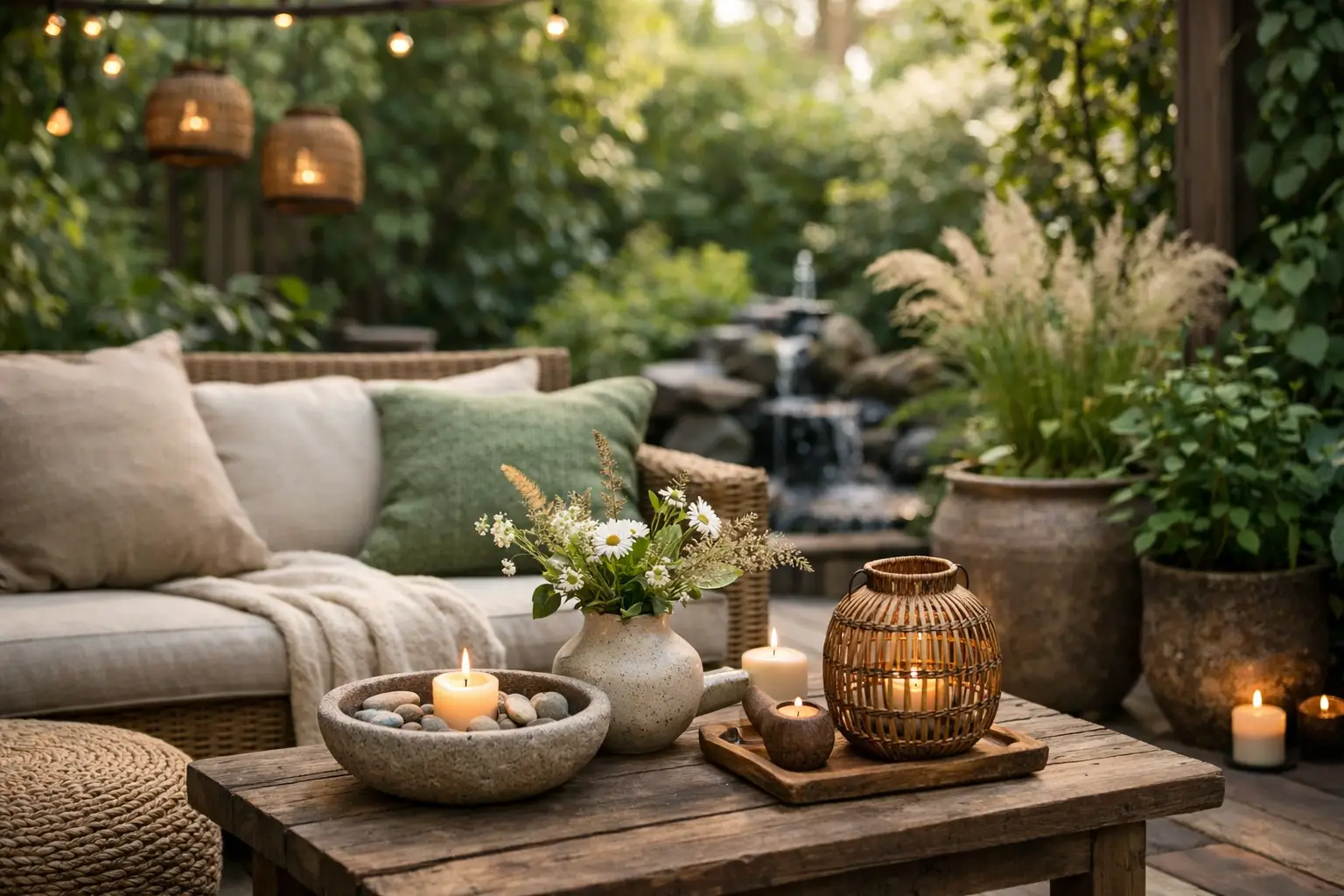
A patio starts to feel right when it stops looking staged. The chair is angled toward the late afternoon light, a throw is close enough to reach when the air cools, and a planter softens the hard edge of stone or wood. Nature inspired patio decor works best in that in-between space – not overly themed, not too polished, but grounded in texture, plant life, and a sense of quiet rhythm.
For design-minded homeowners, this style has real staying power because it is less about buying a matching set and more about shaping an atmosphere. The goal is not to recreate a forest on a deck or turn every surface green. It is to let outdoor living feel connected to the landscape around it, whether you have a compact city balcony, a suburban patio, or a wide garden terrace.
The phrase can be interpreted too literally. Many patios labeled natural end up crowded with leaf prints, faux vines, and rustic signs that flatten the idea into a predictable look. A better approach is to think like a landscape designer. Nature is not only motif. It is material, proportion, movement, shadow, and restraint.
That might mean weathered wood beside matte ceramic, cushions in moss, sand, or stone tones, and textiles with botanical or ink-wash patterns that feel artistic rather than decorative for decoration’s sake. It can also mean leaving visual breathing room. A patio with fewer, better-chosen elements often feels more natural than one filled with accessories.
There is also a useful distinction between organic and rustic. Organic design leans into softness, irregularity, and calm. Rustic can be beautiful too, but it often brings heavier textures and a more obvious farmhouse language. If your taste runs modern, minimal, or East-meets-West, an organic direction usually feels more refined.
The strongest patios do not ignore their surroundings. They respond to them. If your yard has mature trees, deep shade, and layered planting, your decor can be richer and moodier. If the space gets full sun and sits beside pale gravel or concrete, lighter tones and crisper shapes usually make more sense.
Look at the colors that already exist outside your door. Olive foliage, warm cedar fencing, gray stone, dry grasses, terracotta pots, and seasonal blooms all offer cues. Pulling from those tones makes the patio feel settled, as if it belongs where it is. This is one reason nature inspired patio decor often feels more expensive than it is – the palette looks coherent because it is borrowed from the site itself.
Regional climate matters too. In humid areas, dense fabrics and overly layered styling can feel heavy. In dry climates, they may feel welcoming. Wind, sun exposure, and maintenance level should shape your choices just as much as aesthetics. Beautiful patios fail when every element demands more care than the owner wants to give.
Color matters, but materials carry more emotional weight outdoors. They age, catch light, and change with the seasons. A natural patio palette usually comes alive through wood, ceramic, linen-look textiles, powder-coated metal, rattan, stone, and concrete.
The key is contrast with control. If everything is rough, the space can feel blunt. If everything is smooth, it can feel flat. Pair a clean-lined metal chair with a woven seat. Set a glazed planter near raw wood. Add a printed outdoor blanket or pillow with painterly movement to soften structured furniture.
This is where artistic pattern can do something subtle and memorable. Instead of loud tropical prints, consider motifs that echo reeds, mountains, water, branches, or cloud-like washes. Eastern ink aesthetics work especially well here because they suggest nature without over-explaining it. The result feels calmer and more collected than a literal leaf-on-leaf scheme.
Hard surfaces dominate most outdoor spaces, so textiles do a lot of emotional work. They absorb visual sharpness, introduce color gently, and make the patio feel inhabited rather than arranged. A single throw over the back of a lounge chair, a pair of outdoor cushions, or a folded towel near a bench can shift the mood immediately.
This is also where personality enters the space. Furniture often needs to stay practical and neutral because of cost, durability, or size. Textiles can be more expressive. A nature-based print in soft brushwork, a blanket with earthy tonal variation, or a towel in a landscape-inspired palette brings artistry without committing the whole patio to one statement.
There is a trade-off, of course. Outdoor fabrics need to handle sun and moisture, but the most rugged materials are not always the most beautiful to touch. For many people, the best solution is a layered mix: durable base cushions outside full time, with more artful pieces brought out when the patio is in use. That balance keeps the space elevated without asking every item to perform like commercial furniture.
A patio with plants around the edges can still feel bare if the greenery does not help define the space. Think of planters as architectural elements. A tall container can create privacy, a low bowl can calm a coffee table, and a row of grasses can make a dining zone feel held.
Varying height matters more than sheer quantity. One sculptural planter with real presence often does more than six small pots scattered without intent. The same goes for plant selection. Choose forms that contribute something visually even when not in bloom – fine grasses, trailing herbs, upright reeds, small trees, or broad-leafed foliage depending on your climate and style.
If you love a more artistic patio, keep the planters themselves in conversation with the furniture. Matte black, sand, weathered white, soft celadon, and clay all work beautifully with natural palettes. Overly shiny or highly saturated pots can interrupt the mood unless the whole design is built around that energy.
The most overlooked element in patio design is atmosphere after sunset and relief during bright afternoon hours. Nature inspired patio decor is not only what you place in the space. It is also how the space filters light.
A soft-toned umbrella, a pergola, or a light fabric canopy changes the experience of sitting outdoors. It creates shelter, but it also adds a layer above eye level, which makes the patio feel complete. In the evening, lighting should be warm and low. Think less floodlight, more glow. Lanterns, discreet string lighting, and small table lamps can bring intimacy without making the space feel theatrical.
If your patio is compact, this matters even more. Light can expand or flatten a small space fast. Too much brightness feels exposed. A few gentle sources create depth, shadow, and softness – qualities that echo the natural world better than harsh uniform illumination ever will.
One of the quickest ways to lose the elegance of a natural patio is to overstate the concept. Too many signs, too many faux-weathered objects, too many matching botanical prints, and suddenly the space feels merchandised. Real calm comes from editing.
A good rule is to choose two or three anchors and let the rest support them. Maybe that is a beautiful umbrella, a group of planters, and a textile with artistic natural pattern. Maybe it is a wood bench, outdoor lighting, and a restrained color story. Once those are in place, you often need less than you think.
For people who want the patio to feel distinctive, customization can be the missing piece. Personalized accents, especially those rooted in art rather than novelty, make the space feel authored. Fensgarden approaches outdoor living this way – not as a set of generic seasonal pieces, but as a curated extension of the home, where garden forms, ink-inspired imagery, and practical objects can sit together naturally.
The best outdoor spaces are the ones you keep using. That sounds obvious, but it changes how you decorate. Beauty matters, yet comfort, storage, washability, and flexibility matter too. If the throw is too precious to bring outside, if the chairs are beautiful but rigid, or if every cushion must be rushed indoors at the first cloud, the patio may photograph well and live poorly.
A personal patio usually has a slightly imperfect, collected quality. It reflects what restores you. That may be the feel of natural fibers, the sight of planting in loose layers, or the quiet of a muted palette with artwork woven into everyday objects. Nature inspired patio decor is most convincing when it feels less like a style decision and more like a way of noticing what you want to be surrounded by.
Start there. Choose pieces that echo your landscape, give yourself room to edit, and let art and utility share the same seat. A patio does not need more things to feel finished. It needs the right mood, held gently enough that you will want to return to it tomorrow.