Beautiful Gardens, landscaping, art, printing For Your Home And Garden!
Beautiful Gardens, landscaping, art, printing For Your Home And Garden!
Find the best patio umbrella for wind with smart tips on canopy shape, frame strength, bases, and design trade-offs for safer outdoor shade.
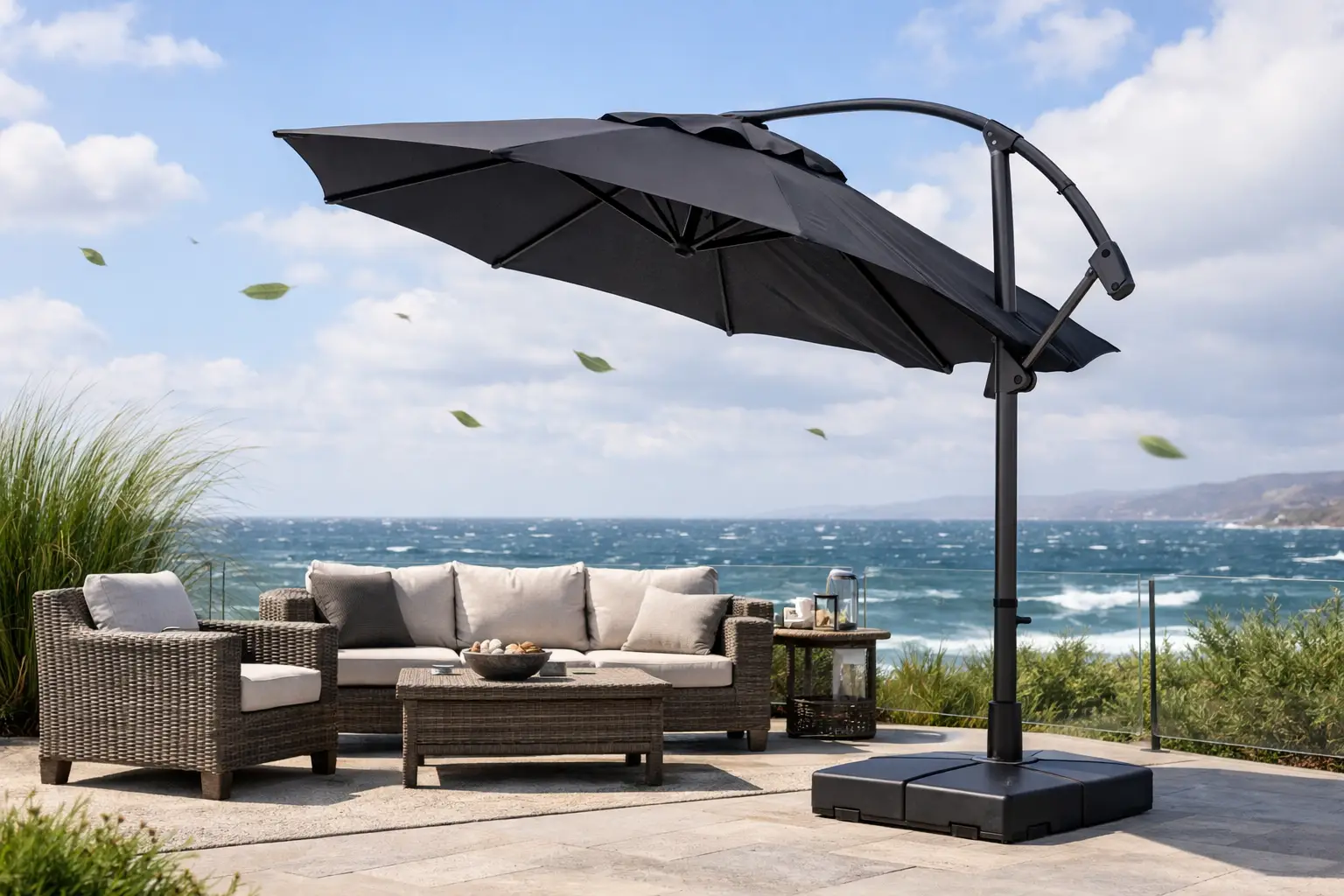
A patio umbrella looks calm right up until the first strong gust turns it into the most dramatic object in the yard. If you are shopping for the best patio umbrella for wind, the real question is not just which one looks beautiful over a dining set. It is which one can hold its line when the weather shifts, without making your patio feel heavy, clunky, or overbuilt.
For design-minded outdoor spaces, that balance matters. An umbrella should soften the hard edges of stone, wood, and metal. It should create shade that feels light, almost architectural. But wind changes the buying criteria fast. Suddenly, proportion, venting, frame material, and base weight matter as much as color and silhouette.
There is no single umbrella that wins in every backyard, rooftop, or poolside setup. Wind behaves differently depending on exposure, surrounding walls, nearby trees, and how open your landscape is. A courtyard with partial shelter can handle a more refined, decorative umbrella than a coastal deck or a wide, uncovered patio in a windy suburb.
That said, the best patio umbrella for wind usually shares a few traits. It has a vented canopy so air can move through instead of pushing against a solid surface. It has a sturdy frame, often aluminum, fiberglass, or a reinforced steel structure. It has a base heavy enough for the canopy size, and ideally a shape that does not create unnecessary drag.
The word “wind-resistant” can be misleading. No patio umbrella should stay open in severe wind, and no honest brand should suggest otherwise. A better way to think about it is daily resilience. You want an umbrella that can handle normal breezes and occasional stronger gusts without rattling, bending, or feeling one storm away from failure.
Many people shop by diameter first. That makes sense if you are trying to shade a dining table or lounge area, but canopy shape affects wind performance more than most buyers expect.
Round umbrellas often behave better in wind than large rectangular ones because they present a softer profile. Air tends to move around them more evenly. Square and rectangular umbrellas can cover furniture more efficiently, which is useful for long tables or sectional seating, but they also create broader flat surfaces for gusts to catch.
This is where trade-offs become real. If your space is moderately windy, a slightly smaller round umbrella may outperform a larger rectangular one, even if the larger size looks better on paper. In a sheltered patio, the reverse may be fine. Good outdoor design is never just about maximum coverage. It is about how form behaves in place.
A vented canopy is one of the clearest signs of a wind-conscious design. The top vent allows heat and air to escape, reducing the pressure building beneath the umbrella. That does not make the umbrella invincible, but it can make the difference between a steady structure and one that shudders with every gust.
Single vents are common and useful. Double-vented designs can offer even better airflow, though the quality of construction matters more than the number of openings alone. Poor stitching or weak fabric around the vent can become a failure point if the umbrella is under repeated strain.
When wind hits, some umbrellas resist by brute weight and stiffness. Others survive by flexing slightly and returning to form. The best choice depends on your environment.
Aluminum frames are popular for a reason. They are lighter than steel, resist rust well, and can look clean and modern. A well-made aluminum umbrella is often a smart fit for most homeowners because it balances strength, maintenance, and visual simplicity.
Fiberglass ribs are especially valuable in windy conditions because they flex rather than snap. If you live in a coastal area or somewhere with frequent gusts, fiberglass can be worth prioritizing. It may not always have the handcrafted warmth of wood or the visual heft of steel, but it performs well when conditions are less predictable.
Steel frames are strong, though they can be heavy and may require more vigilance around rust if the finish gets damaged. Wood umbrellas have undeniable beauty and can feel especially at home in a garden setting, but for consistently windy spaces they are not always the first choice. Wood can age gracefully, yet it is generally less forgiving than fiberglass and often heavier to manage.
This is one of the biggest decisions buyers make. Center pole umbrellas are typically better for wind than cantilever designs. The structure is simpler, more balanced, and easier to stabilize. If wind is your top concern, a center pole model usually gives you more peace of mind.
Cantilever umbrellas offer a cleaner, more open space underneath and can feel more elegant over lounges or conversation areas. They are visually appealing because the support sits off to the side, but that offset design creates more leverage in wind. A high-quality cantilever can still work in moderate conditions, especially with a very heavy base, but it usually asks for more caution.
If your patio is exposed and breezy most afternoons, the stylish answer may not be the practical one. Sometimes the most graceful outdoor choice is the one that respects the site.
A beautiful umbrella with an undersized base is a bad pairing. The base is part of the engineering, not an afterthought. For wind, the right base often matters as much as the umbrella itself.
Heavier is generally better, but weight should match canopy size and umbrella type. A small market umbrella may perform well with a moderate freestanding base, especially if it sits through a patio table. A large cantilever requires much more ballast and often relies on weighted plates or a dedicated fillable base system.
It is also worth paying attention to footprint and material. Resin bases can work well when properly filled, while steel and concrete options often feel more secure from the start. If your patio surface is uneven, even a heavy base may wobble, which introduces movement that wind can amplify.
Outdoor fabric is often discussed in terms of UV protection and color retention, but in windy conditions, fabric tension and construction matter too. A canopy that fits tightly over the frame tends to behave better than one that sags or flaps excessively.
Look for durable solution-dyed acrylic or other performance outdoor fabrics with strong stitching and reinforced stress points. Thin, low-grade polyester may be affordable, but it can wear faster under constant motion and sun exposure. Once fabric begins to stretch or fray, the umbrella becomes less stable and less attractive.
For design-focused shoppers, this is good news. Better fabric usually looks better as well. The drape is cleaner, the color is richer, and the canopy keeps its shape longer.
A wind-friendly umbrella should not feel like a piece of safety equipment dropped into an otherwise thoughtful patio. It still needs to belong in the landscape.
Neutral tones are often the easiest fit in outdoor settings because they let planting, furniture, and surrounding architecture lead. But if your patio is intentionally expressive, a deeper green, muted terracotta, or ink-like charcoal can create a more composed, artful atmosphere. At Fensgarden, we tend to see outdoor living as an extension of the home’s visual language, not a separate category of utility products.
The finish on the frame matters too. Matte metal reads more refined than overly glossy surfaces. Clean lines tend to age better than fussy details. And if you know you will close and store the umbrella regularly, choose a crank or tilt mechanism that feels solid in the hand. Convenience shapes habits, and habits affect longevity.
If you want the best patio umbrella for wind in most residential settings, a vented center pole umbrella with an aluminum frame, fiberglass ribs, performance fabric, and a properly sized heavy base is the safest all-around bet. It is not the most dramatic option, but it often gives the best mix of stability, durability, and visual restraint.
If your area is only occasionally breezy and you care deeply about open sight lines, a premium cantilever can still be a good choice, as long as you accept the trade-off. You will need a heavier base, more careful placement, and a stricter habit of closing it when conditions change.
If your patio gets regular strong wind, size down. This is one of the least glamorous and most useful decisions you can make. A slightly smaller umbrella that stays steady is far better than a large one you never trust enough to use.
The right umbrella should make outdoor life feel easier, calmer, and more intentional. When wind is part of your landscape, the smartest choice is rarely the flashiest one. It is the one that understands the weather and still leaves room for beauty.