Beautiful Gardens, landscaping, art, printing For Your Home And Garden!
Beautiful Gardens, landscaping, art, printing For Your Home And Garden!
Find gifts inspired by Chinese painting that bring ink-wash calm to patios, gardens, and everyday rituals, with beauty made for use, not display alone.
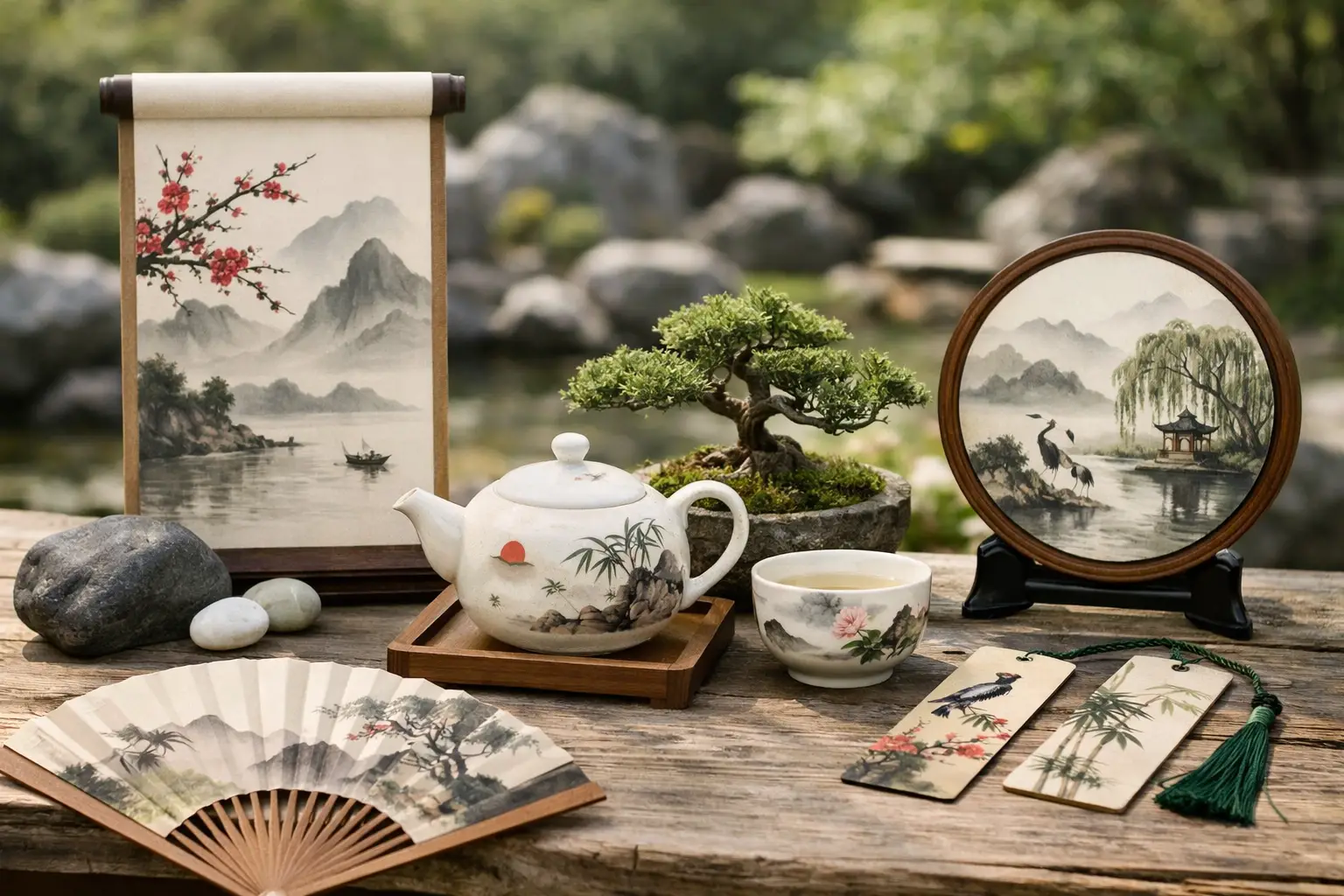
A garden gift should not disappear into a drawer after the celebration. The best gifts inspired by Chinese painting carry a sense of place outdoors: mist lifting from a mountain ridge, the spare line of a branch, a lotus opening across still water. They make an ordinary patio chair, picnic, or early-morning watering ritual feel considered without making the space feel staged.
For households building gardens as lived-in outdoor rooms, this kind of gift has unusual staying power. It connects art to practical moments – drying off after a swim, wrapping up by the fire pit, setting down a drink beside the herb bed – while leaving room for plants, weather, and family life to take the lead.
Traditional Chinese painting is not simply decoration applied to an object. Its visual language is built around relationship: empty space and expressive marks, distant mountains and nearby stones, water and air, movement and stillness. A small ink-wash landscape can suggest a vast horizon because it does not try to fill every inch.
That restraint works beautifully in gardens that are already rich with life. A pollinator border has changing color and motion. A vegetable planter is full of texture. A patio used for meals, reading, and children’s projects gathers its own visual energy. Art inspired by ink painting gives the eye a place to rest rather than competing with every bloom.
It also suits a more resilient approach to outdoor living. Many American gardens are moving away from thirsty, tightly controlled displays toward drought-tolerant planting, native species, and layered habitats for birds and beneficial insects. The imperfect, seasonal character of brushwork feels at home beside seed heads, rain-darkened paving, and plants allowed to grow into their natural forms.
The strongest artful gifts are not necessarily the most ornate. Start with how the recipient actually uses their home and garden. A keen gardener who is outside from spring through fall needs a piece that can handle regular washing and sunlit afternoons. A design-conscious apartment dweller may value a versatile textile that moves from balcony chair to beach day. A family that hosts often may prefer something that makes a shared outdoor space more inviting.
A premium towel with an ink landscape, bamboo, lotus, or plum blossom motif is an easy gift because it serves several roles. It can travel to the pool or beach, hang near an outdoor shower, line a chaise lounge, or become a soft layer for a garden picnic. The pattern adds character, but the value is in the daily use.
Look for a print with visible depth rather than a flat, overly literal image. Soft washes of charcoal, mineral blue, moss green, and warm stone tend to sit naturally among timber, terracotta, and planted containers. If the recipient has a small garden, a lighter composition with generous open space can prevent the patio from feeling crowded.
There is a practical trade-off here. A pale towel feels airy and refined, but it may show potting soil, sunscreen, and muddy paw prints more quickly. A deeper ground color or layered brush texture is often the wiser choice for a busy family garden.
An art-printed blanket is a gift for people who believe the patio should not close the moment the temperature drops. Drape it over a porch swing, keep it in a covered basket by the fire table, or carry it to an evening concert in the park. A mountain-and-water composition is especially fitting: it gives a cool evening a sense of quiet shelter without turning the setting into a themed space.
For an outdoor room, scale matters. A large blanket with one broad landscape gesture can anchor a sectional or daybed. In a compact balcony nook, a smaller throw with a close-up botanical detail – reed leaves, chrysanthemums, or a flowering branch – often feels more proportionate.
A blanket is also a thoughtful gift for the gardener who rarely buys something just for themselves. It acknowledges that gardening is not only about tending plants. It is also about pausing long enough to watch light change across them.
Planters are ideal for a recipient who sees every threshold, balcony, or side yard as a chance to grow something. A painterly surface can frame the plant without overpowering it, especially when the design takes cues from restrained ink lines, river stones, or distant topography.
Choose the planting purpose before choosing the pattern. For culinary herbs, a planter placed close to the kitchen door is more useful than a decorative vessel hidden at the back of the yard. For native grasses and flowering perennials, a larger container gives roots more room and holds moisture longer. For a sunny balcony, consider a lighter-weight option that is easy to reposition as conditions change.
The most lasting pairing is often an artful planter and a useful plant: rosemary for cooking, mint for summer drinks, echinacea for pollinators, or a compact berry variety for family picking. The gift then becomes a small, growing ecosystem rather than a fixed object.
Some gifts are less about planting and more about making people want to stay outside. Consider an ink-art cushion, a portable picnic layer, a garden stool, or a textile made for a shaded reading corner. These pieces work well for hosts, but they are equally meaningful for someone creating a quiet recovery space after work.
The key is to match the gift’s visual energy to the recipient’s architecture. A contemporary home with black-framed doors and pale concrete can carry stronger black brush marks and abstract mountain forms. A cottage garden with weathered wood, climbing roses, and mixed planting may call for softer botanical washes. Chinese painting has many traditions; not every gift needs a dramatic monochrome landscape.
A meaningful gift can be inspired by Chinese painting without treating a living artistic tradition as a generic exotic motif. Avoid products that scatter random calligraphy-like marks, dragons, or symbolic imagery with no context. If characters appear, their meaning and direction should be accurate. If a design references a specific subject, such as the Four Gentlemen – plum, orchid, bamboo, and chrysanthemum – it should do so with respect for the plant’s long artistic and cultural associations.
This does not mean a garden gift needs to feel formal or museum-like. It means the design should be intentional. A contemporary interpretation can be fresh, abstract, and highly personal while still honoring the original art’s attention to observation, balance, and the natural world.
At Fensgarden, that translation begins with landscape thinking: art is considered alongside light, planting, material, and the rituals a space supports. A pattern is not there to make a garden look more decorative. It is there to make the experience of being in the garden more memorable.
A small amount of thought in the presentation turns a useful object into a personal gesture. Pair a garden blanket with a handwritten note inviting the recipient to take one unhurried evening outdoors. Give an art-printed towel with a packet of regionally appropriate native seeds, if the recipient has the space and interest to plant them. Place a planter around a young herb or perennial that suits their climate and sun exposure.
Skip the temptation to add too many themed extras. One well-chosen object and one living or handwritten element usually feel more generous than a crowded gift basket. The visual language of ink painting offers a good rule: leave enough empty space for the recipient to make the gift their own.
The most rewarding gifts inspired by Chinese painting do not ask a garden to stay perfect. They look good beside new spring growth, high-summer gatherings, fallen leaves, and the quieter geometry of winter branches. Choose something made to be touched, used, washed, and brought outside again – then let the changing garden complete the composition.