Beautiful Gardens, landscaping, art, printing For Your Home And Garden!
Beautiful Gardens, landscaping, art, printing For Your Home And Garden!
Our outdoor sofa review explains how to choose lasting comfort, weather-smart materials, and a shape that lets your patio feel alive year-round.
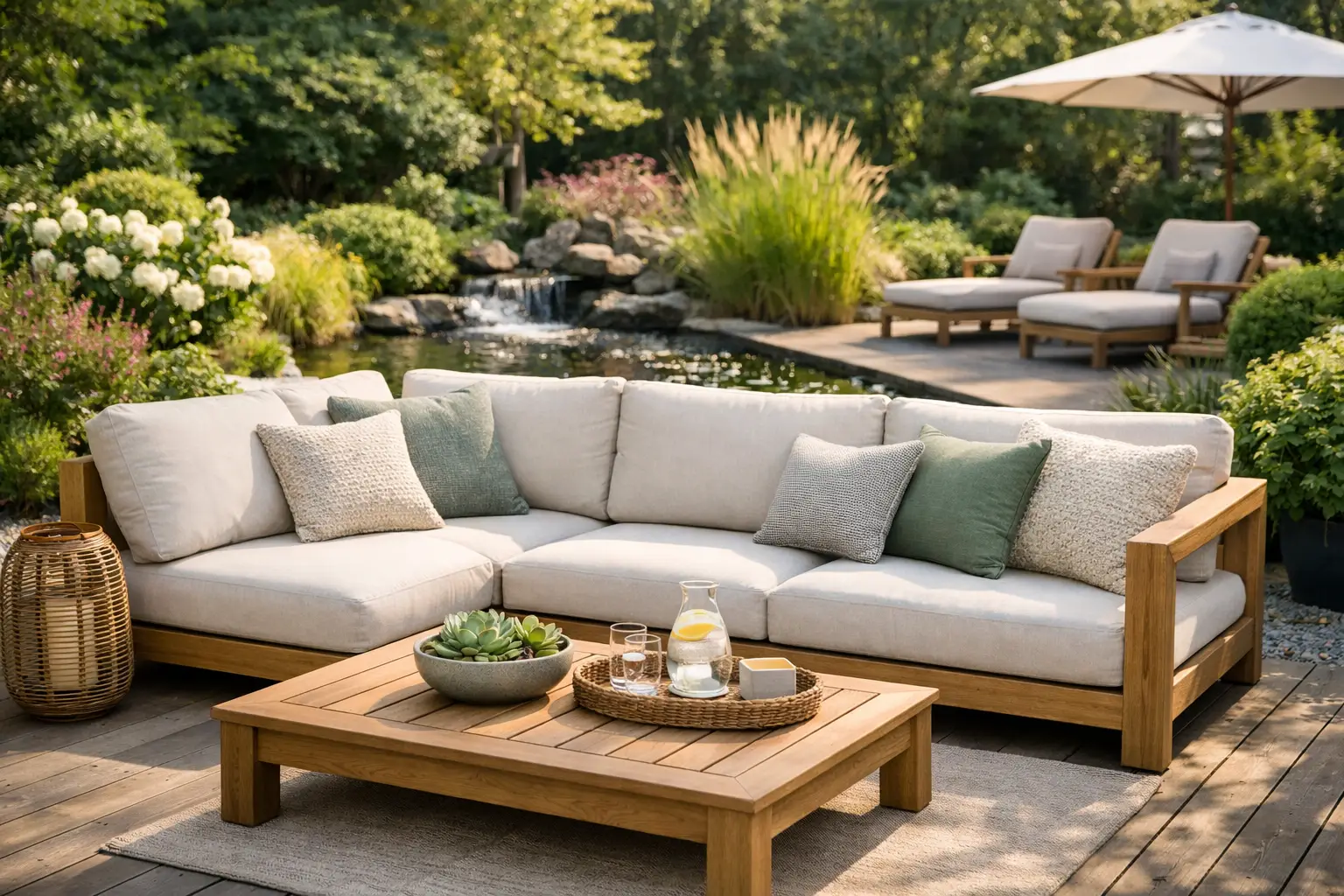
An outdoor sofa review should begin where real life happens: damp towels after a swim, pollen in spring, a child climbing up with a book, a late dinner that runs past sunset. A beautiful sofa can anchor a patio, but beauty alone does not make it useful. The right piece turns a paved edge, deck, balcony, or garden terrace into an outdoor room that invites people to stay.
For a garden-minded home, the best outdoor sofa is not necessarily the largest, softest, or most photogenic one. It is the one that fits the way your space receives light, rain, wind, plants, and people. It should hold its own beside loose grasses and flowering borders without asking the garden to become overly polished around it.
Most outdoor sofas look convincing in a product image. Their differences appear after the first heat wave, several rainy weekends, and a season of entertaining. To judge one well, look past the silhouette and consider its frame, cushions, scale, placement, and long-term care as a single system.
A sofa with deep cushions may feel luxurious for an hour, yet become frustrating if it takes days to dry. A slim aluminum frame can make a compact terrace feel open, while a heavy sectional may suit a broad poolside patio but overpower a narrow garden path. There is no universal winner. The better choice depends on whether your outdoor room is built for quiet morning coffee, frequent family gatherings, or the occasional long summer evening with friends.
Powder-coated aluminum is often the most practical option for exposed patios. It is relatively light, resists rust, and works visually with both contemporary architecture and planted, naturalistic gardens. Check the finish closely. A quality coating should look even, feel substantial, and cover joints and undersides rather than only the surfaces visible from the front.
Teak offers a warmer, more tactile presence. Its grain gains character as it weathers, shifting from honey tones toward a soft silvery gray if left untreated. That change is not damage, but it does require a homeowner to accept an evolving surface. Teak is especially compelling beside clay planters, stone, and textured planting, where the material can feel grounded rather than decorative.
Steel frames can be strong and sculptural, but they demand a trustworthy protective finish and more attention in wet or coastal locations. Woven resin is comfortable in a relaxed, traditional setting, though the weave should be tightly finished and supported by a solid frame. Avoid making a decision based only on the word “weatherproof.” Materials age differently, and the best choice is the one whose aging you are happy to see.
Cushions determine whether an outdoor sofa becomes part of daily life or remains an attractive object no one quite uses. Look for quick-drying foam or a layered fill designed to release water, paired with breathable, solution-dyed fabric. This kind of fabric carries color through the fiber, helping it stand up better to sun exposure than many surface-dyed alternatives.
Even excellent cushions are not invincible. Dark colors absorb more heat, pale fabrics show marks more readily, and dense foam can retain moisture after persistent rain. Removable covers make ordinary maintenance far easier, particularly in homes shared with children, pets, or enthusiastic gardeners. If the sofa will sit under trees, choose a fabric with enough texture or depth of color to be forgiving around leaf stains and stray soil.
Comfort also has a visual dimension. Overstuffed cushions can look out of place beside the looser, layered planting style many homeowners now prefer. A tailored cushion with softened edges often creates a calmer relationship between architecture and garden. Think of it as a quiet line of ink across a changing green landscape: present, intentional, and never louder than the life around it.
Before choosing a sofa, measure more than the patio. Measure the movement around it. People need clear routes from the house to the garden, grill, gate, and planting beds. A sofa that blocks circulation creates a space that looks finished but feels inconvenient.
A straight two- or three-seat sofa is usually the most adaptable format. It can sit against a wall, face a view, or float lightly within a larger terrace. It is an intelligent choice for households that expect their garden to change over time, perhaps with new planters, a dining table, or a fire feature later on.
A sectional offers a stronger sense of enclosure. It can make an open deck feel like a true living room, especially when paired with an outdoor rug, low table, and layered lighting. The trade-off is flexibility. Once a large sectional claims a corner, it can be difficult to rearrange for a party or seasonal planting project. Modular designs soften that limitation, but assess each connection point. Pieces that slide apart in use quickly lose their appeal.
For a balcony or small urban yard, resist the instinct to fill every inch. A compact sofa with open legs and a modest side table often feels more generous than a bulky set. Let the edge of the space remain available for fragrant herbs, a small tree, or flowering perennials that support pollinators. The garden needs breathing room too.
Seat depth changes how a sofa is used. Deep seats encourage lounging, reading, and informal conversation with legs tucked up. Shallower seats are easier for dining-adjacent spaces, older guests, and anyone who prefers to sit upright with a drink or plate. If possible, sit on a comparable model for longer than a minute. Notice whether your feet touch the ground and whether the back cushion supports you without forcing a reclined posture.
A low sofa can create a serene, lounge-like horizon, particularly next to a water feature or a low planting meadow. But it may feel awkward on a raised deck or for guests who need an easier rise. Better design is not about chasing a single look. It is about matching proportion to the bodies and habits that will live with it.
A cover is useful, but it should not be treated as permission to ignore climate. In rainy regions, give the sofa airflow and avoid placing it directly beneath a roofline that pours water onto one arm. In hot, sunny gardens, umbrellas, pergolas, or deciduous trees can create needed shade without turning the terrace into a dark enclosure.
Coastal air, freezing winters, and intense desert sun each ask different things of outdoor furniture. In a harsh climate, consider whether cushions can be stored inside during the wettest or coldest months. If storage is limited, choose a sofa with manageable cushion sizes rather than oversized pieces that become a logistical burden.
This is where low-maintenance design becomes genuinely freeing. A resilient garden is not one that never changes. It is one that can absorb weather, family life, and small imperfections without demanding constant correction. The same principle should guide the sofa at its center.
The strongest patios do not look like indoor rooms moved outdoors without thought. They respond to the materials, shadows, and planting around them. A pale limestone terrace may welcome charcoal, sand, or moss-toned upholstery. Against weathered timber and dense foliage, warm neutrals or muted clay colors can feel softer and more settled.
Pattern can be used sparingly through cushions or throws, especially when it recalls water, branches, or distant hills rather than competing with the planting. At Fensgarden, we see outdoor living as a composition of useful objects and living materials: a seat, a lantern, a planter, a breeze through leaves. An outdoor sofa should contribute to that composition with confidence, not insist on becoming the entire picture.
Avoid buying a complete matching set simply because it is convenient. A sofa gains character from contrast: a hand-finished planter, a weathered side table, a woven blanket for cooler evenings, or a sculptural garden light. These layers make the space feel collected over time, which is often more inviting than a perfectly coordinated showroom scene.
Rather than asking, “Is this outdoor sofa good?” ask, “Will this make us use the garden more?” That question brings the practical details into focus. Can it dry after rain? Does it leave room for planting? Will it be comfortable for different generations? Can its materials age with dignity?
Choose the sofa that makes a daily pause outdoors feel easy. When the cushions hold the late-afternoon light, the herbs are close enough to brush with a hand, and there is room for both conversation and birdsong, the garden has become more than a backdrop. It has become part of the home’s living rhythm.