Beautiful Gardens, landscaping, art, printing For Your Home And Garden!
Beautiful Gardens, landscaping, art, printing For Your Home And Garden!
Gazebo roof lifespan depends on material, climate, installation, and care. Learn what wears roofs down and how to plan for lasting outdoor shelter.
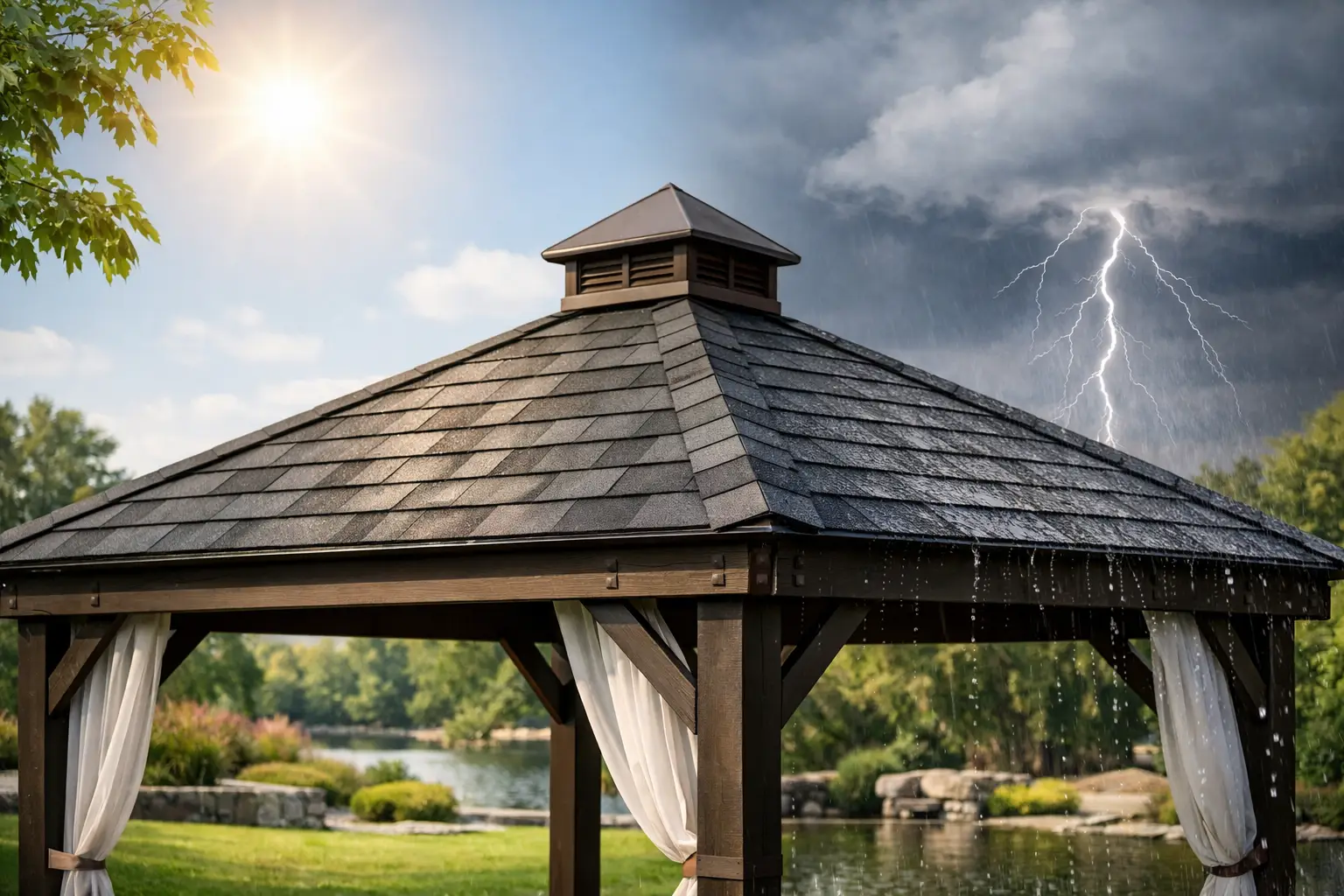
A gazebo roof does more than keep lunch dry when a summer shower passes through. It gives an outdoor room its sense of shelter: a quiet ceiling above the dining table, a frame for climbing fragrance, a shaded pause between house and garden. Gazebo roof lifespan is therefore not just a maintenance question. It shapes how confidently you can plant, furnish, gather, and settle into the space beneath it.
The honest answer is that no single lifespan applies to every gazebo. A lightweight fabric canopy in a sunny, windy yard has very different demands from a hardtop pavilion beside a wooded, snow-prone garden. Material matters, but so do climate, installation quality, roof pitch, drainage, and the small habits that prevent a minor issue from becoming a structural repair.
A roof’s expected service life is best treated as a planning range, not a promise. Local weather can shorten or extend it substantially, especially where high winds, salt air, heavy snow, intense sun, or falling branches are part of the landscape.
Polyester and other fabric gazebo covers are accessible, airy, and easy to change with the seasons. They work especially well for flexible patios, renters, and gardens that benefit from a lighter visual touch. Their limitation is exposure. UV light slowly weakens fibers and fades color, while wind stresses seams, grommets, and attachment points.
A basic canopy left outdoors year-round may need replacement after one or two seasons. A higher-quality, UV-resistant cover that is properly tensioned, cleaned, dried, and stored during harsh weather can often serve for three to five years. In coastal or storm-heavy areas, expect the lower end of that range.
Polycarbonate roofs filter rain while allowing a soft, luminous daylight into the structure. Clear panels can make a compact garden feel more open, while tinted or bronze finishes reduce glare and create a more restful shade. They are lighter than glass and generally resist impact well.
Over time, however, sun exposure can cause yellowing, surface wear, or reduced clarity. The panels themselves may outlast the seals, fasteners, and closure strips around them. A roof that begins to leak is not necessarily a failed roof: replacing aged gaskets or re-securing panels may restore years of useful life.
Shingles make sense when a permanent gazebo is designed as an extension of the home’s architecture. They offer a familiar, substantial look and can be matched to a house or garden studio. The lifespan depends heavily on shingle grade, ventilation, underlayment, and whether leaves and moisture linger in roof valleys.
Heat can make shingles brittle, while freeze-thaw cycles can stress edges and flashing. Moss and algae are often more than cosmetic in damp, shaded settings because they can hold moisture against the surface. A gentle annual inspection and prompt clearing of debris protect both appearance and performance.
Aluminum, steel, and zinc roofs are often the longest-lived choices for a permanent garden structure. They shed water and snow efficiently, resist fire, and can suit a clean contemporary pavilion as naturally as a more traditional gazebo. A standing-seam metal roof, in particular, has a quiet, architectural rhythm that works beautifully with planting-led landscapes.
The trade-off is upfront cost and installation precision. Screws, flashing, edges, and connections must be detailed correctly to prevent leaks or wind-related lifting. Steel coatings need attention if scratched, especially near the coast. With good detailing and regular checks, metal offers a low-maintenance path to decades of shelter.
Cedar introduces warmth that few manufactured materials can replicate. Its texture sits naturally beside grasses, stone, and weathered timber, allowing a gazebo to feel grown from the garden rather than placed on top of it. Yet wood is a living material, and it asks for a climate-aware approach.
In dry, well-ventilated locations, cedar can last for decades. In humid shade, wood may cup, split, or develop moss and fungal decay sooner. Roof design is essential: adequate slope, airflow beneath the roofing, and clear runoff matter as much as the species of wood. Cedar is best for homeowners who appreciate a material that will weather visibly and who are prepared to maintain it thoughtfully.
The most damaging conditions are often ordinary ones repeated over time. Water that cannot drain away, wind that catches a loose edge, branches that rub during storms, and leaves that remain wet in a gutter all create gradual wear. A roof rarely fails without offering early signals.
Poor installation is another major factor. Fasteners driven too tightly can crack polycarbonate panels as they expand and contract. Fabric that is overly loose flaps itself apart; fabric pulled too tight can tear at the seams. Incorrect flashing around a hardtop roof lets water travel into the structure, where damage may remain hidden until stains, rot, or corrosion appear.
Climate should guide the material decision from the start. In snowy regions, check the gazebo’s snow-load rating rather than assuming a decorative roof can carry winter accumulation. In hurricane or high-wind zones, anchoring and wind certification are as important as the roof surface. In hot southern exposure, prioritize UV resistance, ventilation, and shade performance. A beautiful roof that fights the conditions of its site will demand more care than one designed to live with them.
A low-maintenance garden is not a no-care garden. It is a garden where attention is timed well, materials are allowed to do their job, and repairs happen while they are still small. For a gazebo roof, two seasonal checks are usually more valuable than constant worry.
In spring, clear leaves, seed pods, and twigs from the roof, gutters, and drainage channels. Look for loose fasteners, cracked sealant, lifted shingles, fabric abrasion, and pooled water. After major storms, inspect the roof from the ground first, then use a stable ladder only if it is safe to do so. Never walk on a roof unless the structure and roofing material are explicitly designed for foot traffic.
Before winter, remove a soft canopy if the manufacturer recommends seasonal storage. Clean it with mild soap and water, allow it to dry completely, and store it where rodents and trapped moisture will not damage the fabric. For hardtops, trim overhanging limbs, make sure water has a clear route off the roof, and repair any compromised seals before freeze-thaw weather arrives.
Avoid harsh pressure washing, abrasive brushes, and unapproved chemical cleaners. These can strip protective finishes, scratch polycarbonate, or weaken fabric coatings. Use the care method recommended for the particular material, and remember that a clean roof is not automatically a healthy roof. Check the joints, edges, and drainage details as carefully as the visible surface.
A long-lasting gazebo is more convincing when it belongs to its setting. Consider where rain will fall once it leaves the roof. Instead of directing runoff across a patio, guide it toward a rain garden, gravel channel, or planting area suited to occasional moisture. This supports a more resilient landscape while protecting foundations and paving.
Think about the shade beneath the roof as well. A dense solid roof creates dependable shelter but may make adjacent planting beds darker and drier. A louvered, polycarbonate, or partial-roof design can offer a gentler transition of light for ferns, shade-tolerant perennials, or a dining space that still feels connected to the sky. The right choice depends on whether the gazebo is primarily a rain refuge, a summer lounge, an outdoor kitchen, or a year-round garden room.
At Fensgarden, we see outdoor structures as part of a living composition rather than isolated objects. The roof, the path beneath it, the planting at its edge, and the changing light across the day should all support a space people want to return to.
A gazebo roof earns its longevity through good material choices and quiet stewardship. Choose for your climate, inspect it before problems spread, and let the shelter mature alongside the garden it protects.