Beautiful Gardens, landscaping, art, printing For Your Home And Garden!
Beautiful Gardens, landscaping, art, printing For Your Home And Garden!
Regenerative gardening helps your yard build healthier soil, use less water, support wildlife, and become a beautiful outdoor room that deepens over time.
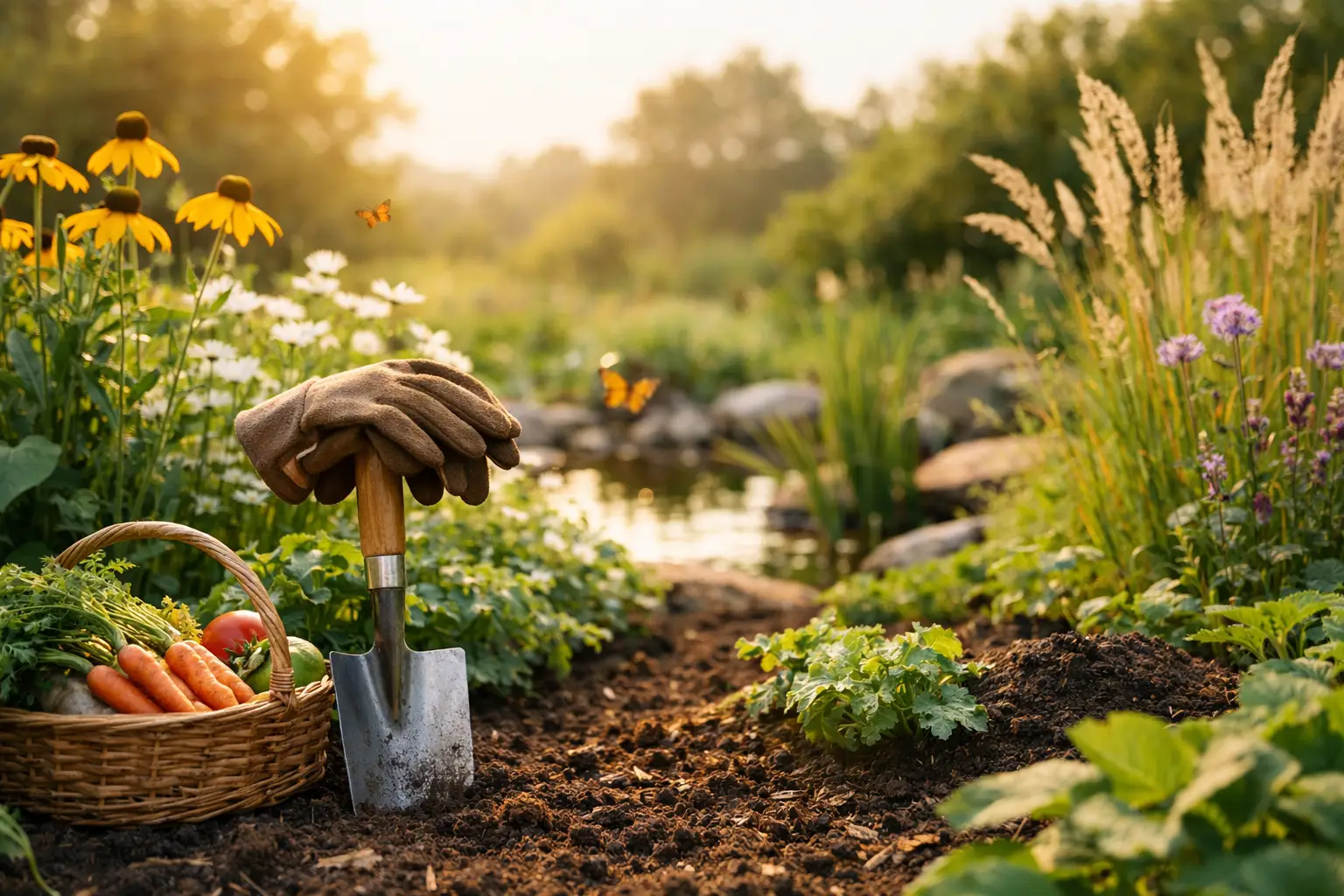
A tidy lawn can look finished, but a living garden is never truly finished. Its soil darkens year by year. Its plants learn the light, wind, and rainfall of the place. Birds find cover, pollinators find food, and the people who live beside it find a quieter rhythm outdoors. That is the promise of regenerative gardening: not simply growing plants with fewer chemicals, but helping a small piece of land become more alive, resilient, and generous over time.
For a modern home, this approach does not require giving up beauty for practicality. Quite the opposite. A layered planting bed, weathered stone path, sculptural planter, and shaded place to sit can create an outdoor room with real atmosphere while also protecting the ecology beneath it. The goal is not perfection. It is a garden that belongs to its climate and becomes richer with age.
Regenerative gardening begins with a simple shift in perspective. Instead of asking what a garden can produce for us, ask how every design choice can return something to the land. This may mean feeding soil organisms, slowing rainwater before it leaves the property, choosing plants that shelter wildlife, or allowing leaves to become mulch rather than waste.
Sustainability often focuses on reducing harm. Regeneration goes further by improving the condition of the place. A regenerative garden can hold more moisture after heavy rain, need less supplemental water during dry periods, and provide a longer season of nectar, seed, shade, and habitat.
It is also deeply personal. A compact urban patio may support this work through containers, climbing plants, a small water bowl, and a compost caddy. A suburban backyard may have space for native shrubs, a meadow-like border, or a rain garden. The scale changes, but the intention remains the same: let the garden participate in a healthy local system.
The most beautiful planting scheme struggles in compacted, exposed, or depleted soil. Healthy soil is not inert growing medium. It is a living community of fungi, microbes, insects, roots, air, and water. When that community is cared for, plants are better equipped to handle heat, pests, and inconsistent rainfall.
Start by disturbing the soil less. Repeated digging and turning can break apart its natural structure and disrupt fungal networks. Where possible, layer compost over existing beds and let worms carry it downward. This method, often called top-dressing, improves soil gradually without treating the garden like a construction site every spring.
Keep bare ground covered. Shredded leaves, untreated bark, compost, and low groundcovers all reduce evaporation and limit weed pressure. They also soften the visual transition between plants, creating the loose, gathered quality of a mature garden. Avoid piling mulch against woody stems, where excess moisture can encourage rot.
If your soil is heavy clay, do not assume it must be replaced. Clay holds nutrients and can become exceptionally productive with organic matter, patient planting, and improved drainage. Sandy soil benefits from the same additions because compost helps it retain moisture. In both cases, a soil test is useful before adding fertilizer. More is not always better.
A garden designed against its climate will demand constant correction. A regenerative one works with local conditions: the direction of summer sun, winter shade, wind exposure, rainfall patterns, and the way water moves after a storm.
Watch your garden for a few days before making major changes. Notice where puddles linger, where afternoon heat is strongest, and which corner remains protected on a cold morning. These observations are more valuable than a plant label alone. They reveal the garden you actually have, not the one shown in a catalog.
Native plants deserve a central role because they have evolved alongside regional insects, birds, and weather patterns. Yet a strictly native garden is not the only responsible choice. Noninvasive, drought-tolerant plants can be appropriate, especially where they serve a clear purpose such as shade, seasonal structure, or edible harvest. The essential question is whether a plant supports the wider garden or creates more work, water use, and ecological pressure.
Aim for diversity rather than a large block of one species. Combine grasses, perennials, shrubs, small trees, herbs, and groundcovers. Their roots occupy different depths, their flowers extend the feeding season, and their varied forms create visual movement. A garden with layers feels more natural because it is more natural.
Choose plants so that something is happening from early spring through late fall. Early flowers help emerging pollinators. Summer blooms carry the garden through heat. Seedheads and berries provide value when colder weather arrives.
Leave some stems standing through winter instead of cutting every bed back in fall. Their silhouettes can be striking in frost, while their hollow stems and seedheads provide shelter and food. Maintenance becomes a design decision: a little restraint often produces both more beauty and more habitat.
Water is where regenerative design becomes especially practical. Rather than pushing rain quickly toward a drain, keep it in the landscape long enough for plants and soil to use it. A rain garden, shallow swale, permeable gravel path, or planted container beneath a downspout can all help slow runoff.
Not every yard needs a dramatic water feature. In a smaller space, even a large bowl refreshed regularly can become a drinking stop for birds and beneficial insects. Place shallow stones in it so smaller creatures have a safe landing point.
For irrigation, focus on roots rather than leaves. Drip lines and soaker hoses waste less water than overhead spraying, particularly in hot or windy weather. An automatic system can be a thoughtful addition when it is nearly invisible and adjusted for seasonal conditions. Smart gardening should reduce effort without making the garden feel engineered.
Containers need special attention because they dry out faster than in-ground beds. Choose generously sized planters, use quality potting mix, and group vessels together to create a cooler microclimate. A hand-thrown-looking planter in a quiet mineral tone can feel like part of the landscape rather than an object placed on top of it.
Regenerative gardens are not museums of biodiversity. They are places to eat, read, talk, rest, and watch the day change. When people use a garden often, they notice its needs earlier and care for it more consistently.
Build your outdoor room around a view into planting rather than away from it. A dining table beside fragrant herbs, a bench facing a small tree, or a lounge chair under a pergola can make nature part of daily life. Use materials that weather with grace: wood, stone, ceramic, textured metal, and woven fabrics in tones that sit comfortably beside foliage.
At Fensgarden, this balance between artistic form and lived-in landscape is central to outdoor design. A garden can carry the spacious feeling of an ink painting – open ground, measured pauses, softened edges, and a few expressive forms – without becoming sparse or precious.
Edible plants are especially effective at bringing people into the garden. Tuck rosemary near a path, grow strawberries at the edge of a planter, or include a serviceberry, currant, or dwarf fruit tree where climate allows. The most successful edible landscapes do not announce themselves as a separate vegetable patch. They are woven naturally into the composition.
Low-maintenance does not mean no-maintenance. It means choosing tasks that build value instead of repeating cycles of correction. Mulching, selective pruning, composting, and occasional watering during establishment are investments in a garden that will eventually ask for less.
Resist the urge to remove every insect or fallen leaf. Some leaf damage is part of a functioning food web, and a few untidy corners offer habitat that an immaculate border cannot. Of course, invasive plants, serious disease, and structural hazards still need prompt action. Regenerative gardening is attentive, not neglectful.
Keep a simple seasonal record on your phone or in a notebook. Note when the first bees arrive, which plants wilt in August, where birds nest, and which areas remain wet after rain. Over time, these small observations become a site-specific design brief far more useful than general advice.
This weekend, choose one small gesture that gives more than it takes: spread fallen leaves beneath a shrub, add a flowering native perennial, place a shallow water dish near shelter, or replace one thirsty container planting with a drought-tolerant mix. A living yard is built through these quiet decisions, repeated until the garden begins to care for itself – and for everyone who shares it.