Beautiful Gardens, landscaping, art, printing For Your Home And Garden!
Beautiful Gardens, landscaping, art, printing For Your Home And Garden!
Find the best climbing plants privacy screens need, from fragrant jasmine to native vines, with design tips for a layered, resilient outdoor room at home.
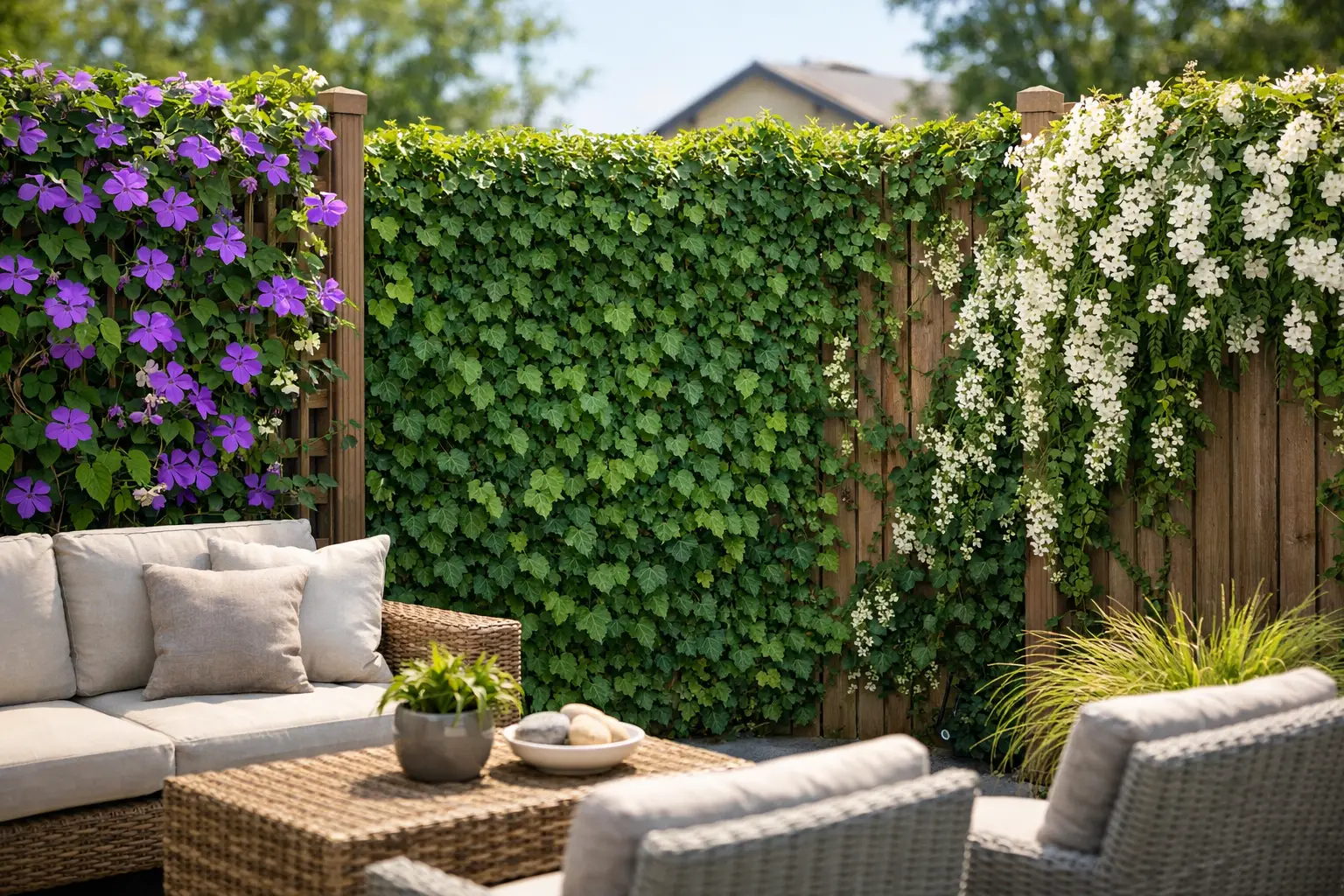
A privacy screen does not have to feel like a wall. When a climbing plant takes hold of a trellis, pergola, or fence, it softens the edge between home and garden with leaves, flowers, movement, and seasonal change. The best climbing plants for privacy do more than hide a neighboring window: they can cool a sunny patio, feed pollinators, frame an outdoor dining area, and make a compact yard feel like a living landscape.
The right choice depends on more than a beautiful flower photo. Your winter temperatures, sun exposure, support structure, desired screening speed, and appetite for pruning all matter. A vine that feels effortless in a mild California courtyard may struggle through a Minnesota winter, while a fast-growing climber can quickly overwhelm a delicate wood lattice.
Privacy planting works best when it is treated as a layered design rather than a single green curtain. A vine provides vertical softness and height. A low border of grasses, flowering perennials, or evergreen shrubs can cover the bare lower stems that many climbers develop over time. The result feels more like a garden room than a boundary line.
Before choosing a plant, consider whether you need year-round coverage or simply want privacy during the months when you use the garden most. Evergreen vines are valuable in warm climates, but deciduous vines often offer better flowers, fall color, and habitat value. In cold-winter regions, a thoughtfully placed trellis or slatted screen can still provide structure when leaves are gone.
Also match the vine to its support. Twining plants need wires, cables, or narrow lattice to wrap around. Tendril climbers prefer fine mesh or trelliswork. Heavy woody vines need a substantial pergola, masonry wall, or purpose-built frame. Never assume a lightweight fence can carry a mature vine after rain, wind, and years of growth.
Star jasmine creates a refined, deep-green screen in warm regions and fills early summer evenings with a sweet fragrance. Its glossy foliage is often evergreen in USDA Zones 8 through 10, making it a strong choice for patios where winter privacy matters. Train it along a trellis, fence, or pergola post in full sun to partial shade.
It grows at a manageable pace once established, so it suits homeowners who want a composed look rather than a vine that takes over every surface. In colder climates, grow it in a large container and protect it over winter, or choose a hardier alternative.
Coral honeysuckle is one of the most generous choices for an ecologically minded privacy screen. Native to much of the eastern and southeastern United States, it carries tubular coral-red blooms that attract hummingbirds and pollinators from spring into summer. The foliage is semi-evergreen in warmer areas and the vine is generally hardy in Zones 4 through 9.
Choose coral honeysuckle rather than invasive Japanese honeysuckle. The native vine is easier to welcome into a diverse garden and looks especially lovely woven through a simple black metal trellis or warm cedar screen.
For a shady side yard or north-facing wall, climbing hydrangea brings a calm, woodland character that few sun-loving vines can match. Its broad, heart-shaped leaves create real visual density, followed by lacy white blooms in early summer. It is hardy in Zones 4 through 8 and slowly develops handsome, peeling bark.
Patience is required. Climbing hydrangea may spend its first few years establishing roots before it begins to climb with confidence. Once mature, it becomes heavy, so give it a solid wall, sturdy arbor, or substantial fence panel rather than flimsy lattice.
Clematis offers a way to make privacy planting feel personal. There are compact varieties for containers, large-flowered cultivars for dramatic color, and vigorous late-summer types that can cover a trellis with remarkable speed. Most perform well in Zones 4 through 9, depending on the variety.
The classic advice still holds: keep its roots cool and its flowers in the sun. Plant low perennials or mulch around the base, then let the stems reach toward light. Pairing clematis with a climbing rose creates a layered, painterly effect, though both plants need thoughtful pruning.
American wisteria brings the romance of cascading violet blooms without some of the extreme aggression associated with Chinese and Japanese wisterias. It is still a strong woody vine, but it is generally more restrained and better suited to residential gardens in Zones 5 through 9.
Use it only on a seriously built pergola or arbor. A mature plant can be beautiful over an outdoor table, casting dappled shade and creating a spring focal point, but it can crush weak structures. Prune twice yearly to encourage flowering and keep the framework visible.
Crossvine is a resilient choice for sunny gardens in Zones 5 through 9, particularly across the South and Mid-Atlantic. Its trumpet-shaped flowers in orange, red, or yellow bring pollinators to the garden, while its foliage may remain evergreen or bronze-tinted through winter in mild climates.
This vine attaches itself to surfaces, so it is useful for covering a masonry wall or sturdy fence. Give it room to spread and prune after flowering if you want a more architectural silhouette around windows, gates, or a pergola entrance.
A climbing rose gives privacy planting a softer, more deliberate rhythm. Rather than forming a solid green sheet immediately, it creates canes, foliage, and blooms that invite close looking. Repeat-flowering varieties are particularly useful near a seating area, where scent and color can become part of everyday rituals from late spring into fall.
Most climbing roses need at least six hours of sun and a trellis with horizontal ties or wires. Choose disease-resistant varieties suited to your region, and leave room for air circulation. Their thorns are a trade-off near narrow walkways, but they can be an advantage where you want a more protected boundary.
For rapid coverage and spectacular fall color, Virginia creeper is difficult to beat. Native across much of North America and hardy in Zones 3 through 9, it tolerates sun, shade, urban conditions, and a wide range of soils. Its berries also support birds, though they are not edible for people.
Its vigor is both its strength and its caution. Virginia creeper can cling tightly to walls and spread beyond its intended zone, so it is better on a freestanding trellis, sturdy fence, or large outbuilding than on delicate siding. Prune it regularly and keep it away from gutters and roofs.
Passionflower turns a privacy screen into a conversation piece. Its intricate, otherworldly flowers appear almost hand-drawn, followed by fruit on certain species. Native passionflower varieties can support butterfly larvae and bring a sense of joyful abundance to a sunny garden.
Many types are hardy in Zones 7 through 11, though some die back in winter and return from the roots. In cooler areas, treat them as a seasonal vine or grow them in containers. Their fast growth makes them useful when a new pergola or fence needs a quick summer veil.
Evergreen clematis is a fragrant, early-blooming option for mild climates, usually Zones 7 through 9. It covers fences and pergolas with leathery green leaves, then produces clouds of small white flowers in late winter or early spring. It is especially effective near an entry patio, where its fragrance can be appreciated before many other garden plants wake up.
Because it can grow vigorously, plant it where there is room to let it become generous. Prune lightly after flowering, rather than shearing it into a rigid plane. A little irregularity gives the screen depth and lets light move through the foliage.
Start with the view you actually want to edit. You may only need to conceal the second-story window across the fence, not block every inch of sky. A narrow trellis panel positioned at eye level often creates more comfort than an eight-foot solid barrier, while preserving sunlight and the feeling of openness.
For a new screen, install the support first and plant at least 12 to 18 inches away from the fence or wall. This gives roots a healthier planting zone and makes watering easier. Guide young stems toward the structure with soft ties, checking them through the first growing season. Most vines look sparse at the beginning, so add a temporary layer of tall grasses, containers, or a sculptural outdoor screen while the plants establish.
Water deeply during the first one to two years, then adjust according to your climate and the plant’s needs. A drip line beneath mulch keeps moisture where it belongs without turning foliage into a disease-prone splash zone. Native and drought-tolerant vines may need far less help after establishment, but even resilient plants appreciate consistent care during prolonged heat.
Avoid planting a monoculture of one vine across every boundary. Mixing a flowering climber with native shrubs, seed-bearing perennials, and ground-level habitat creates a more resilient garden. It also means that if one plant struggles after an unusually cold winter or dry summer, the whole outdoor room still holds its shape.
The most successful privacy screen is not the fastest one. It is the one that gives you a place to exhale: a filtered view from the breakfast table, a fragrant wall beside the lounge chair, or a green threshold that makes stepping outside feel like entering another room.