Beautiful Gardens, landscaping, art, printing For Your Home And Garden!
Beautiful Gardens, landscaping, art, printing For Your Home And Garden!
Find the best patio heaters 2026 for dining, decks, and garden rooms, with practical advice on heat, fuel, safety, and design-led placement year-round.
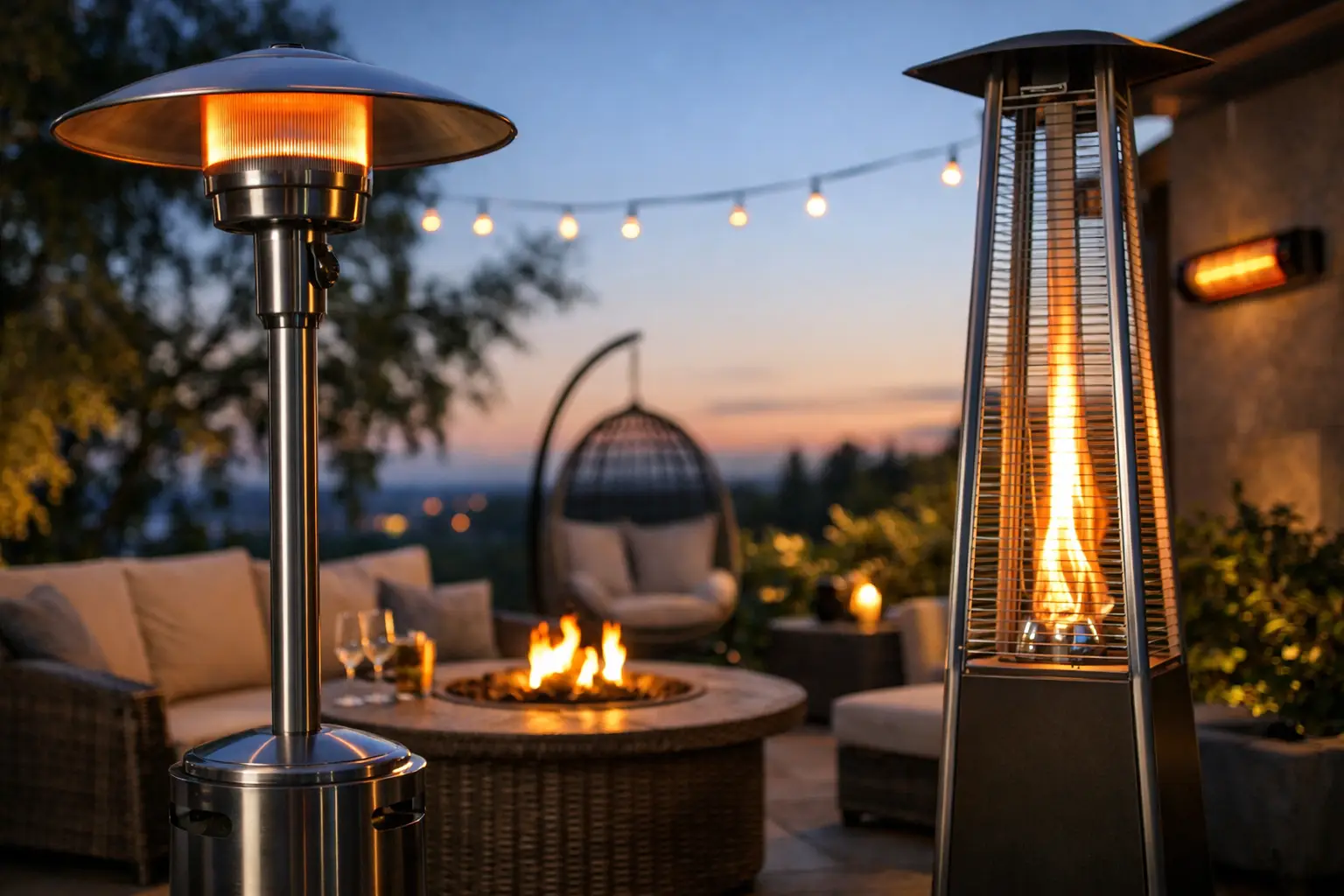
A patio heater should do more than push back a chilly evening. It should let dinner linger under the pergola, keep a reading corner usable after sunset, and extend the life of a garden room without dominating its planting, lighting, or view. The best patio heaters 2026 are not defined by their tallest flame or largest BTU number. They are the ones that suit the scale, shelter, material palette, and rituals of the outdoor space.
For most American homes, that means choosing heat as part of the landscape rather than treating it as an appliance added at the end. A compact electric infrared heater can disappear beneath a pergola beam. A freestanding propane heater may be right for a flexible dining terrace. A flame-style heater can become a gentle focal point in an open gravel garden, provided it is positioned with care. The right answer depends on how you use the space – and how much wind, cover, and maintenance it must live with.
The strongest patio-heater choices this year reflect a broader shift in outdoor living. Patios are becoming real rooms: places for weeknight meals, children’s craft tables, quiet coffee, and slow gatherings in every season. At the same time, homeowners want gardens with lower water demand, more native planting, and less visual clutter. Heat needs to work with that calmer, more resilient vision.
Start with radiant heat, not just stated output. Infrared electric heaters warm people and surfaces directly, which makes them especially effective in covered or semi-enclosed areas where guests are seated in a defined zone. Gas heaters warm a wider surrounding area and can be more practical where electrical capacity is limited, but they lose efficiency in wind and require more breathing room.
Then consider the heater’s visual weight. A large stainless-steel mushroom heater can look out of place beside soft grasses, sculptural planters, and a low modern lounge set. It may still be the practical choice for a broad, open patio, but it should be treated as a seasonal tool rather than permanent garden furniture. In a more composed setting, a slim dark electric bar heater or a low-profile fire table often preserves the architecture of the space better.
Electric infrared heaters are among the best choices for pergolas, covered porches, outdoor kitchens, and dining areas with a clear overhead structure. They heat quickly, operate quietly, and do not require propane tanks to be moved, stored, or concealed. Wall- and ceiling-mounted versions also free up floor space, which matters in compact urban patios and narrow side gardens.
Their limitation is reach. An electric heater creates a focused comfort zone, not a blanket of warmth across a large yard. A 1,500-watt portable unit can be ideal beside two lounge chairs, while a larger hardwired model may serve a dining table or sofa grouping. For a broad covered terrace, two smaller heaters positioned around the seating area often feel more balanced than one powerful fixture mounted far away.
Look for outdoor-rated construction, a stable mounting system, a timer, and a heat setting that can be adjusted during the evening. If the unit is hardwired, involve a licensed electrician early in the patio design. The power plan should be as considered as irrigation or landscape lighting, not an afterthought.
Freestanding propane heaters remain useful for open patios, rental-friendly spaces, and households that rearrange furniture for different occasions. The classic mushroom form throws heat downward over a wide radius and is effective for standing conversations, long dining tables, and casual celebrations where people move around.
The trade-off is aesthetic and practical. Propane heaters are tall, visually prominent, and vulnerable to strong breezes. They also require tank changes and careful storage. In a garden designed around natural materials and layered planting, choose a finish that recedes – matte black, soft bronze, or a subdued neutral often integrates more easily than bright polished metal.
Use propane heaters on a level, noncombustible surface, with adequate clearance from umbrellas, pergolas, fabric drapery, branches, and eaves. They are generally a poor match for enclosed porches or very tight balconies. Always follow the manufacturer’s clearance requirements and local fire regulations rather than relying on a general rule of thumb.
A pyramid heater places a visible flame inside a vertical glass tube. Its heat performance can be modest compared with its dramatic height, but that is not necessarily a drawback. For an open terrace where mood matters as much as warmth, it can act like a lantern – a vertical point of warmth and light that gives a gathering area presence after dusk.
This style works best when it has room around it. Place it at the edge of a lounge arrangement or beside an outdoor bar, not in the center of a small dining area where its height interrupts sightlines. It should complement the scene, much as a single tree or lantern would, rather than become the scene itself.
Tabletop heaters are designed for intimate outdoor settings: a bistro table, apartment balcony, or small porch seating area. They are less likely to carry an entire winter dinner, but they can make a crisp spring or fall evening far more comfortable. Their small scale also makes them easier to store when the season changes.
Because tabletop models sit close to people and objects, stability is essential. Keep them away from loose linens, dried flowers, and overhanging foliage. If you want warmth for a four- to six-person dining table, a mounted infrared heater is usually a more reliable choice.
BTUs matter most for gas heaters, while watts are the key measure for electric models. Yet neither number tells the whole story. Wind, ceiling height, insulation from surrounding walls, and the distance between heater and guest all affect comfort.
For a small, sheltered seating nook, targeted electric infrared heat is usually more useful than a high-BTU gas heater placed several feet away. For an exposed 12-by-16-foot patio, a single modest heater may not overcome a steady breeze at all. In that setting, consider moving the seating closer to a hedge, screen, wall, or pergola side rather than simply buying more output. Landscape structure can make heating more effective while improving privacy and reducing wind stress on plants.
Think in zones. Heat the dining table, the main sofa, or the conversation circle rather than the entire backyard. This reduces energy use and creates a more intimate atmosphere. A patio that is slightly cool at the edges often feels more natural than one flooded with harsh, indiscriminate heat.
The best patio heater placement begins with how people sit. A heater should be close enough that guests feel warmth at shoulder and leg level, but far enough away to maintain required clearances and allow easy movement. Avoid placing a heater where people must repeatedly walk around it to reach the kitchen, garden gate, or seating.
For pergola dining, mount infrared heaters at opposing sides of the table and angle them toward chairs rather than directly downward onto the tabletop. This avoids overheating the center while leaving diners cold. For lounge areas, place a freestanding unit just beyond the seating perimeter, ideally where a wall or tall planting can buffer wind without creating an enclosed, unsafe space.
Consider the view from indoors as well. Patio heaters are often visible through windows for much of the year. A restrained finish and thoughtful location help preserve the sense that the garden is a living landscape, not a collection of equipment. At Fensgarden, we often see the most convincing outdoor rooms use heat, light, textiles, planting, and furniture as one quiet composition.
Patio heat should feel effortless, but it should never be casual. Electric units need weather-appropriate ratings and correctly protected outlets. Gas units need regular hose, regulator, and connection checks. Any heater with a flame requires careful clearance from furniture, plants, umbrellas, and architectural elements.
Keep fallen leaves, dry seed heads, and lightweight textiles away from the heater zone. This is particularly relevant in naturalistic gardens, where meadow-like planting is beautiful but can leave dry material near paths and seating. Before the colder season arrives, clean the heater, inspect the finish for corrosion, and test ignition or electrical controls. A fitted cover can protect a freestanding model, though it should only be used when the appliance is fully cool.
The best patio heaters for 2026 are those that make outdoor life more generous without asking the garden to become something artificial. Choose focused warmth for the places where people actually pause, give the heater a clear role in the composition, and let planting, texture, and soft light carry the atmosphere. Then a cool evening becomes not a reason to go inside, but an invitation to stay a little longer.