Beautiful Gardens, landscaping, art, printing For Your Home And Garden!
Beautiful Gardens, landscaping, art, printing For Your Home And Garden!
Ceramic vs fiberglass planters compared for weight, weather, roots, and style, so you can choose a lasting vessel for your patio or garden with confidence.
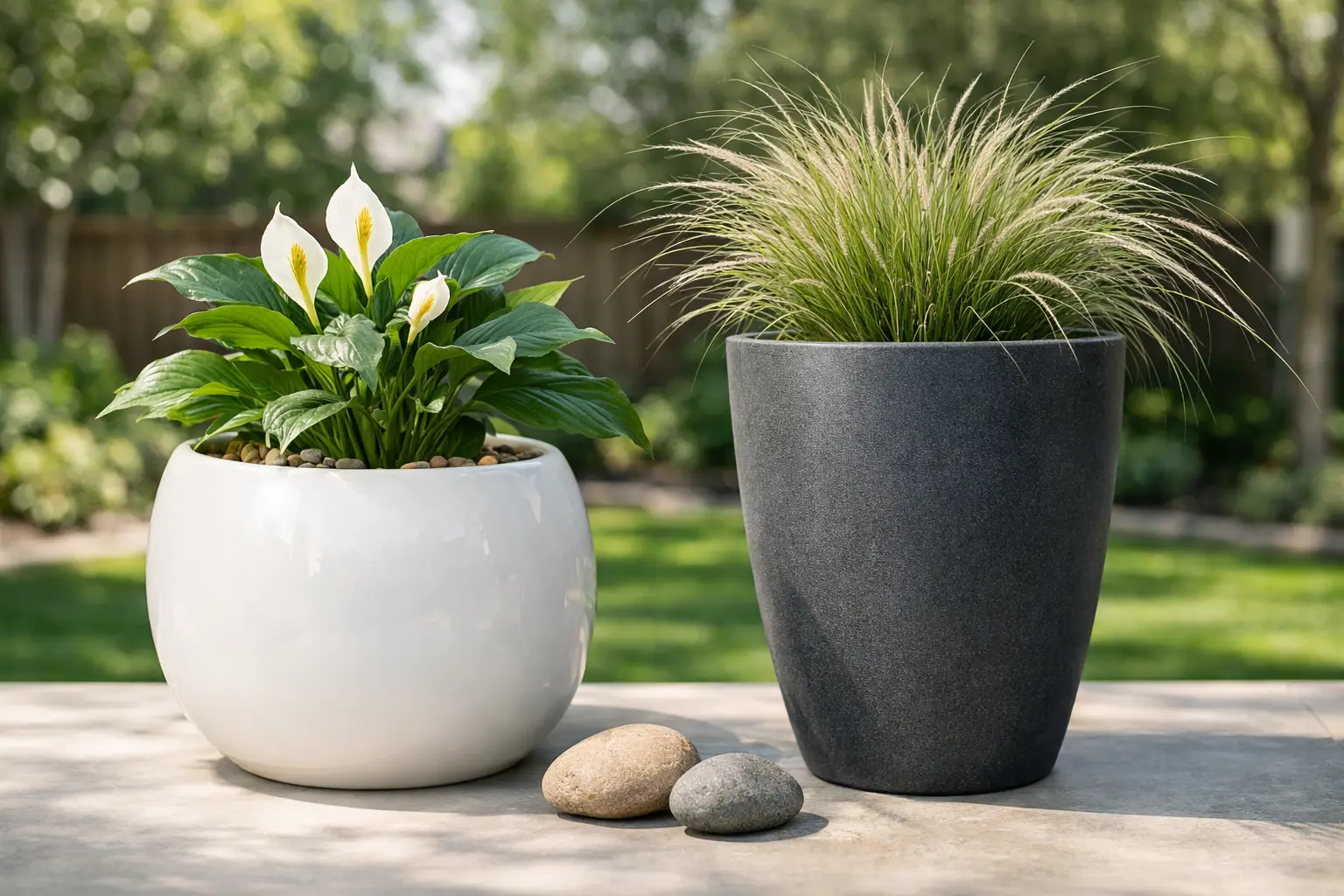
A planter is not simply a container for soil. It sets the pace of care, frames the character of a planting, and determines whether a patio garden feels settled or constantly in motion. In the choice of ceramic vs fiberglass planters, the better material is rarely the one that looks best in a product photo. It is the one that suits your climate, the scale of your plants, and the way you actually live outdoors.
For a small herb garden by the kitchen, that may mean a glazed ceramic pot with a hand-finished presence. For a wind-exposed roof deck or a pair of olive trees beside the pool, fiberglass often makes more sense. Both can be beautiful. Their differences become clear over seasons of watering, lifting, freezing temperatures, root growth, and changing light.
Ceramic planters are made from fired clay, often finished with a glaze that adds color, depth, and a subtle variation from piece to piece. They bring visual weight and tactile warmth to a garden, especially where planting is meant to feel collected, layered, and personal.
Fiberglass planters are molded from glass fibers and resin. They can be shaped into clean architectural forms, soft organic curves, tall columns, or generously scaled troughs without the extreme weight of stone, concrete, or large ceramic. Quality fiberglass has a refined, matte-like finish rather than a plastic appearance, and it gives designers more freedom to work at larger dimensions.
The essential contrast is simple: ceramic is a material of craft and permanence, while fiberglass is a material of flexibility and resilience. Neither is automatically more sustainable, more luxurious, or more practical. The right choice depends on where the planter will live and what its planting needs to become.
A ceramic planter feels grounded before it is even filled. That weight is useful on a breezy porch, near a busy entry, or alongside outdoor seating where a substantial pot can anchor a visual composition. Once filled with moist soil and a mature shrub, however, it may be nearly impossible to reposition without help.
Fiberglass is dramatically easier to move, particularly in oversized sizes. This matters for renters, apartment dwellers, and homeowners who like to adjust their outdoor rooms as the seasons change. It also matters on balconies, roof terraces, and elevated decks, where structural load should be considered before adding heavy containers.
Lightweight does not have to mean unstable. A large fiberglass planter filled correctly with soil is usually stable enough for everyday outdoor use. In very windy locations, use a wider profile, add weight at the base only if drainage remains open, or place the planter where a wall, screen, or planting group reduces direct gusts.
For gardens with freezing winters, ceramic requires more attention. Water can enter unglazed clay, tiny surface cracks, or vulnerable areas around a drainage hole. When that water freezes and expands, it can cause cracking, flaking, or a complete split. Even frost-resistant ceramic can suffer if soil stays saturated through repeated freeze-thaw cycles.
If you love ceramic in a cold climate, reserve it for sheltered entries, covered patios, or seasonal displays that can be protected in winter. Choose pots specifically rated for outdoor freezing conditions, make sure they have drainage holes, and raise them slightly on feet or risers so water can escape below. Never allow a planter to sit in a saucer full of water outdoors during winter.
Fiberglass is generally the easier year-round choice in climates with frost, heat, rain, and intense sun. It does not absorb water like clay, so freeze-thaw cycles are less threatening. A well-made piece also resists rust, rot, and many of the surface problems associated with natural materials.
That said, fiberglass quality matters. Thin, poorly finished planters can fade, chalk, crack, or flex over time, especially under strong UV exposure. Look for a substantial wall thickness, a UV-resistant finish, proper drainage, and a finish designed for exterior use. A quality planter should feel firm and balanced, not hollow in a flimsy way.
The pot itself does not make a plant healthy. Drainage, soil volume, light, watering habits, and root space matter more. Still, material affects how quickly soil changes temperature and moisture level.
Ceramic, particularly unglazed terracotta, is porous. It allows moisture to evaporate through its walls, which can benefit Mediterranean herbs, lavender, rosemary, succulents, and plants that dislike wet roots. The trade-off is faster drying in summer. A terracotta pot in full afternoon sun may need much more frequent watering than a fiberglass planter of the same size.
Glazed ceramic is less porous, although it can still experience temperature shifts more quickly than a thick, insulated container. Its biggest advantage is emotional rather than horticultural: glazed surfaces bring rich color and luminous detail to close-view gardens. They are especially effective near a bench, at a front door, or on a patio where the planter can be appreciated like a piece of functional art.
Fiberglass is nonporous and usually holds soil moisture longer. That can make it a smart choice for low-maintenance planting schemes, especially with drought-tolerant perennials, ornamental grasses, small trees, and native shrubs. It also offers more room for root systems because fiberglass can be fabricated at substantial scale without becoming unmanageable to install.
For either material, avoid the common mistake of filling the base with rocks to “improve” drainage. Rocks create a perched water layer above them and reduce valuable root space. Use a high-quality potting mix suited to the plant, keep drainage holes clear, and choose a planter large enough that roots will not overheat or dry out every day.
Ceramic has an immediate sense of hand and history. Its glazes can hold soft celadon green, inky blue-black, warm sand, or a quiet cream that changes with morning and evening light. In a garden inspired by naturalistic English borders or an intimate courtyard, ceramic helps create the feeling that the space has evolved over time.
It pairs beautifully with fragrant and tactile planting: thyme spilling over an edge, feathery grasses, flowering salvias, or a small citrus tree. Rather than matching every pot exactly, choose a restrained family of tones and vary the heights. The result feels collected without becoming cluttered.
Fiberglass offers a different kind of beauty. Its strength is proportion. Tall, narrow forms can frame a doorway. Long troughs can define the edge of an outdoor dining space. Low, wide bowls can make a sculptural home for grasses, sedums, or pollinator-friendly perennials. It is ideal when the planter needs to act like part of the landscape architecture rather than a decorative object placed within it.
For a contemporary garden with an Eastern ink-painting sensibility, consider the contrast between a soft charcoal fiberglass planter and pale grasses moving in the wind, or a matte ivory form holding a single multi-stem serviceberry. The composition can be quiet, but never empty.
Small ceramic pots are often more affordable than comparable fiberglass pieces, but large outdoor ceramic can become expensive quickly because of material weight, firing, packaging, and shipping. It can also be costly to replace after frost damage or an accidental impact.
Fiberglass often carries a higher initial price at medium and large sizes. Its value appears over time, especially when you need a planter that can remain outdoors, be moved without machinery, and support a long-lived tree or shrub. A planter for a mature specimen should be viewed less like seasonal decor and more like a piece of outdoor furniture.
Before purchasing, measure not only the available floor space but also the mature spread of the plant, door clearances, stairways, and the route from delivery point to final location. The most elegant vessel is frustrating if it cannot reach the patio or leaves no room for chairs, circulation, and the small rituals of outdoor life.
Choose ceramic when the planter will stay in a sheltered location, you want visible glaze or earthy texture, and you enjoy tending smaller, more expressive plant groupings. It is particularly rewarding for entryways, intimate patios, herb collections, and places where each vessel can be seen up close.
Choose fiberglass when you need large scale, all-weather reliability, easy repositioning, or a crisp architectural silhouette. It is usually the more forgiving choice for exposed patios, roof decks, poolside spaces, and low-maintenance gardens built around structural evergreen planting.
If your garden includes both, do not force one material everywhere. Use fiberglass for the foundational shapes that organize the space, then bring in ceramic as an accent near places of pause: a reading chair, a dining table, a threshold, or the path where you step outside with coffee in the morning.
The best planter choice leaves room for a garden to grow a little wild in the right places. Give roots enough soil, give pollinators a succession of bloom, and let the vessel support the life inside it rather than compete for attention.