Beautiful Gardens, landscaping, art, printing For Your Home And Garden!
Beautiful Gardens, landscaping, art, printing For Your Home And Garden!
Custom logo towels for businesses can turn a routine guest touchpoint into lasting brand presence with thoughtful materials, art, and practical planning.
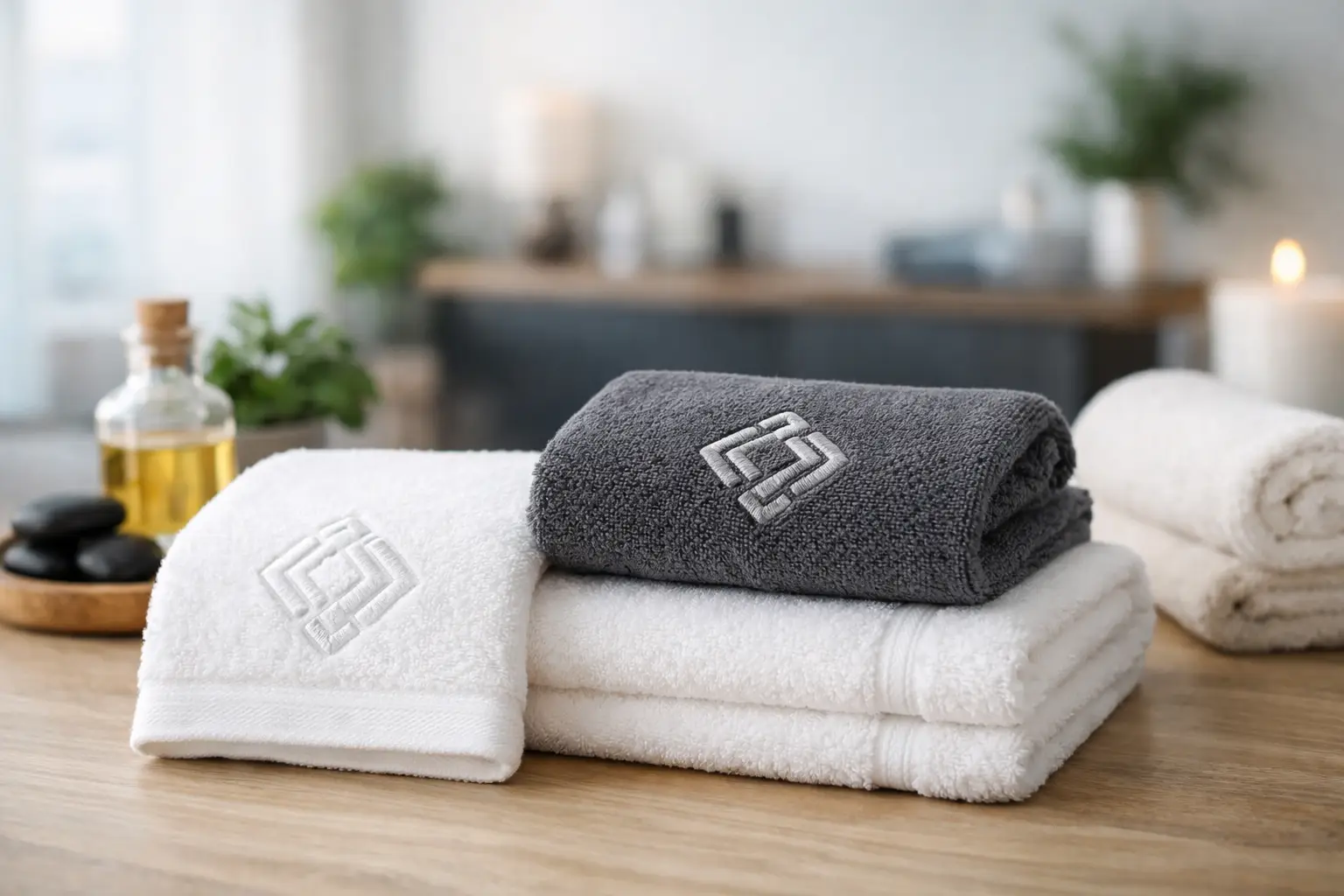
A towel is often the first thing a guest reaches for after a swim, a workout, a treatment, or a long afternoon outdoors. That makes custom logo towels for businesses more than a promotional extra. They are a tactile part of the customer experience, carrying your standards of comfort, color, and care long after the visit ends.
For a boutique hotel, yoga studio, garden venue, salon, café with a summer patio, or creative retail shop, the best branded towel does not feel like an advertisement stamped onto fabric. It feels considered. Its material suits the setting, its artwork belongs to the brand, and its logo is present without taking over the whole composition.
Business merchandise is most effective when it has a genuine job to do. Towels have one built in: they offer warmth, absorb water, protect a lounge chair, soften a treatment table, or make a day at the beach more comfortable. A useful object stays in circulation. Every use creates another quiet encounter with your business.
That is a different kind of visibility from a flyer or a disposable giveaway. A well-made beach towel may travel to pools, parks, lakes, and weekend trips. A guest towel can bring a hotel’s visual language into a private bathroom. A compact hand towel at a fitness studio can reinforce the feeling that details have been handled well.
The trade-off is simple: because towels are personal, people notice quality. Thin fabric, washed-out printing, or an oversized logo can make a brand feel careless. Choosing fewer, better towels is often more persuasive than ordering a large volume of generic merchandise.
Before choosing colors or artwork, define where the towel will live. The right size and construction depend on the experience you are designing.
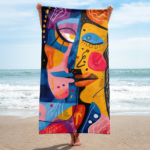
A full-size beach towel gives you the broadest visual canvas. It works especially well for resorts, vacation rentals, beach clubs, outdoor brands, and hospitality businesses that want guests to photograph and share the setting. Think beyond a centered logo. A shoreline-inspired composition, botanical pattern, or landscape-like field of color can make the branding feel like part of the destination.
For this use, generous dimensions and a soft hand matter. The towel needs enough presence to work on sand, a lounge chair, or grass, and it should still look good when draped over an arm or folded into a tote.
In a treatment room, visual calm is often more valuable than bold brand recognition. A small woven or printed mark near the edge, paired with restrained tonal artwork, can feel more luxurious than a large graphic. Soft neutrals, mineral shades, ink-like brush textures, and quiet plant forms tend to support an atmosphere of restoration.
White towels remain practical for some operations, particularly where laundering and sanitation are central. Yet a carefully chosen pale gray, sand, mist blue, or botanical accent can distinguish the experience without making care routines unnecessarily difficult.
Performance-minded businesses usually need durable towels that are easy to distribute, collect, and wash. Here, legibility matters, but the design can still have character. A strong color border, repeating emblem, or abstract topographic pattern gives the piece energy while leaving the logo easy to find.
If towels will be included in membership kits or race packages, consider whether the recipient is likely to use them beyond the event. A design that feels like wearable lifestyle art has a longer life than one covered in sponsor marks.
For shops, real estate teams, garden centers, and creative businesses, branded towels can become a gift rather than an operational supply. They work beautifully for client thank-yous, opening events, holiday bundles, and limited seasonal collections. In these cases, the design should be attractive enough to display at home.
A garden-inspired towel, for example, might pair a discreet logo with flowering branches, rain-washed stone, or an abstract interpretation of a cultivated landscape. The customer receives something useful, while the business leaves behind an object with atmosphere.
A logo does not need to dominate a towel to be remembered. In fact, a quieter placement often gives it more confidence. Consider a small mark at the hem, a monogram integrated into a corner pattern, or a logo placed within a framed panel that resembles a maker’s signature.
The most successful designs establish hierarchy. First, people notice the overall visual mood. Then they see the pattern, color, or illustration. Finally, they recognize the business behind it. This sequence is especially effective for brands that want to be associated with taste, hospitality, creativity, or a particular sense of place.
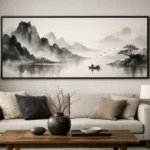
For a more expressive direction, borrow from the natural forms that already inform your business: waterlines, leaves, mountain contours, orchard fruit, local wildflowers, architectural arches, or the geometry of a garden path. Eastern ink painting offers another rich visual language. Its washes, negative space, and shifting brush textures can turn a standard textile into something more contemplative without losing contemporary clarity.
At Fensgarden, this balance between water-ink aesthetics and practical everyday textiles is central: an object should be beautiful enough to keep, and useful enough to reach for often.
The feel of the towel affects how customers read the brand. Plush cotton suggests comfort and hospitality. A lighter, quicker-drying construction can be better for travel, sport, or frequent commercial laundering. Texture also changes how artwork appears. Highly detailed designs may need a printing method that preserves fine lines and layered color, while a simple, graphic logo can work across more fabric options.
Ask practical questions early. Will the towel be washed after every guest? Is it intended for indoor use, outdoor use, or resale? Does it need to stay bright in sun? Will dark colors show lint or fading more readily in your setting? These are not small production details. They shape whether the final piece still feels premium after a season of use.
Color deserves the same attention. Screen colors can look more luminous than pigment on fabric, and large blocks of deep color may behave differently over time than pale, layered artwork. Requesting a sample or proof is worth the extra step, especially when a signature brand shade or detailed illustration is involved.
A single towel can work well for a campaign, but a small family of designs often creates greater value. A hotel might use a full-size pool towel, a hand towel for guest bathrooms, and a limited-edition retail towel that shares the same palette. A garden business might create seasonal motifs that change from spring blooms to late-summer grasses.
Consistency does not mean repeating the identical design. It means carrying through recognizable elements: a color story, a line style, a border treatment, or a small logo placement. This gives the brand a visual rhythm while allowing each towel to suit its function.
For businesses with a limited budget, start with one high-impact use case. A distinctive towel for VIP guests, a membership welcome package, or a special event can tell you far more about demand than an oversized first order. If customers ask where they can buy it, photograph it, or take it home, you have evidence that the design is doing more than carrying a logo.
Beautiful merchandise needs a practical path into people’s hands. Decide whether towels will be loaned, gifted, sold, or reserved for special clients. Each model affects quantity, packaging, replacement planning, and the level of customization that makes sense.
Loaned towels need straightforward care instructions and a laundering plan. Gifted towels benefit from a simple folded presentation, perhaps with a small printed card explaining the artwork or seasonal inspiration. Retail towels need product information that helps customers imagine them at the beach, in the bath, on a picnic, or over a patio chair.
Also consider what happens after the first use. Designs with broad appeal are more likely to stay visible in customers’ homes. A towel that feels like décor has an advantage over a towel that feels like event swag.
The strongest branded textiles do not ask customers to carry a message for you. They give customers something they genuinely want to use. That shift changes every design decision, from the weight of the fabric to the restraint of the logo.
When the towel captures a place, a season, or a mood your audience wants more of, it can become a small part of their rituals: the weekend swim, the guest room refresh, the backyard gathering, the quiet hour after a shower. Design for that moment, and your business will be remembered there naturally.