Beautiful Gardens, landscaping, art, printing For Your Home And Garden!
Beautiful Gardens, landscaping, art, printing For Your Home And Garden!
Healing gardens turn patios, balconies, and backyards into resilient places for rest, sensory ritual, and a richer connection with nature at home daily.
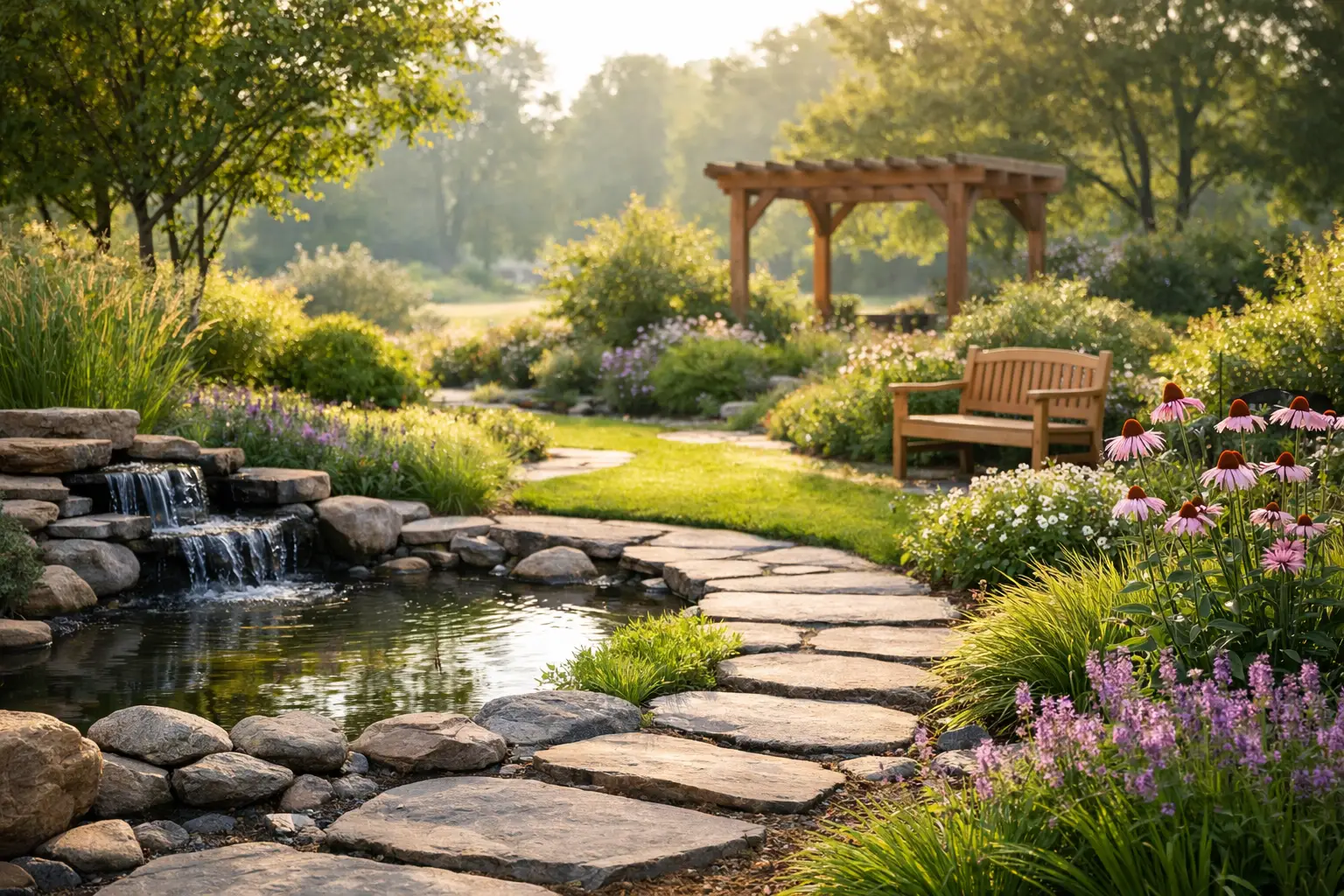
A garden becomes healing when it gives something back every time you step outside. It may be the cool shade beneath a small tree, the scent of thyme released underfoot, or the simple sight of a bee working through late-summer flowers. Healing gardens are not a decorative style reserved for large estates. They are lived-in outdoor rooms designed to help people slow down, notice the seasons, and feel more at home in nature.
For many American households, that shift matters. The backyard is no longer just a view from the kitchen window. It is a morning coffee corner, a place for children to get their hands in the soil, a dinner setting, a refuge after a demanding day, and a small habitat shared with birds and pollinators. A truly restorative garden can hold all of those roles without asking for perfection.
A healing garden works through experience, not through a checklist of fashionable plants. It gives the eye a place to rest, the body a comfortable place to pause, and the senses gentle cues that mark a transition from indoor life to outdoor life. The goal is not to create a flawless image. It is to create a space that feels alive, generous, and easy to return to.
This is where biophilic design becomes practical. Natural materials, layered planting, moving water, dappled light, and changing seasonal color can make a patio or yard feel more connected to the living world. Eastern ink painting offers a useful design lesson here: leave room for quiet. A path disappearing behind grasses, a pale stone beside dark foliage, or the open surface of a water bowl can be more powerful than filling every inch.
Healing does not mean a garden can replace professional care for physical or mental health needs. It does mean that a well-considered outdoor space can support everyday rituals of rest, movement, attention, and connection. Its value grows through repeated use.
Before choosing a planter or plant, decide what you want to do in the garden. This decision keeps the project personal and prevents a small space from becoming a collection of unrelated purchases. A balcony may be designed around ten quiet minutes with tea. A side yard may become a fragrant walking path. A larger patio may center on lingering meals, with a sheltered nook nearby for reading or meditation.
Choose one primary ritual and one secondary use. For example, a family might create a dining terrace as the main purpose, then add a bench facing the planting border for solitary pauses. A couple with a compact urban yard might prioritize a pair of lounge chairs and use edible herbs as a useful, aromatic edge around them.
Let the route to that ritual be clear. If the most comfortable chair is exposed to afternoon glare, crossed by children carrying bikes, or surrounded by pots that need constant moving, it will not become a regular refuge. Comfort is part of the design, not an accessory added at the end.
Walls are not required for a room to feel held. A pergola, a tall planter, a hedge, a cluster of ornamental grasses, or a change in paving can create a sense of enclosure while keeping the air and views open. The best approach depends on climate and scale. In a dry, sunny region, an open pergola with a shade cloth or climbing vine may offer relief without trapping heat. In a cool, wet climate, a covered seating area can make the garden usable for more months of the year.
Think in layers. Start with the ground plane, whether it is gravel, decking, pavers, or a simple lawn path. Add a middle layer of containers, planting beds, and furniture. Then introduce a vertical element, such as a trellis, sculptural small tree, umbrella, or canopy. This layered composition gives even a narrow patio depth.
Avoid treating every boundary the same way. One dense planted edge can feel protective, while another side can remain open to borrow a view of the sky or a neighboring tree. The contrast between shelter and openness is often what makes a garden feel spacious rather than crowded.
The most restorative planting is rarely the most demanding. A garden that needs constant watering, clipping, and replacement can become another task on an already full schedule. Instead, build around plants suited to your local sun, soil, rainfall, and winter conditions. Native species are often a strong foundation because they have evolved with regional weather patterns and provide food or cover for local wildlife.
Use diversity rather than relying on one plant repeated everywhere. Include a mix of flowering perennials, grasses, shrubs, and, where space allows, a small tree. Different root depths help support soil structure. Different bloom times give pollinators a longer season of forage. Different leaf shapes and heights create the rich, slightly untamed character that makes a garden feel like a living landscape instead of a static display.
A practical planting composition might combine a calm evergreen backbone with softer, seasonal companions. Low aromatic herbs can edge a path or sit near an outdoor kitchen. Flowering natives can bring color and insect activity to the middle layer. Grasses or airy perennials can catch wind and low evening light. A serviceberry, dwarf fruit tree, or carefully chosen native shrub can provide a focal point while offering berries, blossom, or habitat.
There are trade-offs. Native plants are not always the lowest-maintenance option during their first year, when consistent watering helps roots establish. Edible plants invite daily participation, but they may need more sun and more attention than ornamental perennials. The answer is not to choose one category over another. It is to place higher-care plants close to the house and let the outer parts of the garden become more self-sustaining.
Visual beauty is only one part of a healing garden. Fragrance, texture, sound, and temperature are what make it memorable after sunset or in the middle of an ordinary weekday. Place scented plants where people will brush past them or sit nearby, rather than scattering them at the far end of the yard. Lavender, rosemary, mint in a contained pot, basil, and certain native flowering plants can add a sensory dimension to everyday use.
Sound deserves equal attention. Leaves that rustle in a breeze, a modest fountain, a small birdbath, and gravel underfoot can soften traffic noise without trying to erase it completely. Water features should fit your willingness to maintain them. A shallow bowl refreshed often may be more realistic than an elaborate pond, especially where water conservation is a priority.
Lighting should reveal the garden gently, not flatten it with brightness. Use warm, low-level illumination at changes in level, along pathways, and near seating. Let darkness remain in some areas. It supports night insects and makes the lit portions of the garden feel intimate rather than theatrical.
Low maintenance does not mean no maintenance. It means designing care into a rhythm that feels manageable. Group plants with similar water needs, use mulch to protect soil moisture, and choose generously sized planters that do not dry out by noon. A discreet drip irrigation system can be especially valuable for containers, newly planted beds, and families who travel during summer.
Keep tools and supplies near the work they support. A beautiful garden loses momentum when every small task requires a trip through the house or garage. A weather-resistant storage bench, a simple potting surface, and a place for a hose or watering can make care feel almost effortless.
Allow some looseness. Seed heads can feed birds. Fallen leaves can become mulch in a quiet corner. A plant that self-seeds in an appealing place may be a gift, not a flaw. The garden should be guided, but it does not need to be controlled into silence.
The most successful healing gardens begin before the back door. Repeat a material, color, or plant form between the living room, balcony, and garden so the transition feels continuous. A houseplant-filled window, a ceramic planter near the threshold, and outdoor textiles with botanical or ink-inspired patterns can create a visual thread without making the space overly coordinated.
Fensgarden approaches this connection through the meeting of landscape thinking and Eastern water-ink aesthetics: considered composition, natural texture, and enough openness for each season to leave its own mark. A garden is never finished in the way a furnished room is finished. It matures, shifts, and asks to be noticed.
Start with the corner you are most likely to use this week. Add a seat, one healthy planter, and a reason to linger there for five minutes. The larger garden can grow from that small act of attention.