Beautiful Gardens, landscaping, art, printing For Your Home And Garden!
Beautiful Gardens, landscaping, art, printing For Your Home And Garden!
Learn how to arrange outdoor dining with shade, generous flow, layered light, and resilient planting for gatherings that feel easy and alive year-round.
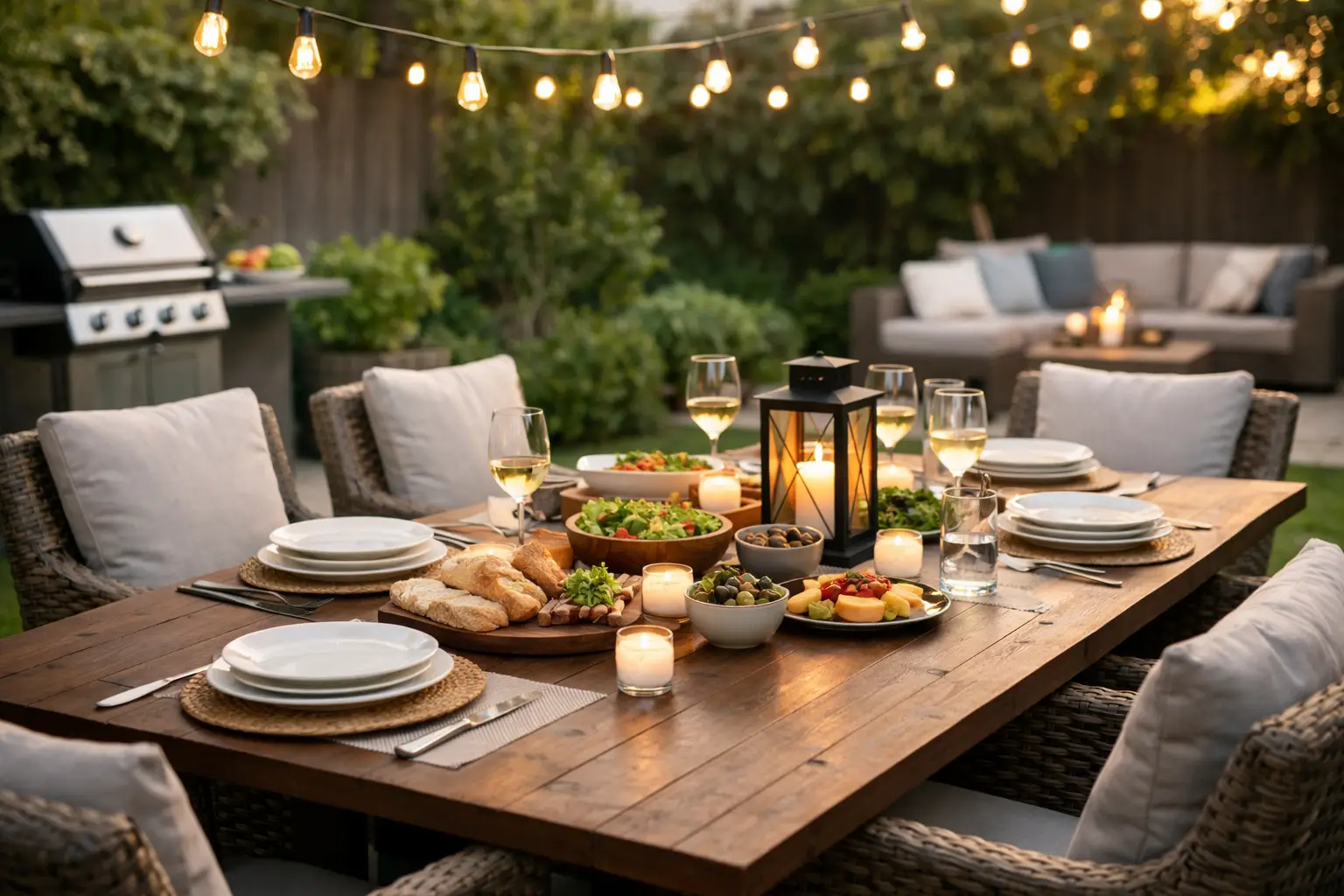
A dining table placed in the middle of a patio is not yet an outdoor dining room. The difference is felt at dusk, when someone is carrying a platter from the kitchen, a child is running through the garden, and the light begins to soften. To understand how to arrange outdoor dining, begin with the life you want the space to hold, not with the furniture you want to buy.
The most inviting gardens make a meal feel like a natural continuation of the house. They offer enough shelter to linger, enough planting to feel held by nature, and enough open space that no one needs to squeeze past a chair. This is less about creating a flawless showroom and more about making a living outdoor room that can change with the weather, the seasons, and the people around the table.
Before choosing the size or shape of your dining table, walk the path between your kitchen and the proposed dining area. Carry an imaginary tray. Notice thresholds, steps, tight corners, and doors that swing into the route. A beautiful table positioned too far from food preparation can turn even a simple breakfast into a series of inconvenient trips.
For most homes, the best location sits close enough to the kitchen for serving, yet far enough away to feel like a change of scene. A terrace just beyond French doors works well. So does a small gravel court reached by a clear garden path. If your outdoor kitchen is separate, place dining within easy conversation distance, but outside the hottest cooking zone.
Leave room around the table for chairs to move comfortably. As a practical rule, allow about 36 inches from the edge of the table to a wall, planter, railing, or dense planting. If people will regularly pass behind seated guests, more space is better. A compact garden does not need to feel crowded. It simply needs a deliberate route around the room.
Choose the table according to your everyday rhythm, then plan for the occasional larger gathering. A table that seats six comfortably but consumes the entire patio may look generous in a photograph and feel frustrating in daily use. Consider whether four people eat outside most often, whether children need room for projects, and whether large family meals happen once a month or once a year.
Round tables encourage conversation and soften square patios, especially in smaller spaces. They also make circulation easier because there are no sharp corners to navigate. Rectangular tables feel more architectural and often suit long terraces, pergolas, or narrow side gardens. An extendable table can be a thoughtful compromise for households that want intimacy on ordinary evenings and flexibility for celebrations.
The table should have visual weight, but it should not be the only thing the eye sees. Pair it with chairs that are comfortable enough for a long meal and durable enough for changing weather. Natural-looking finishes, warm timber, woven textures, powder-coated metal, or stone can all work beautifully. The best material depends on your climate and how much maintenance you welcome. Teak ages gracefully but needs considered care; metal is often easy to clean but can become hot in full sun; lighter woven pieces may need storage in storm-prone areas.
A bench along one side can save space and create a relaxed, communal mood. It is particularly useful beside a wall, planter, or hedge where chairs would be difficult to pull out. Balance it with individual chairs elsewhere so guests can choose the seat that feels most comfortable.
Outdoor dining becomes more usable when it has a sense of enclosure overhead. This does not always mean a permanent roof. A pergola, a cantilever umbrella, a shade sail, or even the delicate canopy of a small multi-stem tree can create the feeling of a room while allowing sky and breezes to remain part of the experience.
Start by observing the sun before committing to a structure. A west-facing patio may be pleasant in the morning and glaring at dinner. In that case, an adjustable umbrella or louvered shade may be more useful than a fixed cover. A humid or rainy climate may call for a pergola designed to shed water, while a dry, breezy garden may benefit from a more open structure that does not trap heat.
If you choose a pergola, let climbing plants be part of its long-term character rather than an afterthought. Vine-covered beams can filter light beautifully, but dense growth takes time and needs pruning. In the first years, a retractable canopy or textile panel can provide shade while plants establish themselves. The goal is dappled comfort, not a dark ceiling.
A dining area feels exposed when it is surrounded only by hard surfaces. Plants give it privacy, soften sound, and create seasonal change. They also make the space more than a setting for meals: they invite birds, pollinators, fragrance, and movement into the evening.
Avoid treating every border as a clipped green wall. Layering usually creates a richer and more relaxed effect. Use lower aromatic plants near the table, such as thyme, sage, lavender, or mint in contained pots. Add flowering perennials and grasses for texture, then establish shrubs or small trees for a taller frame. Choose plants suited to your region, soil, and rainfall so the garden can remain beautiful without demanding constant intervention.
Edible planting belongs naturally near outdoor dining. A pot of basil within reach of the table, strawberries tucked into a sunny edge, or a citrus tree in a warm protected corner makes the garden participatory. These details are small, but they change the relationship between meal and landscape. A leaf can move from plant to plate in a few steps.
Container planting is especially useful on balconies, rental patios, and paved yards. Group pots in varying heights rather than lining them up like furniture. A large planter can define a corner or shield an unwanted view, while smaller vessels can be moved as the season changes. At Fensgarden, this meeting of sculptural form and growing life is central to the idea of an outdoor room: objects should frame nature, not compete with it.
One bright fixture above the table can make outdoor dining feel flat and overly exposed. Better evening light comes in layers. Begin with warm, practical illumination for serving and walking, then add lower, softer sources that make guests want to stay.
A pendant or weather-rated fixture under a covered pergola can define the table. Path lights, low wall lights, or subtle step lighting make circulation safer without turning the garden into a runway. Lanterns and rechargeable table lamps add intimacy and can move wherever the gathering goes. Keep light warm rather than blue-white, and aim it downward whenever possible to protect the night atmosphere and reduce disturbance to wildlife.
Candlelight remains hard to replace, but use enclosed holders when there is wind, fabric, or planting nearby. On a small table, one low cluster is often enough. Tall centerpieces may be dramatic, but they interrupt conversation and create an obstacle between guests.
The strongest outdoor dining spaces do not pretend weather does not exist. They prepare for it. Keep cushions where they can be brought in quickly, choose a table surface that can handle a sudden shower, and have a nearby basket for throws on cooler evenings. A textured outdoor blanket can extend the season without making the setting feel over-styled.
Wind deserves as much attention as rain. If your patio catches prevailing gusts, use planting, slatted screens, or a partially open trellis to slow the wind rather than blocking it with a solid barrier. Solid walls can create uncomfortable turbulence. In hot regions, airflow may be more valuable than complete enclosure.
An outdoor rug can visually anchor the dining zone, but it is not essential. It works best under a covered area or in a climate where it can dry quickly. On gravel, brick, or a garden terrace with beautiful material underfoot, leaving the ground visible may feel more honest and require less care.
A dining area should not be reserved for formal dinners. During the day, it can become a place for coffee, homework, potting seedlings, painting, or a quiet moment after work. Keep one small side table or movable stool nearby for drinks, serving dishes, and the ordinary clutter of life. This flexibility is what makes a garden feel inhabited rather than staged.
Do not rush to fill every edge. Leave a little breathing room for a new pot, a summer harvest basket, or a chair pulled into the last patch of afternoon sun. The most memorable outdoor meals rarely come from perfect symmetry. They come from a table that feels settled in its landscape, with room for people, weather, and the slow, generous growth of the garden.