Beautiful Gardens, landscaping, art, printing For Your Home And Garden!
Beautiful Gardens, landscaping, art, printing For Your Home And Garden!
Our native garden design guide shows how to build a resilient outdoor room with layered plants, less watering, and habitat for pollinators nearby at home.
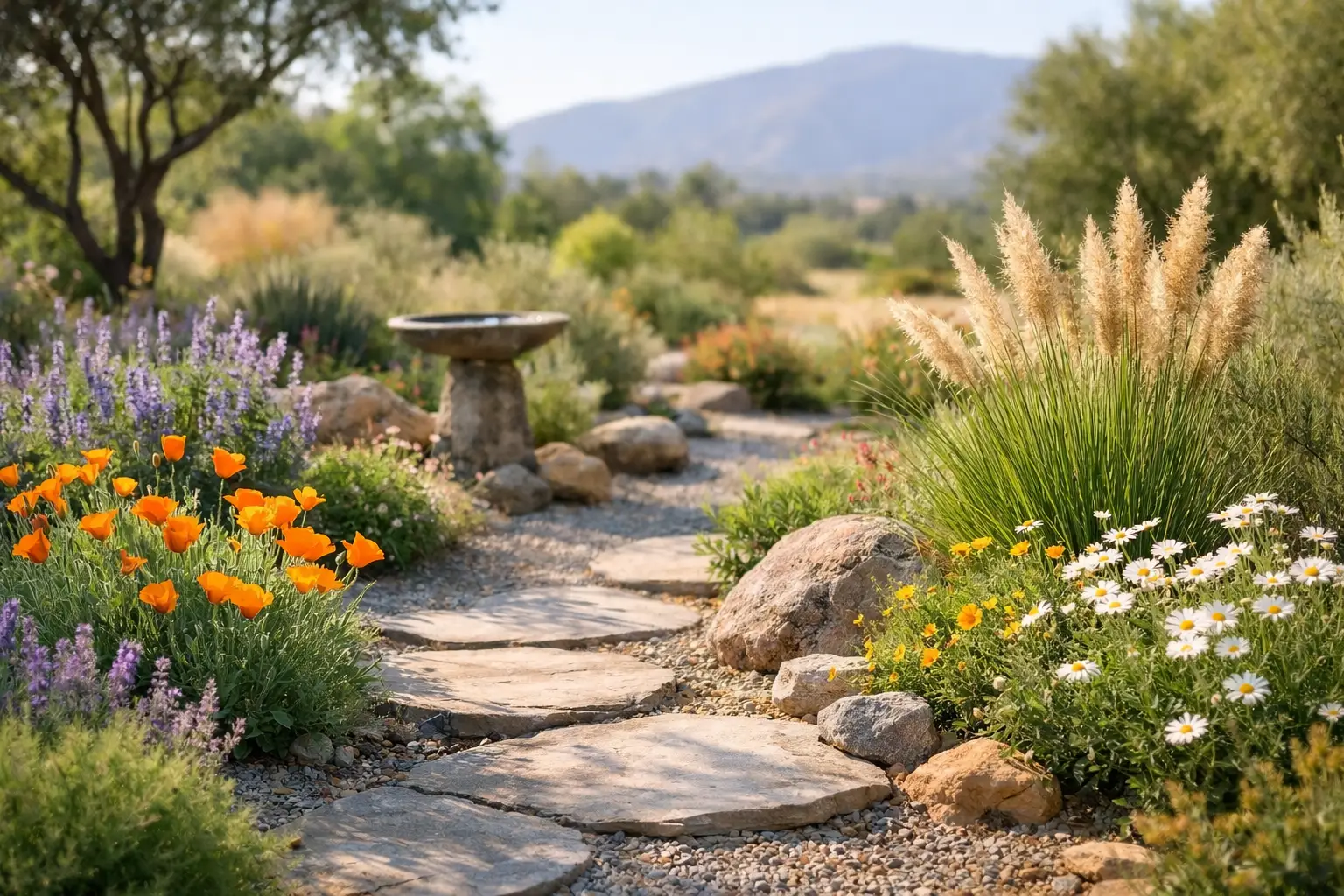
A lawn can look finished and still feel strangely empty: hot underfoot, thirsty in July, silent except for the mower. A native garden changes the atmosphere. In this native garden design guide, the goal is not to recreate a wilderness or let a yard become unruly. It is to compose a living landscape that belongs to its place – beautiful from the kitchen window, generous to birds and pollinators, and easier to care for as the years pass.
For Fensgarden, a garden is an outdoor room shaped with the same attention as an interior: light, texture, movement, rest, and the quiet pleasure of seasonal change. Native planting offers a particularly rich material palette. Seed heads catch low winter sun, grasses move like brushstrokes in wind, and spring flowers arrive with the timing local wildlife recognizes.
The most successful native gardens do not begin with a shopping cart full of wildflowers. They begin with observation. Spend a few days noticing where rain collects, where the afternoon heat lingers, and which parts of the yard stay dry beneath roof eaves. Watch the shadows at breakfast and again at dinner. A plant that is native to your state may still struggle in the wrong moisture, soil, or light conditions.
“Native” is regional, not universal. A species indigenous to coastal New England may not suit a high-plains yard in Colorado, and a California native adapted to summer drought will not necessarily enjoy a humid Mid-Atlantic garden. Start with plants native to your ecoregion, then narrow the choices by your site conditions. Local native-plant nurseries and regional conservation groups can help identify what truly belongs.
This approach also protects the design from a common disappointment: planting for a catalog image rather than for the land. If your soil is heavy clay, celebrate plants that tolerate seasonal wetness and drying. If it is sandy and lean, choose species built for quick drainage. Working with the site produces the low-maintenance resilience many homeowners want; fighting it creates a garden that always asks for rescue.
A native garden can be loose in spirit without being vague in form. Give it a clear edge, a path, or a destination so the planting reads as intentional. A curving gravel walk to a bench, a simple terrace framed by grasses, or a pair of generous planters beside a patio door can make an abundant planting feel composed rather than neglected.
Think in broad masses first. Repeat a few anchor plants across the bed, then weave in smaller seasonal accents. This is more restful than collecting one of everything. It also echoes the rhythm of an ink landscape: a dark structural mark, an open area for breathing room, then softer layers of detail.
Leave enough access for real life. A bed that is deeper than you can comfortably reach from a path can become difficult to weed or edit. In smaller yards, one substantial border may feel more generous than several narrow strips. In larger spaces, use paths and seating to turn planting into a sequence of experiences rather than a view seen only from indoors.
Layering gives a native planting its natural fullness and helps it perform ecologically. The exact species will vary by region, but the visual roles remain useful:
Avoid arranging every plant by height alone, like theater seating. Let a few medium plants drift forward and allow fine grasses to rise through flowering perennials. The result is a garden with depth, especially when viewed from a patio or indoor living room.
Many new native gardens peak brilliantly in early summer, then lose momentum. A better plan distributes interest across the year. Include early nectar sources for emerging pollinators, summer flowers for abundance, late-blooming species for migration season, and grasses or seed-bearing perennials that remain handsome through winter.
Winter is not a blank interval. Dried flower heads feed birds, stems shelter beneficial insects, and frost turns grasses into silver linework. Cutting everything down in fall may look tidy, but it removes much of the habitat a native garden provides. Leave stems standing through winter, then cut back in late winter or early spring before new growth pushes through.
Evergreen structure can be useful, particularly around an outdoor seating area, but it should support rather than flatten the seasonal story. A small tree, a native shrub, or a carefully placed screen can frame a view and create privacy. The softer planting around it can then change with weather and time.
Native does not mean no water, especially during the first growing season. New plants need consistent moisture while roots establish. The difference is that a well-matched native planting should need far less supplemental watering once established than a conventional, thirsty border.
Group plants with similar water needs. Keep moisture-loving species where runoff naturally gathers and drought-tolerant plants on sunny slopes or near reflective paving. Direct downspout water into a planted swale or rain garden only if the area drains within a day or two; standing water for long periods calls for a different solution.
Mulch is helpful, but use it thoughtfully. A light layer of untreated shredded leaves or fine arborist chips protects soil and retains moisture. Do not bury crowns, and avoid the thick, heavily dyed mulch that creates a hard visual boundary around every plant. In a mature planting, living groundcovers and fallen leaves gradually take over much of this work.
If irrigation is needed, let it disappear into the design. A simple drip system beneath mulch delivers water to roots without spraying paths, furniture, or foliage. Smart timers should respond to weather rather than insist on a fixed routine. Good garden technology is felt in the ease of care, not displayed as a feature.
Habitat is not an accessory added at the end. It comes from abundance and restraint: flowers with open forms, host plants for caterpillars, shallow water, leaf litter, and places to perch or shelter. A small dish of clean water with a stone for insects to land on can matter as much as another decorative object.
At the same time, a garden must serve the household. Place fragrant plants near a path or dining table, not at the far end of the property. Use a sturdy planter to mark the transition from patio to planting bed. Set a chair where evening light arrives, and allow a view toward the liveliest part of the garden. Children may use stepping stones, herbs, and berrying shrubs differently than adults use a reading corner, but both are forms of belonging.
Edible plants can fit naturally into this picture. Native fruits, culinary herbs suited to the region, and pollinator-friendly flowering plants make the garden more participatory. Keep in mind that some edible species are not native, and that is not automatically a failure. The aim is a thoughtful balance: native plants as the ecological backbone, with a few useful companions chosen responsibly.
The first year is about establishment, not perfection. Plant densely enough that soil will be shaded as plants mature, but allow room for each species’ mature spread. Water deeply and regularly during dry spells, especially in the first several weeks. Pull aggressive weeds before they set seed, because young native plants can be slow to show their strength above ground while building roots below.
Expect the garden to look different each month and each year. Some plants may thrive while others reveal that the site is not quite right. This is not a design failure. It is useful information. Move or replace underperformers, add a second drift of a plant that excels, and allow the composition to become more specific to your home.
Resist the urge to over-neaten. A little informality is not neglect when paths are clear, edges are defined, and the planting has an evident rhythm. The contrast between a composed outdoor room and a lively plant community is where the garden becomes memorable.
A native garden is never fully “done,” and that is part of its grace. Each season gives you another chance to notice what has arrived, what has taken root, and where there is room for one more small act of care.