Beautiful Gardens, landscaping, art, printing For Your Home And Garden!
Beautiful Gardens, landscaping, art, printing For Your Home And Garden!
Raised garden beds vs planters: compare root space, drainage, cost, and style to build a resilient, low-maintenance garden that feels alive year-round.
A sunny patio can become a kitchen garden. A narrow side yard can become a pollinator border. The real question behind raised garden beds vs planters is not which one looks better in a product photo. It is which structure gives your plants, your daily routine, and your outdoor space room to thrive.
Both can make gardening more approachable than digging into compacted native soil. Both can frame a terrace, soften hardscaping, and bring edible plants close to the table. Yet they create very different growing conditions. One offers a grounded, generous root zone; the other offers mobility, precision, and a sculptural presence.
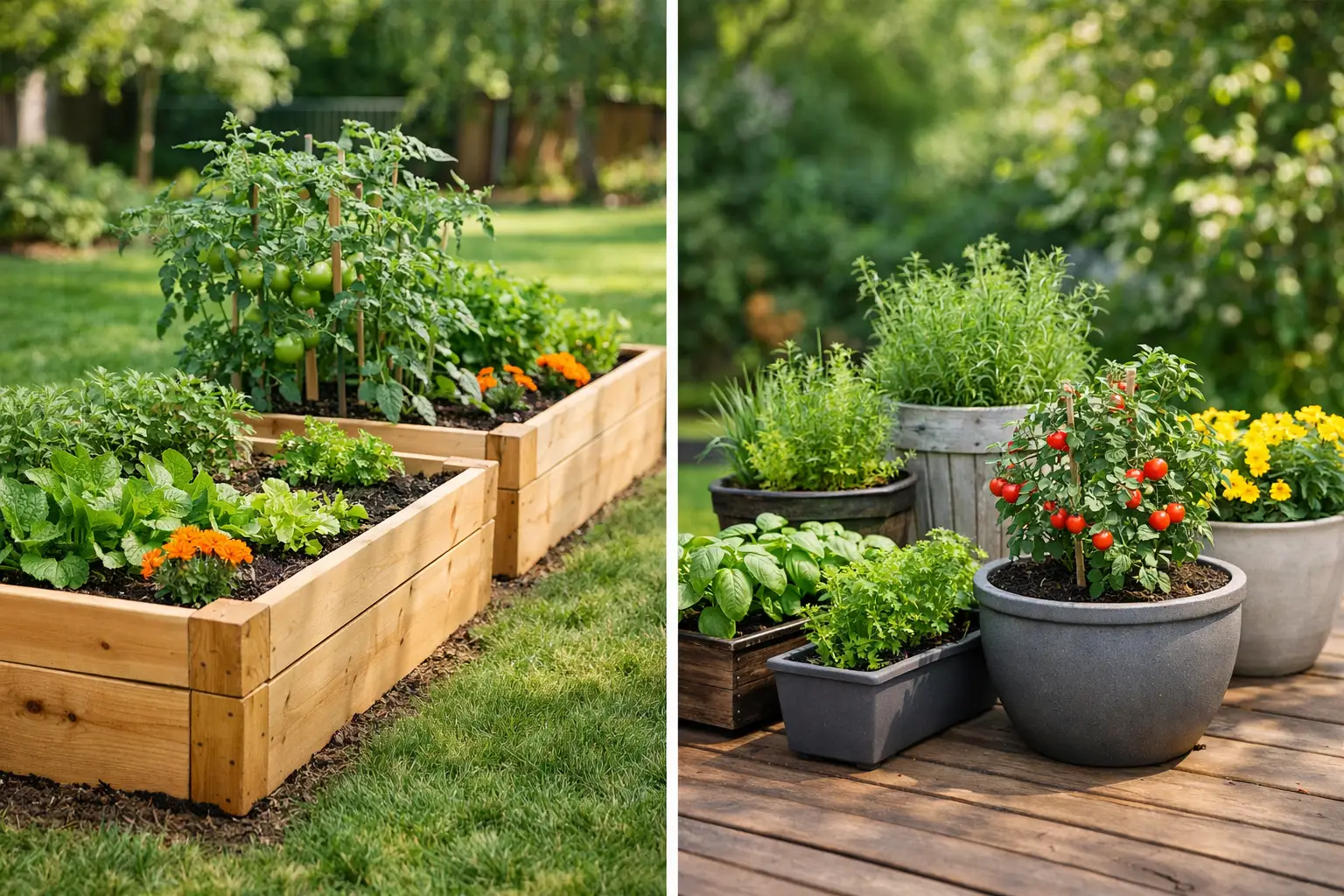
A raised garden bed is a larger planting area built above existing ground. It is usually open at the bottom, allowing roots to grow into the soil below when conditions permit. Most beds are at least 6 to 12 inches deep, though deeper versions are useful where native soil is poor, contaminated, or heavily compacted.
A planter is a self-contained vessel. It has a base, drainage holes, and a defined volume of potting mix. Planters range from small herb pots to substantial architectural containers, but their roots remain within the container.
That distinction affects nearly every gardening decision: watering, soil volume, winter survival, plant selection, cost, and the visual rhythm of a space. Raised beds are often the better choice for a productive garden that will stay in one place. Planters are often the better choice when a garden needs to move, adapt, or live on a balcony, deck, entryway, or paved courtyard.
A raised bed has an advantage that is hard to imitate in a container: volume. More soil holds moisture longer, buffers temperature swings, and gives roots room to spread. That makes raised beds especially well suited to vegetables that need consistent moisture and space, such as tomatoes, beans, squash, cucumbers, kale, and cut-and-come-again greens.
For families who want an edible landscape rather than a few decorative pots, beds can turn gardening into part of everyday life. A 4-by-8-foot bed can hold a changing mix of salad leaves, herbs, flowers, and fruiting crops. Add borage, calendula, or native flowering plants at the edges, and the bed can feed people while offering nectar and shelter to beneficial insects.
Raised beds also make soil improvement more manageable. Instead of trying to amend an entire yard, you can build healthy, loose soil exactly where you need it. Compost, leaf mold, and a good organic soil blend create a living root environment over time. The bed becomes more productive with each season rather than requiring a complete reset.
Height matters, too. A bed raised 18 to 30 inches can reduce bending and kneeling, making it a thoughtful option for gardeners with limited mobility or anyone who wants a more comfortable daily ritual. In a well-designed outdoor room, a taller bed can also define an edge between dining, lounging, and growing areas without feeling like a hard barrier.
Raised beds take commitment. Once filled with soil, they are not easily moved. They require a level site, a durable frame, and an upfront investment in soil – often the largest cost in the project. Wood, metal, and composite materials each weather differently, so the choice should reflect climate, maintenance preferences, and the surrounding architecture.
They can also dry out faster than in-ground gardens, particularly in hot, windy climates. The solution is not constant hand watering. A simple drip line beneath mulch can deliver water slowly at the root zone and disappear into the design. This kind of quiet technology supports a lower-maintenance garden without disrupting its natural character.
Planters excel where flexibility matters. Renters can take them along. Apartment dwellers can create a garden without access to soil. Homeowners can rearrange them as light changes, a patio evolves, or a new seating area calls for a little privacy.
They are also a powerful design tool. A pair of tall planters can frame a front door; a long, low planter can bring grasses and fragrant herbs beside an outdoor sofa; a cluster in varied heights can make a blank wall feel layered and alive. Their lines can be crisp and contemporary or softly organic, depending on the material and planting scheme.
For smaller gardens, planters allow you to place plants exactly where they are most useful. Keep rosemary and thyme near the grill. Place mint in its own container so it cannot wander. Grow a dwarf citrus or fig close to a sunny wall, then shift it to shelter during cold weather. A planter garden can extend the green life of the home from the kitchen window to the patio and beyond.
Planters are especially effective for plants with specialized soil needs. Blueberries prefer acidic soil, while Mediterranean herbs prefer sharply draining mixes. In containers, you can tailor conditions plant by plant instead of negotiating with the existing ground.
A container’s limited soil volume is its central constraint. Pots dry out quickly, heat up faster in full sun, and offer less insulation during winter. A plant that is reliably hardy in the ground may need extra protection in a planter, particularly in regions with freeze-thaw cycles.
Size is the practical answer. The larger the container, the more stable its moisture and temperature will be. Large planters also give roots enough room for small shrubs, ornamental grasses, dwarf fruit trees, and substantial perennial plantings. A tiny pot may be charming, but it can become a high-maintenance obligation by July.
Drainage deserves equal attention. Every outdoor planter needs drainage holes, and those holes should remain clear. Avoid lining the bottom with rocks in an attempt to improve drainage; this reduces the soil volume available to roots. Use a high-quality container mix, elevate pots slightly if water pools beneath them, and mulch the soil surface with fine bark or gravel to slow evaporation.
The most satisfying gardens usually combine both. Raised beds can form the productive heart of a backyard, while planters bring color, scent, and foliage into the places where people gather. This layered approach makes the garden feel less like a separate task zone and more like a living extension of the home.
Choose raised beds if you have a permanent sunny area, want meaningful vegetable harvests, need to improve difficult soil, or prefer a planting system that grows richer over the years. They are particularly valuable for families building a resilient garden with native flowers, herbs, and food crops side by side.
Choose planters if your space is paved, leased, compact, or in constant evolution. They are ideal when you want to direct views, create privacy, garden close to a door, or make seasonal changes without rebuilding the landscape.
Climate should shape the decision as much as square footage. In dry regions, a deeply mulched raised bed with drip irrigation may use less water than many small pots watered by hand. In rainy climates, well-draining planters can protect drought-loving plants from wet winter soil. In cold areas, choose frost-resistant materials and favor larger containers, which are less vulnerable to root damage from rapid freezing.
Whether you choose beds or planters, avoid treating plants as isolated decorations. Repeat a few materials and plant forms to create continuity: weathered wood near a dining table, dark metal beside a pergola, silvery foliage echoed from a container to a bed. Let structure provide calm, then allow planting to be generous and a little unruly.
A useful planting mix often includes four roles: something edible, something fragrant, something that flowers for pollinators, and something evergreen or textural for the quieter months. This creates a garden with more than one purpose. It can offer dinner ingredients, seasonal beauty, habitat, and a place to pause.
Fensgarden approaches outdoor pieces as part of this larger composition – where practical forms support the changing textures of leaves, light, water, and daily life. The goal is not a perfectly controlled display. It is a space that becomes more personal as it grows.
Start with the structure that removes the most friction from your routine. When watering is easy, harvests are close, and the view invites you outdoors, gardening stops feeling like another responsibility and begins to feel like a habit worth keeping.