Beautiful Gardens, landscaping, art, printing For Your Home And Garden!
Beautiful Gardens, landscaping, art, printing For Your Home And Garden!
A 6x6ft hardtop pergola can turn a compact patio into a calm outdoor room. Learn where it fits, what to check, and how to style it well with intention.
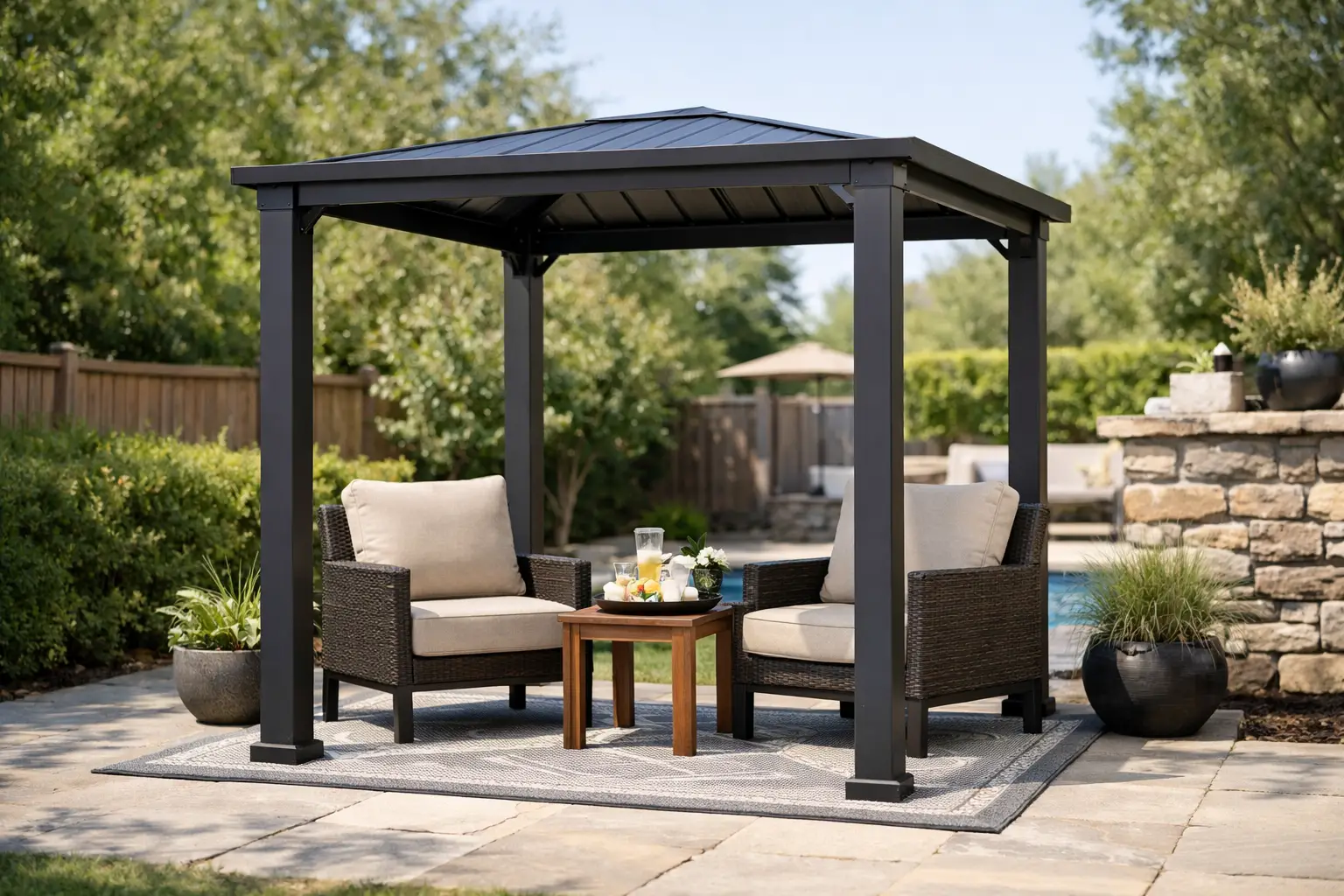
A 6x6ft hardtop pergola is not a miniature version of a grand garden structure. It is a precise architectural gesture: enough cover for two people, a small table, or a quiet reading chair, yet compact enough to give a balcony, courtyard, or narrow patio a clear purpose. In a well-planted garden, its modest footprint can feel less like an addition and more like a framed pause between the house and the landscape.
For homeowners who want an outdoor room without surrendering the entire yard, this size has real appeal. The hard roof offers dependable protection from sharp sun and light rain, while the open sides preserve a connection to moving grasses, climbing vines, birds, and the changing sky. The key is to treat the pergola as part of the garden composition, not simply as a freestanding shelter.
Six feet by six feet gives you 36 square feet of covered area. That is intimate by design. It works beautifully for a bistro table and two slim chairs, two lounge chairs angled toward a planting bed, or a built-in bench with a petite side table. It can also shelter a compact outdoor prep station, provided there is adequate clearance and the cooking appliance is approved for covered outdoor use.
What it will not comfortably hold is a full dining set for four, a sectional, or a large grill with room for people to circulate. This is where honest planning matters. A compact pergola is most successful when it serves one clear ritual: morning coffee, an after-work drink, a private conversation, potting herbs, or a protected place to read while rain softens the garden around you.
Leave breathing room beyond the posts. If the structure is placed directly beside a wall, fence, or dense hedge, the covered space can feel closed in and may trap moisture. A little open perimeter makes the area easier to enter, cleaner to maintain, and more visually generous.
A hardtop makes sense when the goal is lasting shade with less seasonal upkeep. Unlike fabric canopies, it does not need to be removed before every storm or stored through winter. It also creates a firmer visual line in the garden, which can make a small patio feel intentional rather than temporary.
Material makes a difference. Powder-coated aluminum is generally valued for its light weight, resistance to rust, and clean contemporary profile. Steel can feel substantial but requires careful protective finishing, particularly in humid or coastal locations. Polycarbonate roof panels admit filtered light and can prevent the space beneath from becoming overly dark, while insulated metal panels provide denser shade and may reduce heat more effectively.
There are trade-offs. A solid roof blocks overhead sun but may also limit the daylight reaching nearby plants or an interior window. Polycarbonate can be bright and airy, yet it may amplify the sound of heavy rain. Metal panels offer a quieter visual field and stronger shade, but they can hold heat if the structure lacks side ventilation. The right answer depends on your climate, orientation, and how you plan to use the space.
Before choosing a 6x6ft hardtop pergola, measure the patio or deck, then measure the life around it. Consider the space needed to pull out a chair, carry a tray from the kitchen, open a gate, or tend the planting border. A practical rule is to allow at least 30 to 36 inches of circulation on the main access side whenever possible.
Also check the true outside dimensions. Product names often describe the roof coverage or nominal size, while the post-to-post measurement, roof overhang, and anchoring plates can differ. On a compact terrace, even a few extra inches can affect a door swing, railing clearance, or property line setback.
Look upward as well. Eaves, gutters, tree limbs, overhead utilities, and roof runoff all influence placement. Water should not pour from a house gutter onto the pergola roof. If it does, redirect the downspout first. A beautiful outdoor room begins with dry feet and a structure that is allowed to shed water properly.
A hardtop pergola should be anchored to a stable, level base. Concrete slabs, properly built decks, and paver patios with an appropriate structural foundation are common options. Loose gravel, thin pavers laid directly on soil, or uneven ground may not provide a secure fixing point.
Wind ratings, snow loads, permitting rules, and setback requirements vary by city and neighborhood. A small footprint does not automatically mean a structure is exempt. Check local rules and homeowner association requirements before delivery, especially in areas with snow, high winds, hurricanes, or wildfire-related building guidelines. If the pergola will sit on a deck, confirm that the deck framing can support both the structure and its weather loads.
The most compelling small gardens do not treat shelter and planting as separate categories. A pergola can become the quiet center of a living composition, with layers that change through the seasons. Keep taller plants or small trees just outside the roofline so their foliage softens the structure without scraping the panels or blocking drainage.
On the sunniest side, use drought-tolerant perennials, ornamental grasses, and flowering natives suited to your region. Their movement will keep the hard roof from feeling static. Near the entrance, place a large planter with aromatic herbs such as thyme, rosemary, or mint, choosing varieties appropriate to your local conditions. These are useful plants, but they also make the act of sitting outdoors more sensory.
Avoid letting aggressive climbers take over the roof. Vines can be lovely along a nearby trellis, side screen, or fence, but a hardtop needs access for cleaning and inspection. Choose a separate support for climbing plants, leaving a narrow maintenance gap between foliage and the pergola. This protects the finish while giving pollinators a richer, more varied edge habitat.
Because the footprint is limited, every object under the roof should earn its place. Start with one focal use, then select furniture with visual lightness. Folding bistro chairs, a narrow bench, or chairs with open frames preserve sightlines. A round table is often easier to move around than a square one in a six-foot space.
Color should relate to the garden rather than compete with it. Charcoal, warm stone, weathered wood, soft clay, and muted green create a calm foundation for foliage and seasonal blooms. A single artful textile can add warmth without crowding the scene – perhaps a patterned outdoor cushion or throw that carries the quiet movement of water, stone, or ink across the surface.
For evening, use low-glare lighting. A warm rechargeable lantern on the table, a discreet wall light, or a small path light leading to the pergola is usually enough. Overly bright string lights can flatten the atmosphere and confuse nocturnal insects. Let darkness remain part of the garden, with only the paths and gathering area gently defined.
Fensgarden approaches this kind of space as a meeting point between landscape structure and everyday ritual: a place where a cup, a chair, a leaf shadow, and a changing season can all carry equal weight.
Hardtop pergolas are low maintenance, not no maintenance. Rinse the roof periodically to remove pollen, leaves, and urban dust, using a soft cloth or brush for stubborn debris. Keep drainage channels clear, particularly after autumn leaf fall. Standing water can stain panels, encourage mildew nearby, and add avoidable weight.
Inspect bolts, anchors, roof seals, and protective coatings at least once each season. In snowy climates, follow the manufacturer’s snow-load guidance rather than assuming the roof can carry any accumulation. In coastal areas, rinse salt residue more often. Small routines protect both the structure and the calm it is meant to create.
A 6x6ft hardtop pergola asks for modest space, but it gives structure to the hours spent outside. Place it where light, garden views, and daily habits naturally meet, then allow the planting around it to grow a little freer each year. The result is not just a covered patio corner, but a small outdoor room that feels alive.