Beautiful Gardens, landscaping, art, printing For Your Home And Garden!
Beautiful Gardens, landscaping, art, printing For Your Home And Garden!
Compare teak versus aluminum furniture for patios and gardens, from warmth and upkeep to weather resistance, comfort, cost, and long-term design value.
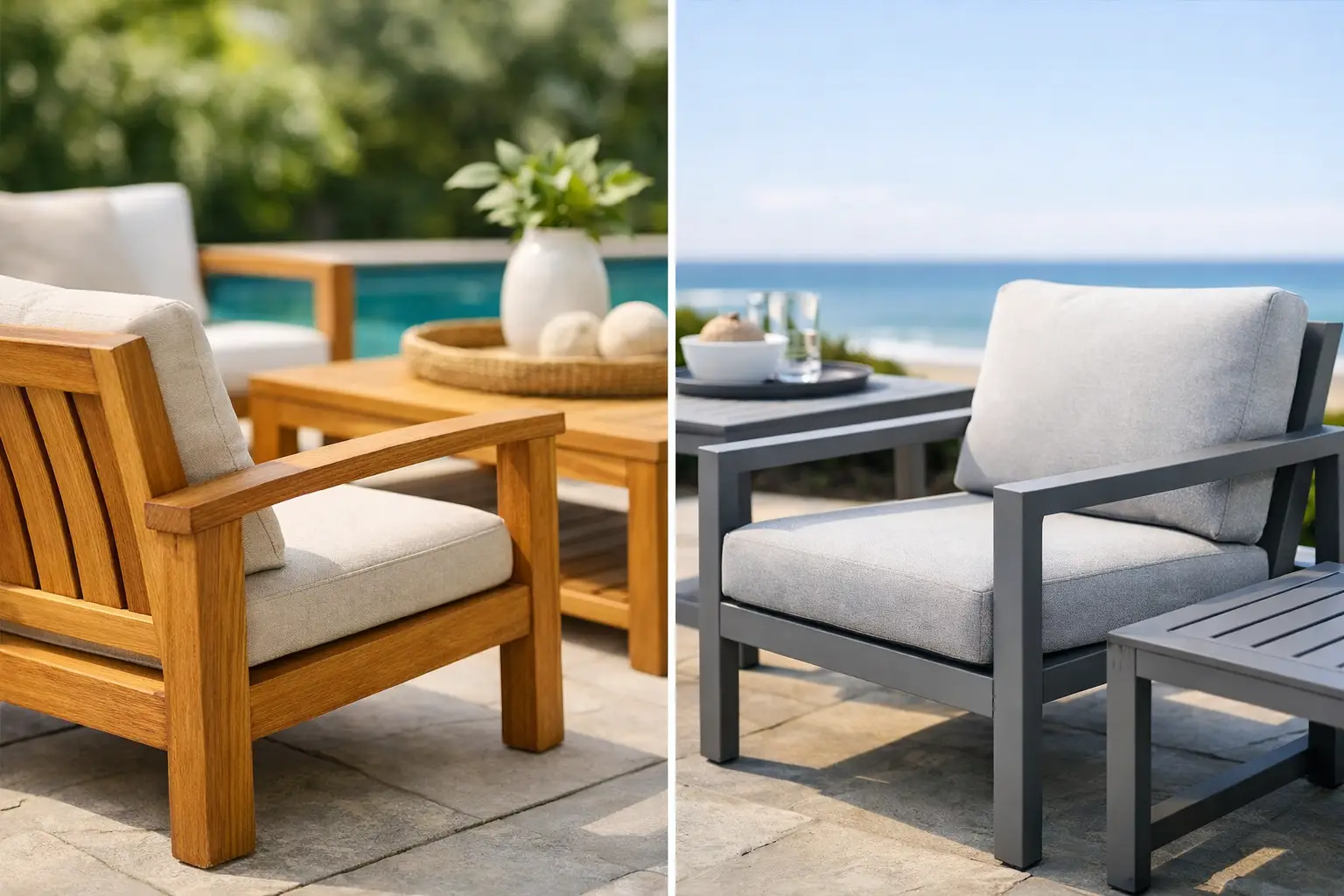
A dining table can change the meaning of a garden. Set beneath a pergola, beside a pollinator border, or on a compact city terrace, it becomes the place for a slow breakfast, a child’s muddy gardening project, and dinner after sunset. The teak versus aluminum furniture decision is therefore about more than a finish or price tag. It determines how an outdoor room feels in the hand, ages through changing weather, and asks to be cared for over the years.
For design-minded households, neither material is automatically better. Teak brings organic warmth and a lived-in quality that belongs naturally beside planting. Aluminum offers a lighter, more architectural line, often with the practical freedom to rearrange a space whenever the season or gathering changes. The better choice begins with the way you want your garden to live.
Teak is a dense hardwood valued for its natural oils, close grain, and remarkable ability to tolerate outdoor conditions. New teak has a honeyed gold-brown color, though sunlight and rain gradually turn an untreated surface into a soft silvery gray. Its visual language is tactile and grounded: a teak bench can make a paved patio feel connected to a meadow border, a water feature, or a mature tree.
Aluminum furniture is typically powder-coated in colors ranging from chalky white and warm sand to charcoal, black, and deep green. It is light, corrosion-resistant, and easily shaped into slim frames, generous lounge chairs, or sculptural dining sets. Its appeal lies in clarity. Where teak reads as material and craft, aluminum reads as line, proportion, and quiet structure.
A useful first question is whether your outdoor space needs a warm anchor or a flexible framework. A garden with stone, abundant foliage, and informal planting often benefits from teak’s visual weight. A roof terrace, poolside setting, or contemporary courtyard may feel more resolved with aluminum’s clean geometry. Of course, contrast can be just as compelling: an aluminum table can sharpen a loose, flower-filled garden, while teak can soften a modern concrete terrace.
Both materials can perform beautifully outdoors, but performance depends on construction, finish quality, local climate, and how water moves around the piece.
Quality teak is naturally rich in oils, which help it resist moisture and decay. That does not mean it is untouched by weather. Repeated wet-dry cycles can create small surface checks, especially in a hot or variable climate. These fine cracks are usually part of wood’s normal movement rather than a structural failure. A well-made teak frame with strong joinery can last for decades.
Teak’s most visible change is color. Left alone, it develops a silver-gray patina that many landscape designers prefer because it sits gently among gravel, weathered stone, and green foliage. If you want to retain the original golden tone, expect periodic cleaning and a teak protector or sealer. Oil is not always necessary and can invite uneven darkening or mildew when applied without care.
In snowy regions, teak can stay outdoors if it is elevated, uncovered enough to breathe, and kept out of standing water. A breathable cover can help during long periods of harsh weather, but a tightly sealed plastic cover can trap moisture against the wood.
Aluminum does not rust like steel, which makes it an easygoing choice for rainy climates and households seeking lower maintenance. Still, the powder coat matters. A thick, well-applied finish protects the metal and preserves the furniture’s color. Inexpensive pieces can chip around edges, joints, and screw holes, exposing the surface to oxidation and making the finish look tired sooner.
Near the ocean, aluminum remains a strong candidate, but salt spray should be rinsed away regularly. In coastal conditions, hardware deserves as much attention as the frame itself. Look for stainless steel fasteners and well-finished welds rather than assuming every aluminum piece is equally suited to sea air.
Aluminum’s main weather drawback is heat. Dark frames can become uncomfortable under direct summer sun, especially on exposed decks or pool terraces. Shade from an umbrella, pergola, or deciduous tree helps, as do light-colored finishes and cushions. In cold weather, aluminum feels colder to the touch than wood, although this matters less once seating has cushions and throws nearby.
The phrase “low maintenance” can be misleading. Every outdoor material benefits from attention. The real question is whether the care feels like a satisfying seasonal ritual or another item on a crowded weekend list.
Teak asks for occasional washing with mild soap, water, and a soft brush. Clean with the grain, avoid aggressive pressure washing, and allow it to dry thoroughly. If you welcome the gray patina, this modest cleaning may be all it needs. If you prefer an even brown color, maintaining it requires more consistency. Teak is low-maintenance structurally, but not necessarily low-maintenance aesthetically.
Aluminum usually needs a rinse, mild soap, and a soft cloth a few times a year. This is particularly helpful after pollen season, near saltwater, or beneath trees that drop sticky residue. Avoid abrasive pads and harsh cleaners that can dull the powder coat. Touch up chips early, and inspect moving parts, feet, and hardware at the beginning and end of each outdoor season.
For a household building a low-water, native-planted garden, aluminum can be the calmer maintenance companion. It lets the garden’s living systems take center stage. For those who enjoy watching materials mature alongside perennial grasses, fruit trees, and climbing vines, teak’s gradual patina can become part of the garden’s seasonal record.
Furniture should support real life, not only a beautiful photograph. Teak feels warm and substantial. A teak dining chair is less likely to shift in a breeze or feel flimsy when guests linger over a meal. That weight is an advantage in windy gardens, but it can make seasonal storage and casual rearranging harder.
Aluminum is notably easier to move. This makes it especially useful for smaller patios, balconies, and multipurpose outdoor rooms where a lounge arrangement becomes a dinner setting, then opens up for children to play. Stackable aluminum chairs are practical when storage is limited. The trade-off is that lightweight pieces should have a stable footprint, particularly in exposed locations.
Comfort depends less on the base material than on proportion and upholstery. Check seat depth, arm height, back angle, and drainage. Outdoor cushions should use quick-drying foam or a breathable fill, with covers that resist fading and can be removed for cleaning. A beautifully made frame cannot compensate for a chair that encourages everyone to stand up after twenty minutes.
Teak usually carries a higher initial cost, especially when it is made from responsibly sourced, mature wood with thoughtful joinery. Its long service life can justify that investment when the design is timeless and the scale suits your space. The most sustainable teak chair is often the one that remains loved, repairable, and useful for twenty years rather than being replaced after three.
Aluminum spans a wide price range. Premium powder-coated aluminum can provide excellent longevity, while lower-cost sets may reveal their limitations through weak welds, fading finishes, or thin cushions. Compare frame thickness, weld quality, finish coverage, replacement parts, and cushion construction. A lighter price can be sensible for a first apartment terrace or a temporary layout, but it should be an intentional choice.
Material sourcing also deserves attention. Teak should come with credible responsible-forestry documentation. For aluminum, recycled content is a meaningful consideration because aluminum can be recycled repeatedly. Yet sustainability is not only a material calculation. Durable construction, repairable cushions, and a form you will not tire of all reduce waste.
Choose teak when you want furniture to feel rooted in the landscape: beside raised herb beds, under climbing roses, or around a table that will gather family for years. Its grain, weight, and changing color make it especially harmonious with natural stone, brick, woven textiles, and layered planting. In a Fensgarden-inspired setting, teak can echo the quiet texture of a landscape painting, where weathered surfaces and living green share equal presence.
Choose aluminum when your priority is adaptable use, clean silhouettes, and easy care. It suits a sun-filled terrace, a compact urban patio, or a poolside area where furniture must move easily between shade and open sky. Select a finish that belongs to the garden palette rather than competing with it: soft mineral neutrals often let plants, water, and evening light do the visual work.
There is also no rule against using both. An aluminum lounge set may keep a terrace light and adaptable, while a teak bench under a tree creates one enduring destination. Repeating cushion fabrics or planter colors can make the materials feel intentional rather than mixed by accident.
The strongest choice is the one that invites you outdoors more often. Picture the furniture after rain, after a busy week, and after years of meals, pruning, reading, and celebration. If it still feels right in that living landscape, it belongs there.